Last Call for 2026 Read Conmigo Educator Grant Applications 

The Read Conmigo Educator Grants provides $3,000 to elementary educators with dual-language programs, and applications for the 2026 Read Conmigo Educator Grants are due on June 15.  

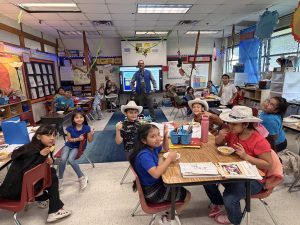
Previous winners have received funding for projects that empower students through innovative, hands-on learning experiences that foster creativity, critical thinking, STEM exploration, communications skills, social-emotional growth, and community engagement.  

Here are a few tips and reminders from the Kemper Foundation to ensure a strong submission: 

  • Review all documents on the website, such as the FAQs.  
  • Write the core content of your application yourself. While AI tools can be helpful, it’s important that your application reflects your unique voice and vision. 
  • Show your authentic self in your bio by highlighting your passion for bilingual education and your approach in the classroom as well as detailing your education and professional achievements.   
  • It is recommended to draft your responses in a Word or Google document before entering them into the grant portal. 
  • Review your full application before submission to ensure that your narrative responses match your budget. 

Beginning this year, the Read Conmigo Educator Grants will transition to one application cycle each year. This will be the only opportunity to apply during the 2026 calendar year. 

Making Dallas ISD home

When Miguel Fijó Mezquita walks into his second-grade classroom at Annie Webb Blanton Elementary School each morning, he doesn’t start class with a textbook or a test prep question. He starts with feelings.

He and his students sit together in a circle and share their “rose and thorn” of the day—one good thing and one hard thing. In a matter of minutes, Fijó learns who is excited, who is frustrated, and who may need a little extra support before the school day begins.

That deep sense of care is one of the reasons he was named Elementary Teacher of the Year at this year’s State of the District, and why so many children and families remember him long after they leave his classroom.

From the very beginning, Fijó knew teaching was a vocation he could not ignore.

“All my life I’ve dedicated myself to children,” he said. “Since I was very young, I realized I liked helping.”

He grew up and trained as a teacher in Spain, where he worked in a bilingual school with students whose first language was not Spanish. Over time, his desire to grow pushed him toward the life-changing decision of accepting an opportunity through the Spanish Ministry of Education to teach in the United States.At first, Texas was almost a mystery. 
“I only really knew Austin and Houston,” he remembered. “So when they selected me for Dallas, I didn’t really know where I was going.”

Fijó and his wife decided to treat it as a three-year adventure. She left her human resources job; he took a leave from his teaching position in Spain. They thought they would gain experience, learn a lot, and then go home.

But life had other plans.

“After the first three years, the district told me they wanted me to stay,” Fijó said. “They said they were offering me the possibility of remaining here because of the impact I was having on the children.”

Visa processes, waivers, and residency eventually followed. Thirteen years later, DFW is no longer just an experiment. It’s where his sons are growing up, where his students greet him each morning, where he has built a life. In his classroom, Fijó blends the best of two educational worlds.

“In Spain, for every subject we had pedagogical materials prepared for us,” he explained. “In that sense it was much easier.”

In Texas, especially at first, those materials didn’t exist in the same way. He had to build resources from scratch and adapt to a different curriculum and system. Instead of being discouraged, he took it as a creative challenge. Over time, programs like Amplify gave him more structure without limiting his style. 

“The lessons give you a guide, but they are flexible,” he said. “I teach the lessons in my own way, but at the same time I follow the curriculum properly.”

Fijó uses music to teach grammar, spelling, even sentence structure. Concepts that could feel dry—like subject, verb, and complement—turn into something kids can sing, dance to, and remember.

“If you only teach it as direct instruction, students don’t always apply it,” he said. “Through the song, they are able to do it.”

Families are also a part of Fijó’s circle of care. Early in his time teaching fourth grade, he became determined to bring parents closer to the classroom. To do this, Fijó uses a daily reading log not as a chore, but as a bridge between home and school. 

“I don’t want my students to read only for a test,” he said. “I want them to read because through reading you learn. The book is a tool for learning, an opportunity to bond with parents, not just something you use for an exam.”

Outside class time, Fijó often finds himself surrounded by Lego pieces and excited voices. As a longtime coach for First Lego League Challenge, he has watched robotics change how students see themselves.

“I’m not on top of them telling them what to do,” he explained. “They solve problems on their own, and my role is to guide them when they have questions.”

Some of the children who shine the brightest in robotics are the same ones who once felt uncertain or discouraged in traditional lessons. 

“They feel freer and can develop their potential,” he said. “Their self-esteem grows.”

At the core of Fijó’s philosophy is a belief in the power of a positive attitude, authenticity, and meaningful experiences. Even his advice to new teachers is rooted in identity.

“You have to be yourself and make the classroom your own,” he said. “The most important thing is your attitude, because you can’t always change the work or the challenges, but you can choose how you show up for your students every single day.”

For him, teaching is ultimately about creating learning experiences that students will carry for life.

“I want them to remember their time with me as a time when they were helped, listened to, and knew they could always count on me,” he said.

Learning culture by exploring languages

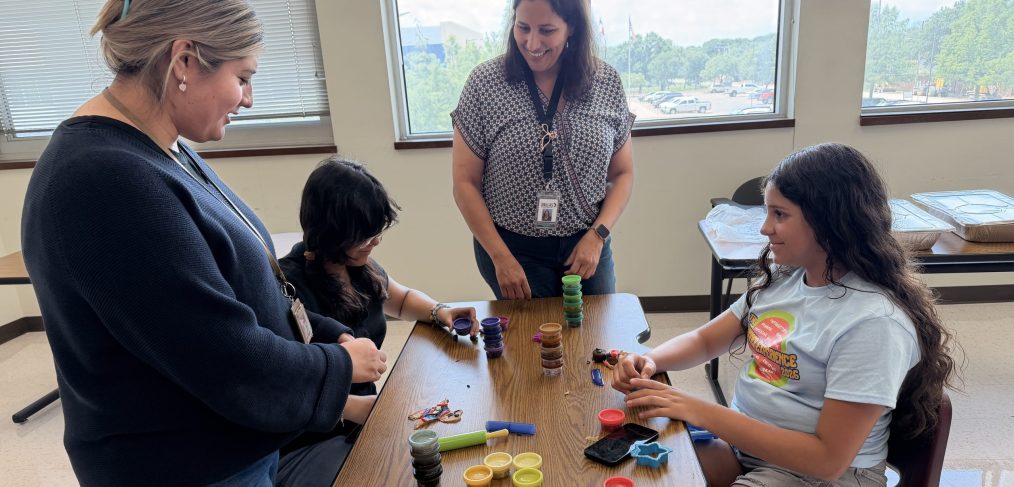
At Camp Culture: A World Language Experience, middle schoolers aren’t cramming conjugations, they are  painting, designing, tasting, and storytelling their way into new worlds. Running through June 25, the camp lets students rotate through Spanish, German, French, and Mandarin with hands-on activities, from traditional dances and basic language lessons to food tastings in partnership with Food and Child Nutrition Services.

Lisa Whitaker, director of Academic Enrichment and Support, said her idea for the program grew out of a simple concern: students don’t know what they’re missing.

“Children often select Spanish or French, while German, ASL, and Mandarin are rarely chosen,” Whitaker said. “Many students simply have little exposure to these languages or how they might use them in real life.”

For Whitaker the camp is about access and imagination. By giving students a taste of these cultures now, she hopes they’ll feel more confident choosing high schools and courses that match their curiosity—and maybe even discover a new passion that could shape their futures.

Camp instructor Fernanda Fernandes, who grew up in Brazil and now teaches French at Preston Hollow Elementary School, said the emphasis is clear.

“The goal during this time is not to teach them a lot of language, but rather the culture,” Fernandes said. “Once they feel connected to the culture, they want to discover more about the language. They learn a few words, but not yet in depth.”

Bazey Mireles, Spanish teacher at Hill Middle School, who is co-teaching with Fernandes, sees the camp as a chance to plant long-term seeds.

“By Friday, we want them to know that these languages are available to fulfill their language credit,” Mireles said. “We want them to immerse themselves in the culture so they become interested in learning another language.”

The camp’s Spanish week is a perfect example. Students created self‑portraits inspired by Frida Kahlo and Diego Rivera, then shifted from art history to social media by designing Instagram‑style pages for the Incas. They also studied athletes like Lionel Messi and produced trading cards. Later, they designed movie posters inspired by the films of Guillermo del Toro and Latino culture. 

These projects transform the classroom atmosphere, Mireles said.

“It’s definitely less pressure for them,” Mireles said. “They get to flip that creative switch. They love expressing themselves, and I feel like teaching them through culture takes the pressure off, which encourages them to keep creating.”

Time is another quiet luxury of the camp. Because camp days run longer than regular class periods, students immerse themselves into their work instead of racing the bell.

“Since it’s a little more laid back, they can dive deep into crafts and hands-on activities to express themselves,” Fernandes said. “Sometimes we don’t have time for that in a regular classroom setting, but with the different approach we have during summer camp, they’re not afraid of having to finish everything in a single class period.”

The cultural lessons spill beyond the walls of the classroom. A planned trip to the Meadows Museum this week will connect what students see in PowerPoint slides and discussions to real works of art.

“Meadows has a Latino exhibition, and that will help them connect with what we just saw,” Mirela said. “They can just walk around, look at the art, and see what these cultures have to offer. Making that real-world connection will help them understand just how important it is.”

This summer, the FIFA World Cup coming to Dallas adds another powerful hook. Students are designing their own FIFA mascots based on Spanish‑speaking countries, tying global sports fever to culture and creativity.

Both teachers are careful to tie language to the real world. Mireles talks to students about major international companies with Dallas ties, and how much it matters to be able to speak to people in their own language. 

“If you want to be part of something big, you need to be able to communicate with people,” Mireles said. “You don’t know how much they appreciate it when you understand their culture.”

For Fernandes, who also has a background in literature and journalism, the camp’s purpose reaches even further.

“Students are learning to be citizens of the world, not just of one place,” Fernandes said. “AI and translation tools can help you get some words, but they don’t help you get the culture—and putting everything together only happens through culture.”

A look at the 2026-2027 budget

During its regular monthly meeting, the Board of Trustees approved the 2026-2027 budget, which reflects the district’s continued investment in students and team members across Dallas ISD. The budget includes raises for exempt campus and central team members, increased pay for employees in excellence initiatives, and a new minimum wage of $17.50 per hour.

It also sets the new certified teacher minimum salary to $68,000, which makes it competitive in the region. Dallas ISD continues to have one of the highest teacher retention rates in the DFW area and across Texas. These are strategic investments in employees, classrooms, and students while responsibly planning for long-term financial stability.

Budget snapshot

  • $1.8 billion total operating budget
  • $104 million projected budget deficit 
  • $56.4 million employee compensation
  • $73 million projected recapture payment to the state 

Why is there a deficit?

Several factors are impacting school district budgets across Texas, including Dallas ISD’s.

  • Rising recapture payments to the State of Texas
  • Reduced state revenue
  • Declining student enrollment

Dallas ISD is projected to send $73 million back to the state next year through the recapture system, compared to $60 million this year.

HOW EVERY DOLLAR IS SPENT

80¢ of every dollar goes directly to employees.

For every $1 spent:

  • 80¢ Payroll
  • 12¢ Contracted Services
  • Supplies & Materials
  • Other Costs

Over the past three years, more than 250 central office positions have been reduced, outside contracts and operational expenses have been reduced, and the district continues identifying additional efficiencies.

Looking ahead

Dallas ISD’s long-term goal is to achieve a balanced budget by the 2028–2029 school year while continuing investments that support students, employees, and school communities.

Printing needs to be outsourced

Dallas ISD has transitioned its graphics and printing services from in-house to outside vendors effective immediately. Moving forward, printing and promotional product needs will be fulfilled through awarded outsourced vendors.

Departments who have outstanding projects with the Graphics Department or need assistance with awarded vendors, should reach out to Procurement Services.

Awarded vendors for printing services can be found under Category Code 10895 while awarded vendors for promotional items can be found under Category Code 21120. 

A current list of awarded vendors is available on the Procurement Services and Small Business Office websites. Departments and staff can access the Awarded Vendors & Bids Directory to identify awarded vendors and obtain vendor contact information. 

If there is a need for a vendor that is not currently on the awarded lists, end users will need to submit a Non-Awarded Vendor Form. Departments and team members must not engage non-awarded vendors without prior approval.

Grant for Library restoration supports student readers 

When Lori Ruso became the librarian at W.T. White High School, she made it her mission to revive the school library, which had not operated to its fullest potential since the Covid-19 pandemic. Now in her second year at the campus, Ruso is helping to transform the space, with the support of a grant from the Laura Bush Foundation for America’s Libraries. 

Ruso was one of 200 educators selected nationwide to receive the 2026 grant for $5,000. Funds will be used to expand and diversify the library’s collection. 

“A beautiful library offers students a refuge from screens, a place where imagination, curiosity, and critical thinking can flourish,” Ruso said. “The grant provides the momentum needed to continue the library’s transformation.” 

Ruso’s journey to becoming a librarian began with a lifelong love for reading and writing. She became fascinated by the craft of storytelling and eventually explored writing as a writer and through songwriting. 

“Education is my love,” she said. “After being a classroom teacher for my entire career in education, I wanted to continue challenging myself in another way.”  

She earned a Master of Library Science degree from Texas Women’s University, shifting her focus from the classroom, and has served as a librarian in Dallas ISD for seven years.  

While pursuing her master’s degree, Ruso took a course in grant writing and discovered she liked it. That later inspired her to apply for funding from the Laura Bush Foundation for America’s Libraries.  

The foundation provides funding to school librarians across the nation to support student achievement and literacy initiatives. Studies have shown that strong school library programs can positively impact reading scores and academic success. 

Located at the center of the school hallway and surrounded by classrooms, the school’s  library has become a gathering place for students. W.T. White principal Beth Wing, described it as “the heart of the school.” It is a place where students can discover new ideas, find a quiet space to recharge, or connect with a community of readers.  

For many students at W.T. White, manga has become a favorite genre. The Japanese comic and graphic novel style has grown in popularity among young readers in recent years. 

The books have helped create a niche community of students who share an interest in anime and storytelling. Manga‘s unique right-to-left reading format and serialized chapters also introduce students to elements of Japanese culture while encouraging reading.  

Once tucked away on a shelf in a corner, manga books and the culture surrounding them now have become a central part of the student reading experience in W.T. White’s library. 

“We have manga events where we explore the history of anime and manga,” said Ruso. “The students get together to talk about books and film series connected to the books. I was excited to create something special for that group of readers.” 

Ruso said she also has seen the educational benefits of graphic novels and manga among students. 

“I’ve noticed that picture-word association is a very strong component in learning for many students,” she said. “Studies are showing that graphic novels, or manga, are often gateway books that lead students to chapter books.” 

To celebrate students who actively used the library throughout the year, Ruso hosted an event recognizing the school’s top 100 readers based on book checkouts.  

The library is also a hub for student collaboration and support. It houses the Academic Success Program, which provides comprehensive college counseling to help students gain admission and scholarships to college. Students earning college credit from Dallas College through the B-TECH program also spend the morning in the school’s library. 

With the grant, Ruso’s vision of the library being a vibrant and welcoming space for all students is closer to being realized. 

“This generous gift represents far more than financial support,” Ruso said. “It is a symbol of hope and renewal for a library that has long been silent.

Grants make innovation possible

Through the heart of teaching grants, the Dallas Education Foundation is awarding 30 innovative classroom grants to educators across the district for the 2026-2027 school year.

“Dallas ISD educators demonstrate extraordinary creativity, passion, and commitment to student success,” said Mita Havlick, director of DEF. “This year’s record number of applications reflects the incredible innovation happening across our district. We are honored to support these educators as they bring transformative ideas directly into their classrooms and communities.”

Selected projects represent every Dallas ISD trustee district, ensuring students across the city will benefit from creative learning experiences designed to inspire academic achievement, engagement, and opportunity. They are funded, in part, by team member contributions during the annual employee giving campaign.

The Heart of Teaching grant supports educators who are developing innovative solutions to meet the unique needs of their students and school communities. Grants fund projects that expand access to enriching educational opportunities, enhance classroom learning, and create meaningful experiences that help students thrive.

The 2026–2027 Heart of Teaching grant recipients include:

  • Danelle Adeniji: Skyline High School early college program, The Legacy of Leaders Symposium
  • Emma Arett: Solar Preparatory School for Girls, 2026 Solar Filmmaking Society
  • Jesse Bartlett: J.L. Long Middle School, Sewing Pathways
  • Christine Bickers: Jack Lowe Sr. Elementary School, Play & Connect Board Game Club
  • Mirshish Boyd: W.H. Adamson High School, Bricks to Brilliance LEGO Club
  • AnaVictoria Braun: Prestonwood Montessori at E.D. Walker, Growing Together: A Family Garden Club
  • Brandon Carter: Barbara Jordan Elementary School, Little Leaders Enrichment & Leadership
  • Jose Cena: Mount Auburn STEAM Academy, VEX IQ Robotics Program
  • Kathy Clark: Dr. Frederick D. Haynes III Global Preparatory Academy, Global Bites
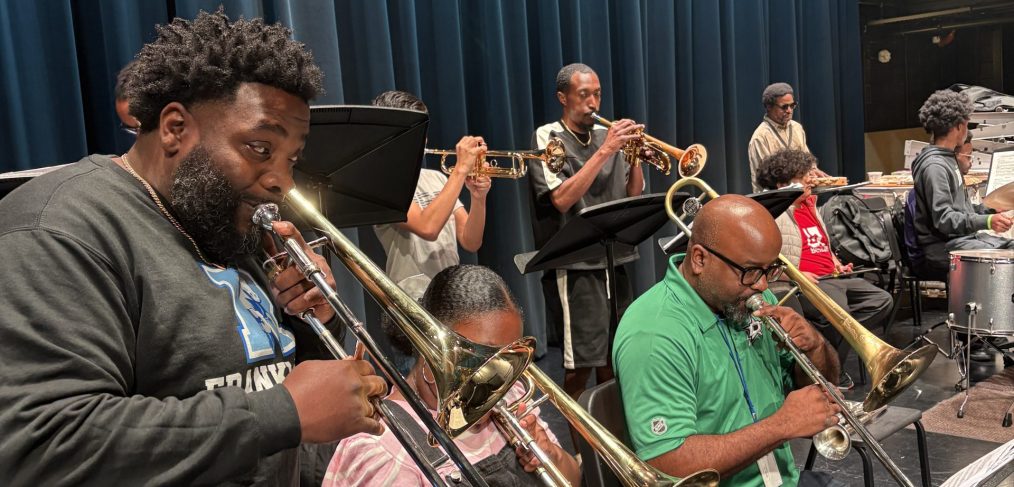
  • Aaron Crawford: Young Men’s Leadership Academy at Fred F. Florence Middle School, Drumline
  • Denise De La Cruz: Leila P. Cowart Elementary School, Life Skills Café Club
  • Devlin DeCutler: Marvin E. Robinson School of Business and Management at Yvonne A. Ewell Townview Center, Music Production Course
  • Katrina Espinal: Jack Lowe Sr. Elementary School, Love Folklorico Club
  • Carlos Estrada: Julián T. Saldivar Elementary School, Little Scholars Wellness Club
  • Robin Fall: W.H. Adamson High School, 2026 Unified Champions: Inclusive Golf & Simulation Lab Excellence through Extracurriculars
  • John Fore: Young Women’s STEAM Academy at Balch Springs Middle School, Beyond the Classroom: The Jaguar Den Student Enterprise Program
  • Amber Holmes-Turner: Hillcrest High School, Panther Leadership Lab: Igniting School Spirit & Student Engagement
  • Rebekah Ickes: Lida Hooe Elementary School, School Music Explorers Club
  • Allen LaPoint: Celestino Mauricio Soto Jr. Elementary School, Music Makers
  • Maria Malagon: Pre-K Partnerships, Little Cheerleaders
  • Minerva Morales: Maria Moreno STEAM Academy, Yoga Kids
  • Martha Mouret: Edwin J. Kiest Elementary School, Performing Arts & Design Club
  • Pamela Murtuza: Arturo Salazar Elementary School, Green Team
  • Julie Nicotra: Moisés E. Molina High School, Student Led News Station
  • Ramicia Paul: Eddie Bernice Johnson STEM Academy: Pages to Podcast Club
  • Alejandro Rodriguez: Edwin J. Kiest Elementary School, Modern Band Project
  • Leesonia Rutledge: William Brown Miller Elementary School, Mic-Drop Literacy: Digital Storytelling
  • Debora Vazquez: Thomas L. Marsalis STEM Academy, Roots & Wings: A Sustainable Garden & Hydroponic Co-op
  • George Wilcox: South Oak Cliff High School, BBQ Team
  • Shinea Wright: Buckner Terrace Montessori, STEM LAB is STEAMING UP!!

Helping students navigate a visual world

Britney Cooks, a mobility therapist in the Vision Program Department, steps into work every day with a clear sense of mission: open doors, expand worlds, and prove that blindness does not limit a child’s potential.

Cooks works in a department that serves a small population but makes a big difference. Across Dallas ISD, the Vision Program supports 145 students with visual impairments. Spread over 46 campuses, the students have different needs, such as the 20 students who are completely blind, learning to navigate a world that was not designed with them in mind. Another 76 students receive orientation and mobility services, practicing how to move safely and confidently in hallways, neighborhoods, and city streets.

Cooks shares the responsibility of serving the entire district with three other colleagues in the O&M team: Barbara Mitchell, Briana Clarke, and T’Shaunda Davis. 

“People hear ‘vision services’ and think of glasses or eye exams,” Cooks said. “But our work is about teaching students how to move through the world on their own terms—how to cross a street, get on a bus, find a classroom, and believe, ‘I can do this without someone holding my hand every second.’”

Her students range from tiny toddlers learning to crawl toward a sound, to high schoolers planning their first solo trip on public transportation. On any given day, Cooks might be teaching a child how to safely explore a playground, coaching a middle schooler to navigate a crowded hallway with a white cane, or helping an older teenager memorize bus routes to a part-time job.

“What we’re really teaching is confidence,” Cooks explained. “The cane is a tool. The route is a skill. But the goal is that moment when a student says, ‘I don’t need you to walk next to me anymore. I’ve got it.’ That’s when we know we’ve done our job.”

They support students both at a practical and emotional level, she said. Many students with visual impairments are the only ones on their campus. They rarely hear of another student using a cane or requesting large print materials. The pressure to blend in can be intense.

“Imagine being the only person in your school who uses a cane,” Cooks said. “A lot of my students will hide their tools or avoid asking for accommodations because they don’t want to stand out. My job is to show them that their tools are not a weakness; they’re a superpower.”

To combat isolation, Cooks and the O&M team organize events that bring students and families together. From a beeping egg hunt at Easter to Baby’s Day Out for infants and toddlers with visual impairments, these gatherings give students a space to practice skills and feel a sense of belonging.

“We want our students to be in a room and think, ‘I am not alone. There are other people like me, and we’re all figuring this out together,’” Cooks said. “When they meet peers who use canes, who advocate for themselves, who are proud of who they are—that changes everything.”

A big part of Cooks’ work is focused on teaching students to protect their autonomy. She runs roleplay scenarios where students practice what to say when someone grabs their arm without asking, moves their cane, or speaks to an adult instead of to them. Cooks said that students practice phrases such as “please don’t touch me without asking” or “talk to me directly” to assert a sense of autonomy and claim recognition from others.

However, her advocacy extends beyond students to the broader community. She urges adults to start with respect and communication when interacting with someone who is blind. 

“When you walk into a room, make sure that you greet the person there, or let them know that you’re there,” she advised. “Always introduce yourself, and always ask if you can touch their cane or their body or their guide dog.” 

Cooks has also become an advocate for early mobility. Working with infants, she saw that many blind babies were late to crawl because they are carried to where they want to go. She went searching for a solution and discovered Crawligator, a tummy-time mobility device originally designed for babies with flat head syndrome. She immediately recognized its potential for her students.

“For blind children, the world only exists through touch. The Crawligator helps them get into a crawling position so they can independently explore their environment,” she explained. “It’s opening up not only a door to them being mobile, but to their vocabulary.” A partnership with Crawligator founder Stacey Kohler has brought the device to nearly 30 Dallas families, with plans for larger sizes and wider distribution. 

Despite the long drives between 46 campuses and the constant juggling of schedules, Cooks remains energized by the moments most people never see: a student who finally trusts the cane enough to walk at a normal pace, a family who stops hovering and starts cheering, a young adult who texts to say they made it to college orientation on their own. 

To her, mobility isn’t just about getting from point A to point B; it’s about access to education, employment, friendships, and full participation in life.

“Those victories might look small to someone else,” Cooks said, “but they’re everything to us. “Our students’ vision may be limited,” she said, “but their direction, their dreams, and their future are not.”

Finding inspiration in students

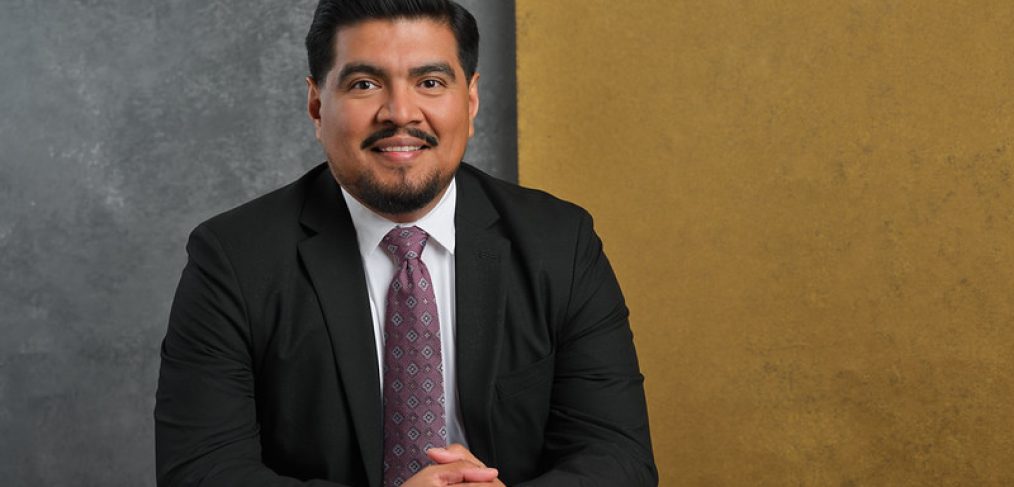
Adrian Hernandez, principal at North Lake Early College High School, keeps a single Post-it note on his computer monitor. The ink is fading a little, but the message isn’t. It’s a simple “thank you” from a student who almost gave up senior year.

he student dropped out and disappeared. Hernandez and his team went to find him. And they convinced him that finishing high school and an associate’s degree was worth the fight.

“I told him, ‘I totally understand your position, but if we finish this right now, it’s something no one can ever take away from you,” he recalled.

The student came back, but it wasn’t a smooth ride. He struggled, pushed through, and walked the stage with both his Dallas ISD diploma and an associate’s degree. Now he runs his own landscaping business.

“The Post-it reminds me why I do this work,” Hernandez said.

Hernandez’s story starts in Dallas ISD classrooms. He enrolled in the district in third grade at Leila P. Cowart Elementary School, went on to L.V. Stockard Middle School, and graduated from Judge Barefoot Sanders Law Magnet at Yvonne A. Ewell Townview Center in 2002. 

Hernandez admitted that education had not crossed his mind, but it took criminal justice instructor Severo Perez at Barefoot Sanders to nudge him toward the classroom.

“He told me after I graduated from college that I would be really good at teaching, and that’s when I began to really consider it.”

Hernandez spent five or six years in the private sector before realizing that the time he spent volunteering and working with students was the part of his week that felt most meaningful. He completed an alternative certification program, took a job working with dropout prevention students, and discovered he loved the work, especially the in-between moments—conversations, check-ins, the slow build of trust.

Years later, that quiet work is being recognized publicly. At this year’s State of the District event, Hernandez was announced as Principal of the Year for Choice/Magnet schools, a moment he still describes as “surreal.”

“I never in my wildest dreams imagined that I would be here,” he said. “This award is for my students and staff.”

Now as principal, Hernandez leads a campus that is reinforcing the expectations for what a Dallas ISD student can achieve. Under his leadership, North Lake has maintained an A rating and sits in the top 10% of schools in Texas.

Hernandez said the model itself is demanding. Students arrive as ninth graders and step into a blended schedule: traditional high school courses are paired with college classes taught by Dallas College professors. By junior and senior year, most of the students’ coursework is dual credit.

The reality of early college, however, can be jarring for freshmen who underestimate the academic rigor, or don’t yet know how to navigate email etiquette and time management.

“We progressively monitor our students every week,” Hernandez explained. “If we see any kind of drop in their grades, that’s when our interventions come into place. The teacher makes contact with the parent, and then we also just talk to the student. Did they just have a bad week, or is this something that they’re not understanding?”

Hernandez is very clear about how he wants students to see him.

“I don’t want them to see the principal as a disciplinarian but rather as somebody who’s just making sure that they’re successful across all facets of their educational journey here,” he said.

From the outside, early college might sound like a gated opportunity reserved for high achievers, but North Lake’s admissions process undercuts that assumption. There are no GPA cutoffs and no test-score thresholds. Admission is based on a student interview and a rubric, then a lottery.

Last academic year, around 400 students applied for 100 spots.

Hernandez is honest about the tension between demand and capacity. He wants more students to have access to what North Lake offers: small classes, bus transportation for about 90% of students, and a program that intentionally recruits from underrepresented schools.

“We have pipeline schools, and we also focus on schools that are underrepresented traditionally in choice and magnet programs,” he said. That means lunchtime visits, presentations on campuses, and open houses at North Lake so students and families can see the place for themselves.

For many of his students, the results are life-altering in very concrete ways, he said. Students  graduate, on average, two years ahead of their peers and save about $40,000 in college tuition. His last graduating cohort—77 students—earned over $25.5 million in scholarships and grants. Two students received full-ride scholarships to Davidson College. This year’s valedictorian, also the school’s first National Merit Scholar, is starting classes at the University of Edinburgh in Scotland in the fall.

As the son of Mexican immigrants and a native of the same part of Dallas as many of his students, Hernandez leans on that shared experience to build trust, especially with families who may not have seen college as a realistic path.

“Speaking to our Hispanic families in Spanish helps build buy-in because we can support them and walk them through the process,” he said.

On campus, Hernandez’s visibility is intentional and consistent. He’s in the hallways in the mornings and during passing periods, in the cafeteria at lunch, talking about everything from coursework to sneakers to sports. When he’s off campus for training, students notice.

“It sets them in place for a successful day,” he said of those routines.

Even while leading an A-rated campus and being named Dallas ISD Principal of the Year for Choice/Magnet, Hernandez is back in the student seat himself. He recently started work on a doctorate in education at the University of Oklahoma, with one big question circling in his mind for a potential dissertation: how to ensure that every student who starts at North Lake finishes.

“My goal is 100% freshman-to-graduation retention in each cohort,” he said. “Beyond that, I want Blue Ribbon recognition, a larger facility, and for North Lake to be one of the first names parents think of when they consider early college options in Dallas.”

He doesn’t frame this work as heroic. Instead, he circles back to his students, his staff, his family—and that Post-it on his computer monitor.

“I want to be remembered as an educator that worked incredibly hard for students to have a voice, for students to have the ability to do things that they otherwise may have not had the opportunity to do,” he said.

Your summer plans

Whether teaching summer school or going on learning trips themselves or traveling with family, Dallas ISD team members are planning for a great summer. Some are undergoing procedures for their health or holding summer jobs different from their regular work. Here are a few team members’ plans:

This summer, I am planning to take a trip to New York and Destin, Flo., with my family. City lights and beach days ahead! 

Briana Garraway
Ed Tech Enterprise Support Services

June and July, I shall be in Kärnten, Austria, the homeland of my heart, as I am every summer. 

Catherine Knight Duncan
Charmaine and Robert Price Career Institute 

Most excited about visiting Washington, D.C., for the museums and historical landmarks. Attending The Caring For Every Mind conference and enjoying the long summer days with friends and family. 

Shakirae Ajaga
George W. Truett Elementary School

This summer, we plan to celebrate our 25th wedding anniversary with a romantic cruise through Fiji and Tahiti. 

John Fore and Julie Fore
Young Women’s STEAM Academy

I’ll be attending a workshop event at the University of Iowa called Frogamans Printmaking for a week. I am very excited about building on my experience and hope to learn a new trick or two. 

Jessica Raff
Booker T. Washington High School for the Performing and Visual Arts

Traveling to see Harry Styles in Europe, going to see the World Cup in Dallas and Kansas City, and taking the Sue Rose Summer Institute course at Southern Methodist University. 

Marian Porras
Hogg New Tech

I will be traveling quite a lot this summer with my husband and friends. The first trip is Spain and Scotland with my husband. Next, it’s Los Angeles to visit my childhood best friend. Last is Tulum, Mexico, with a few friends. I will also periodically be going to Houston to visit my family.

Nataly Rodriguez
David G. Burnet Elementary School

I am among fifteen U.S. high school teachers who have been selected to participate in the 2026 GenEd Teacher Fellowship Program. The Fellows receive intensive, specialized GenEd training in Armenia this summer. 

Mirshish Boyd
W.H. Adamson High School

I’m looking forward to a summer filled with sisterhood, travel, and quality time with family. My mom and I—both proud Dallas ISD employees—are planning a girls’ trip to Las Vegas to attend the 72nd Boule for Alpha Kappa Alpha Sorority, Inc.® We’re excited for a week of connection, service, leadership development, and all things pink and green! Between conference events, inspirational sessions, and a little Vegas fun, we’re making the most of our summer break while celebrating the impact of education, sisterhood, and service. It’s the perfect way to recharge before another amazing school year begins. 

Natalie Richards
School Leadership-LEAD

I’m guiding a wilderness therapy retreat at Lake Tahoe. The retreat title is “Digital Detox.” 

Tami Gilmore
Mental Health Services

I was awarded a $5,000 Fund for Teachers fellowship. I will travel through Indonesia to study volcanic succession, island biogeography, and biodiversity across the Wallace Line. By documenting forests and land use from Krakatoa to Maluku, I will create place-based AP Environmental Science case studies that deepen students’ understanding of evolution, succession, and conservation. 

David McLoda
School of Science and Engineering

I will be offering a workshop to Dallas ISD art teachers and one to adults in the community in June. Then, my husband and I will go to Italy for the month of July. I will take long walks to the port, drink Americano, eat the greatest pizza, and visit with friends and family.

Stacy Cianciulli
L.O. Donald Elementary School

I won a grant from the National Education Association to travel to Spain to participate in professional learning while preparing bilingual literacy and STEM resources.

Katharine Joss
Gabe P. Allen New Tech Academy