Making Dallas ISD home
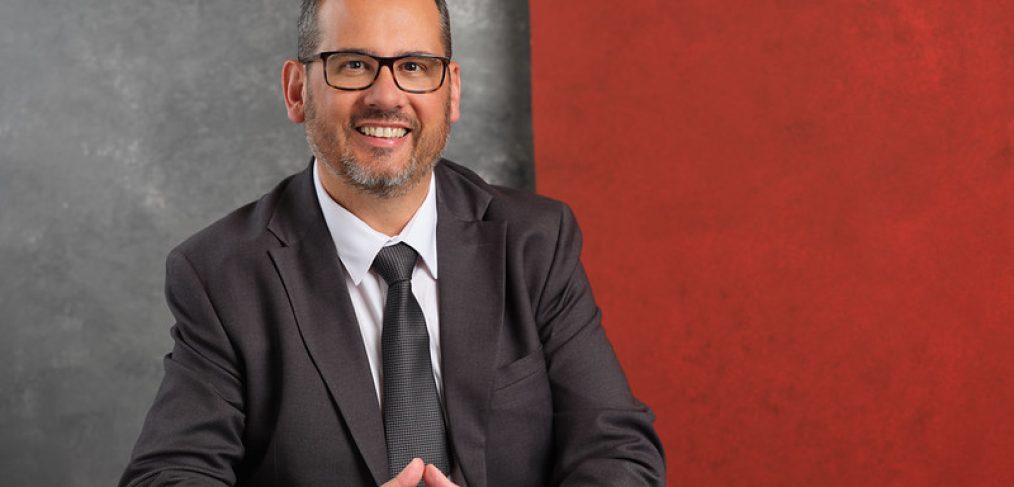
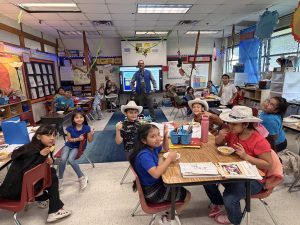
When Miguel Fijó Mezquita walks into his second-grade classroom at Annie Webb Blanton Elementary School each morning, he doesn’t start class with a textbook or a test prep question. He starts with feelings.
He and his students sit together in a circle and share their “rose and thorn” of the day—one good thing and one hard thing. In a matter of minutes, Fijó learns who is excited, who is frustrated, and who may need a little extra support before the school day begins.
That deep sense of care is one of the reasons he was named Elementary Teacher of the Year at this year’s State of the District, and why so many children and families remember him long after they leave his classroom.
From the very beginning, Fijó knew teaching was a vocation he could not ignore.
“All my life I’ve dedicated myself to children,” he said. “Since I was very young, I realized I liked helping.”
 He grew up and trained as a teacher in Spain, where he worked in a bilingual school with students whose first language was not Spanish. Over time, his desire to grow pushed him toward the life-changing decision of accepting an opportunity through the Spanish Ministry of Education to teach in the United States.At first, Texas was almost a mystery.
“I only really knew Austin and Houston,” he remembered. “So when they selected me for Dallas, I didn’t really know where I was going.”
Fijó and his wife decided to treat it as a three-year adventure. She left her human resources job; he took a leave from his teaching position in Spain. They thought they would gain experience, learn a lot, and then go home.
But life had other plans.
“After the first three years, the district told me they wanted me to stay,” Fijó said. “They said they were offering me the possibility of remaining here because of the impact I was having on the children.”
Visa processes, waivers, and residency eventually followed. Thirteen years later, DFW is no longer just an experiment. It’s where his sons are growing up, where his students greet him each morning, where he has built a life. In his classroom, Fijó blends the best of two educational worlds.
“In Spain, for every subject we had pedagogical materials prepared for us,” he explained. “In that sense it was much easier.”
In Texas, especially at first, those materials didn’t exist in the same way. He had to build resources from scratch and adapt to a different curriculum and system. Instead of being discouraged, he took it as a creative challenge. Over time, programs like Amplify gave him more structure without limiting his style.
“The lessons give you a guide, but they are flexible,” he said. “I teach the lessons in my own way, but at the same time I follow the curriculum properly.”
Fijó uses music to teach grammar, spelling, even sentence structure. Concepts that could feel dry—like subject, verb, and complement—turn into something kids can sing, dance to, and remember.
“If you only teach it as direct instruction, students don’t always apply it,” he said. “Through the song, they are able to do it.”
Families are also a part of Fijó’s circle of care. Early in his time teaching fourth grade, he became determined to bring parents closer to the classroom. To do this, Fijó uses a daily reading log not as a chore, but as a bridge between home and school.
“I don’t want my students to read only for a test,” he said. “I want them to read because through reading you learn. The book is a tool for learning, an opportunity to bond with parents, not just something you use for an exam.”
Outside class time, Fijó often finds himself surrounded by Lego pieces and excited voices. As a longtime coach for First Lego League Challenge, he has watched robotics change how students see themselves.
“I’m not on top of them telling them what to do,” he explained. “They solve problems on their own, and my role is to guide them when they have questions.”
Some of the children who shine the brightest in robotics are the same ones who once felt uncertain or discouraged in traditional lessons.
“They feel freer and can develop their potential,” he said. “Their self-esteem grows.”
At the core of Fijó’s philosophy is a belief in the power of a positive attitude, authenticity, and meaningful experiences. Even his advice to new teachers is rooted in identity.
“You have to be yourself and make the classroom your own,” he said. “The most important thing is your attitude, because you can’t always change the work or the challenges, but you can choose how you show up for your students every single day.”
For him, teaching is ultimately about creating learning experiences that students will carry for life.
“I want them to remember their time with me as a time when they were helped, listened to, and knew they could always count on me,” he said.