Students motivate teacher running for national honor

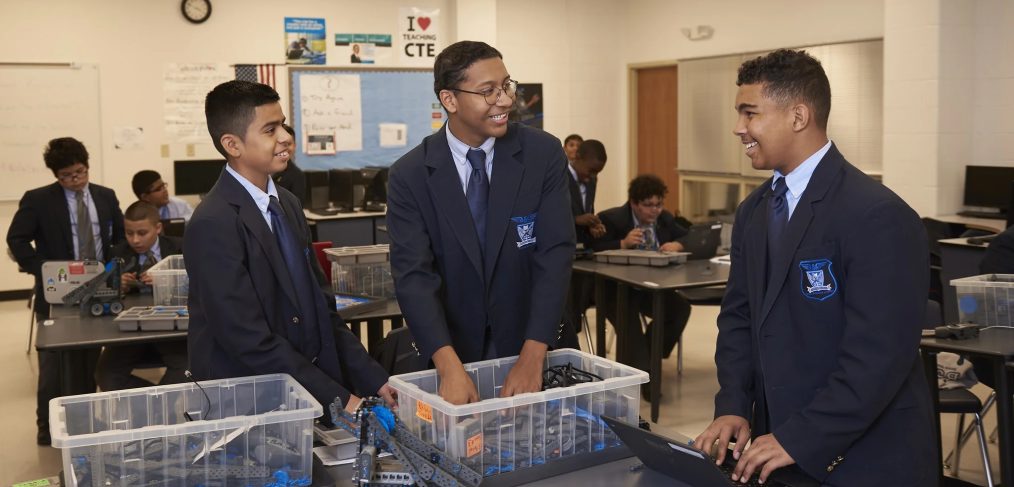
When Shirley Preyan walked into a sixth-grade classroom at Young Men’s Leadership Academy at Fred F. Florence Middle School right after spring break in 2023, the students didn’t bother to hide what they were thinking.

“The boys were like, ‘Why are you here? Like, school is almost over. Why are we getting a new teacher?’” Preyan recalled.

Most educators would have taken that as a negative sign. Preyan, however, took it as confirmation that she was exactly where she was meant to be.

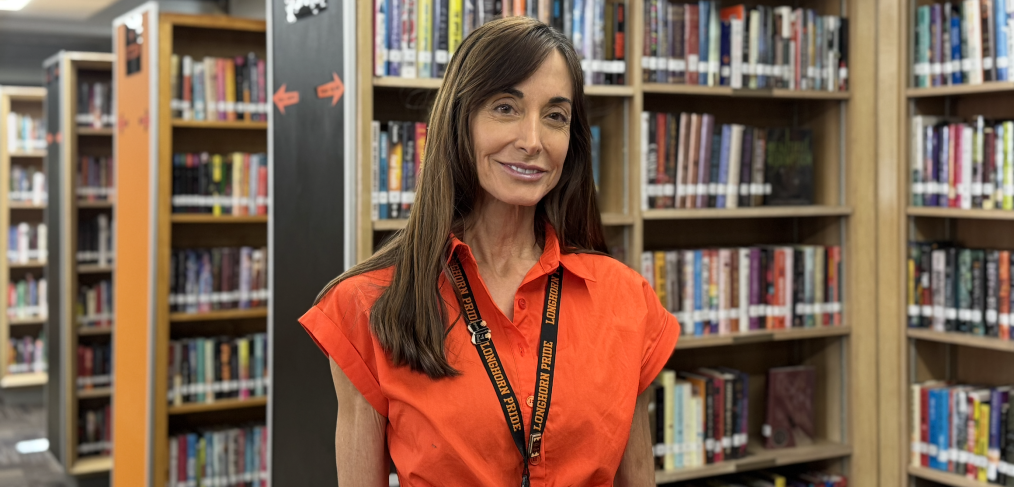
Now, after 14 years in Dallas ISD, including three at Young Men’s Leadership Academy, Preyan is in the quarterfinals for America’s Favorite Teacher, a national, multi-round competition decided largely by public votes. She’s already advanced through five rounds, going from a field of 100 down to being the top vote-getter in her group.

“I started in a group of 100 teachers and had to make the cut for the top 40, then 20, 10, and five, until I was finally number one,” Preyan said. “I was like, ‘Oh my gosh, this is so crazy.’”

Now, the quarterfinals stand between her and a shot at the title, a $25,000 prize, a trip to Hawaii, a feature in Reader’s Digest, and what she cares about most: a schoolwide assembly with Bill Nye.

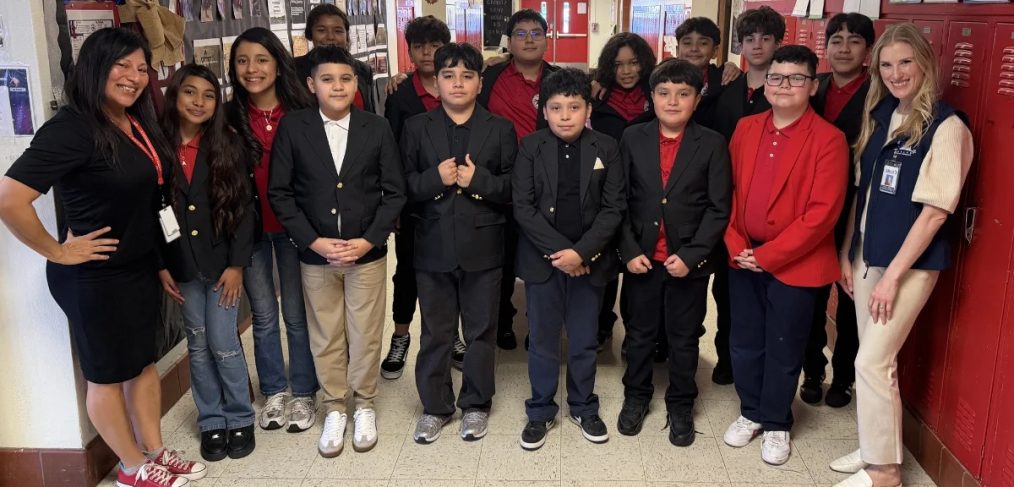
“I can’t wait for the kids to have that assembly,” Preyan said. “I want them to know great teachers are motivated by great students, and I want them to have the cameras on them to see, ‘Look at these amazing students, these amazing boys, who have been so resilient in the turnaround years of this school.’”

Preyan is originally from Detroit and came to Dallas in 2012 as a Teach for America corps member, entering the district through an alternative certification program. The moment she stepped into a classroom, something shifted.

“Once I got in the classroom, I was obsessed. I was like, ‘How could I ever do anything else in my life?’” she said. “And I knew in that second year, this was something I’d be doing long term.”

Preyan taught at Benjamin Franklin International Exploratory Academy for three years, then at T.W. Browne Middle School for another three, serving as a teacher, instructional coach, and assistant principal. After that, she helped co‑found Ignite Middle School and worked there for five years as an assistant principal.

Then life changed: she had a daughter and stepped away from work for a year. When it was time to return, the pull was clear.

“All I could think about was teaching,” Preyan says. “Coming back to teaching has been the best experience for me.”

Her sixth-grade classroom at Young Men’s Academy runs on a set of shared values the boys recite daily: productivity, literacy, urgency, community, plus additional values the boys bring to the table). Productivity, Preyan said, is non‑negotiable.

“P is the first value and stands for productivity. They have to try first,” Preyan said. “I always make it safe for them to try, and I never back off the expectations. The boys always meet me there.”

Underneath this is a deeply intentional structure designed for middle school boys who, Preyan believes, are too often misunderstood.

“Boys can be easily overlooked, especially in middle school, even though they are experiencing so much change,” she said. “When we see them only for their choices and decisions—rather than their potential—we aren’t truly seeing them at all.”

That mix of high expectations and relentless care comes from a life that has taught her exactly what school can mean. Preyan grew up in the foster care system. She was adopted and “unadopted” twice, moved through six foster homes and two group homes, and learned early that stability was never guaranteed.

“Growing up in the foster care system, school was my place of safety,” she said. “It was where I knew I would be safe, and I had really amazing teachers who took great care of me. Some of them knew that I was in foster care, and some of them didn’t. It didn’t matter to them.”

Those teachers changed the trajectory of her life, which is why she talks about teaching with the urgency of someone who has seen the alternative. 

“It restored my deep belief in the importance of boys’ education and how much they deserve great teachers,” she remarked.

Preyan’s care for her boys doesn’t stop at the classroom door. Several times a year she sends parents bilingual, highly personalized progress letters, outlining what she notices about each student, where they are academically, and what goals they’re working toward. 

“I send this home to them multiple times throughout the year,” she said. “Parents appreciate seeing recent scores and trends laid out clearly.”

Every Christmas, she also prints and sends home a photograph of each sixth grader—never just a text message, always on paper—capturing them in a moment of effort or pride.

“We stop praising boys much too early in their lives,” she noted. “I never miss the opportunity to tell them how amazing their boys are.”

Preyan’s goal is not perfection, but growth from even the smallest starting point.

“Even if I only had a little bit to give, I hope the boys remember I took that and helped them grow from it,” she said.

To cast your vote for Shirley Preyan, click here

To vote for Soujanya Veeravalli, also an America’s Favorite Teacher quarter finalist and math teacher at Dr. L.G. Pinkston Sr. High School, click here.

Mastering science through the art of publishing

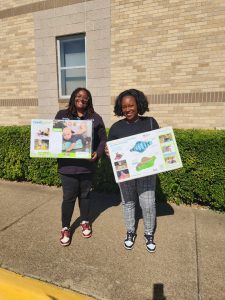
In the aquatic science class at W.T. White High School, juniors and seniors aren’t just learning about water chemistry and physics—they’re publishing reports about their own experiments. For aquatic science and integrated physics and chemistry teacher Sarah Novoseletsky, writing isn’t an add-on to science; it’s a core part of how students learn and see themselves.

The idea reaches back to Novoseletsky’s own childhood in Colorado. 

“The fourth-grade class at my old school made a book about our hometown,” Novoseletsky recalled. “I still have it, and it’s fun looking back at what my classmates wrote. It’s just memorable.”

Years later, when Novoseletsky saw an online advertisement for Studentreasure, a student publishing program, that memory resurfaced—and turned into action.

“I thought, ‘Oh, this is really cool,’” she said. “It’s something that gives students more writing practice and teaches them to edit—it just gets them more interested in writing and literacy.”

The students in Novoseletsky’s aquatic and physics class begin the research process months before any actual writing happens. Around October, students set up the fish tank and learn water chemistry, properties of water, and the nitrogen cycle.

During this initial phase, Novoseletsky encourages her students to keep binders filled with notes, questions, and short written responses connected to the aquarium and related concepts. Only later do these become the raw material for their book chapters.

“I tried to center everything we did in the first semester around the aquarium,” Novoseletsky explained. “When we came back for the second semester, we picked our topics and wrote our paragraphs. It was a review, too; they had to go back, look at what they wrote, and relearn it.”

Rather than simply assigning topics, Novoseletsky has the whole class do the full range of work—and then lets them choose what to “master and perfect” for publication.

“We do the work, and then I give them a sign-up sheet so they can choose the paragraph they want to master, perfect, and put into the book,” she said. “We complete the project, and then we do the ‘perfection writing’ for the book at the end.”

The result is a collaborative book that reads like a guided tour through the classes’ learning journey—from cohesion and water chemistry to nitrogen cycles and motion graphs.

Of course, like many classroom projects, this one doesn’t always start smoothly.

“The first group I did this with were sixth graders at Piedmont Global Academy, where I taught for six years,” Novoseletsky said. “The children were like, ‘Why do we have to do this? This is silly.’”

Back then, students didn’t have Chromebooks, which meant that every piece had to be handwritten and often rewritten. Students revised multiple drafts, and Novoseletsky spent hours before school helping them catch up and refine their work. 

At times, the process felt grueling, but when the printed books finally arrived, attitudes changed in an instant.

“I held up my sixth graders on their way out the door and asked, ‘What came today?’ Their eyes grew wide, and they all came running over, wanting to look at their work,” she said. “They were like, ‘Oh, okay, so this really was cool after all—we just didn’t want to admit it.’”

High school students may act similarly unimpressed, but Novoseletsky reads their reactions differently.

“High schoolers are always so nonchalant about it. They’re like, ‘Okay, yeah, whatever, miss.’ But then they all want to see their work in the book,” she said. 

When it dawns on students that their writing and illustrations will be bound and shared, they set out to raise the standard for their own work.

“They want their work to look nice,” Novoseletsky noted. “For instance, when students realize their colored-pencil drawings don’t scan well, they are always willing to go back over them with markers to finish them.”

Because many of Novoseletsky’s students are English learners and newcomers, she designs the writing process to support them with structure, not overwhelm them with open-ended tasks.

“I have a lot of ESL students in my class, so I use sentence stems to help them write,” she said. “After we do a few together on the board and brainstorm ideas off to the side, they have the foundation to fill in the paragraphs on their own.”

Once Novoseletsky receives a copy of the printed book, she has each student read his or her contribution aloud to the class. This, she said, builds a classroom culture where risk-taking with language feels safe.

“I try to read Spanish every now and then, and they all laugh at me,” she said. “I tell them, ‘If I can stand up here and embarrass myself trying to read Spanish, you can try to read in English.’ We’re all in the same boat.”

Over time, she sees their confidence grow. 

“It’s a lot of extra work, but it’s rewarding because I see their confidence building,” she said. “They start doing the work, they think to do it more on their own, and they simply try harder.”

Yet, for Novoseletsky, the books are more than a product; they’re a reflection of her entire philosophy of teaching.

“I want them to remember that science class is fun and exciting,” she said. “That’s the biggest thing—having fun in science and learning through hands-on, interdisciplinary projects.”

Keeping the campus healthy and safe

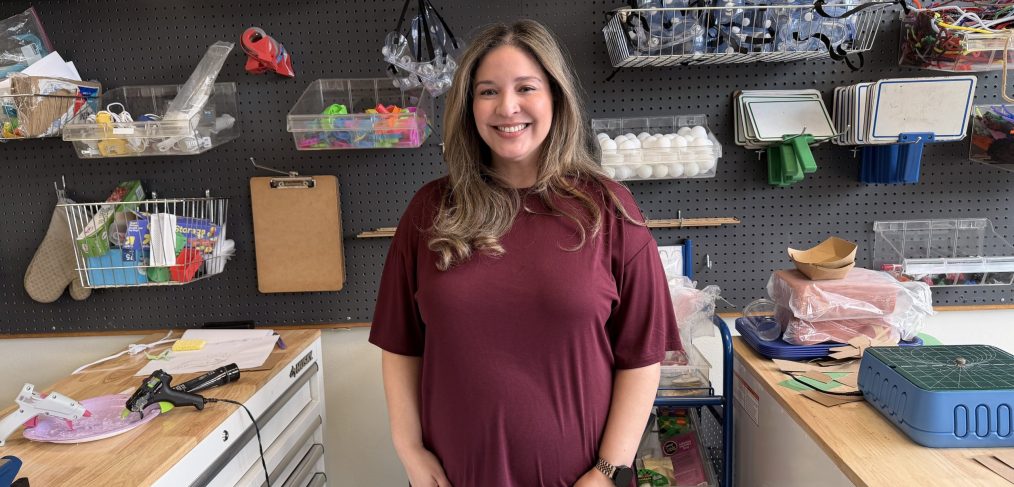
Meghan Royal, nurse and safety coordinator at the School for the Talented and Gifted in Pleasant Grove, will tell you she doesn’t like talking about herself. She calls herself a helper, someone who’s more comfortable taking care of others than being in the spotlight. But when she starts talking about her students and her school, it’s clear why she deserves recognition.

National Nurses Day on May 6 recognizes the work nurses perform every day to improve the health and well-being in their communities, and for school nurses, of their schools. 

Before she ever stepped into a school clinic, Royal had a very different career. She was a systems analyst—a job she said she enjoyed very much. Still, something kept tugging at her. Healthcare was in her DNA. 

“I come from a family of healthcare providers,” Royal explained. “My father and grandfather were both pharmacists—it’s just that sort of family.”

For a while, pharmacy seemed like the obvious path for Royal, but the field was changing.

“It was during a time when pharmacists were moving away from owning their own drugstores,” she said. “It was becoming more of a CVS or Walgreens situation.” 

Royal wanted something more personal, more hands-on, so she decided nursing was really the best path, she said. She went back to school at Texas Woman’s University, finished her degree, and started out in psychiatric nursing.

Then life shifted again. Royal became a mom.

“My daughter is the light of my life,” she said. “I realized our time with our children is fleeting. What feels like a regular Tuesday to us is actually a core memory for them.”

The idea that an ordinary Tuesday could become a core memory stayed with Royal. Hospital shifts and summers spent working didn’t fit the kind of presence she wanted to have in her daughter’s life. School nursing did.

When her daughter started kindergarten, Royal moved into a school clinic at Seagoville North Elementary School, working with a team she described as a wonderful group of people and a campus full of little ones.

She loved it—the kids, the community, and the feeling that everyone pulled together for students, she said. But then came COVID-19.

“There was something about that time when all the kids were wearing masks; it felt less personal,” she remembered. “That was the saddest time.”

As her elementary students grew up and moved on, and as her own daughter got older, Royal started to feel like it might be time for a change too. Middle school suddenly didn’t seem so intimidating; it felt like the next step.

A nurse supervisor mentioned an opening at TAG in Pleasant Grove and encouraged Royal to apply. When Royal sent in her résumé, she didn’t expect much right away. 

“Forty‑five minutes after my résumé went out, Principal Reymundo Guajardo Cervantes called me,” Royal recalled. “He’s like, ‘We’d love to have you.’” 

Although she had never even seen the campus, she had heard all the wonderful things about it. Royal took a leap of faith and accepted. Now, years later, Royal knows she made the right call. 

“This is my third year at TAG, and I just absolutely love it. It’s a wonderful place,” she said.

The kids she sees there are high achievers, driven, and often hard on themselves. But their stress doesn’t always look like stress at first. 

“You’re going to experience more stress,” Royal said. “A stomachache can easily be a sign of, ‘Oh, I’m so worried about taking this test.’”

Around big exams like STAAR, students go to her office complaining of headaches, nausea, or stomach pain. Sometimes the real need isn’t medicine—it’s a moment to breathe and someone to listen. 

“Sometimes it’s not even about nursing,” she explained. “It’s simply about being someone who truly sees them.”

There are days when a student comes in with “a little headache” and ends up sitting with her for 20 minutes, just talking. By the time they leave, they feel better, Royal said. She doesn’t downplay it or make it sound extraordinary, because to her, it’s just part of caring for the kids.

Her care doesn’t stop at the clinic door. Royal is also the school’s safety coordinator. What started with her quietly checking AEDs and Stop the Bleed kits turned into coordinating fire drills, leading safety meetings, and even starting a student safety club. She and her students walk the campus together, looking for loose bars on the playground, issues with the turf, or anything that might put someone at risk. 

Their work earned the school Dallas ISD Risk Management’s Safety Eagle Award in 2025 and a monetary incentive. 

“I think more schools should participate, as they give out an award every year for campus safety,” she said. “It was really helpful. I used the funds to restock bandages for the clinic and buy raincoats for the staff to wear during arrival and dismissal. We were even able to get extra radios, which are incredibly useful during testing.”

Royal’s success, whatever her title, is based on her belief that relationships are at the core of her work. She greets students in the morning, calls parents often, and wants families to feel their children are known and loved. 

“I want them to know I care—that we’re here for their kids,” Royal said.

For Nurse Appreciation Week, Royal expresses her gratitude to the Health Services Department for their constant support and camaraderie.

“We’ve got this. I love that we can call each other and be there for one another,” she said. “Especially during COVID, we really bonded as a team. Health Services is such a great group. We’re blessed to have each other, and I’m very grateful for that.”

Everyone appreciates teachers

Teachers are the engine that makes schools run, and on May 5-8—National Teacher Appreciation Week—local and national businesses in the community are taking the time to thank them for all they do to make sure children have brighter futures. Some are concentrating their efforts on National Teacher Day, which takes place on May 7.

If you want to thank a teacher, the National PTA has created a special thank you card that can be downloaded here

If you are a teacher and a RaceTrac rewards member, you can get a free Dunkin Iced Coffee and a breakfast sandwich May 4-8. Look at the flyer for details. 

The Texas Rangers are hosting Teacher Appreciation Day at the ballpark to recognize teachers for their dedication and the impact they make in our community at 1:30 p.m. on Sunday, June 7. Buy tickets now and enjoy a great day presented by Texas Lottery. Tickets purchased through this offer include a custom Rangers Teacher Appreciation hat. https://www.gofevo.com/event/Teacherappreciation283

Half Price Books gives teachers and all educators a 10% discount on all purchases year-round with the Educator Discount Card.

Michaels also appreciates teachers year-round a 15% discount on both in-store and online purchases after verifying your educator ID online through the Michaels Rewards program.

Apple offers an education discount on their products when purchased at their stores or online. 

By joining the Star Teacher program, Office Depot offers teachers a variety of benefits and discounts. Check them out at https://www.officedepot.com/l/rewards/teachers

By enrolling in the Classroom Rewards program at Staples, teachers can  earn 5% back in rewards on purchases made by supporters (parents/community) and 2%–5% on their own purchases. Must register through the app. 

Bryan Adams expands student support 

Bryan Adams High School is focusing on creating a safe and supportive environment by prioritizing students’ mental, emotional, and physical well-being. As a recipient of the Stronger Together Grant, the campus has strengthened schoolwide systems of support, leading to increased student engagement and success. 

“The grant was specifically designed to decrease acts of hate and violence while increasing support for students’ overall well-being through mental health and safety resources.” said Principal Sarah Foster.  

Now in its second year, the grant is guided by campus data. Bryan Adams has one of the highest numbers of mental health referrals in the district, with many students self-referring to receive support from a clinician. 

“Our teachers are acutely aware of students’ needs,” Foster said. “As a campus, we have one of the highest number of students being seen by a clinician.”  

In the first year of implementation, Bryan Adams saw a 56% increase in students self-referring for mental health services and a 20% percent increase in individual counseling sessions, totaling 3,600 sessions. 

According to the campus clinician, students have even begun bringing their friends to the office, recognizing when someone may simply need someone to talk to.  

This progress is driven by a focused approach built on three key areas: mental and behavioral health, supportive discipline, and systems and structure. 

To meet growing student needs, the school used grant funds to hire an additional mental health clinician, expanding access to services.  

The grant also funded Yondr pouches to limit cellphone use during the school day and supported a telehealth partnership with Hazel Health, helping address students’ physical health needs. 

As one of the first campuses in the district to implement Yondr pouches, Bryan Adams has seen how limiting cellphone use can support student’s overall well-being.  

“Sixty to 75% of bullying is now cyberbullying,” Foster said. “We knew that if we could limit access to cellphones during the school day, students would be more engaged in their academics. We also anticipated an increase in overall student safety, along with a decrease in discipline issues and behaviors related to mental health concerns.”  

Bryan Adams maintains a strong focus on student well-being. The counseling program, led by Kathye Jackson-Porter, received the 2025 CREST Award from the Texas School Counselors Association. 

Donna Deadman, 10th-grade counselor, also played a key role in implementing the Stronger Together Grant, working alongside the team to build strategies that support students and strengthen school culture.  

“At Bryan Adams, we want students to have the confidence and skills to seek and solve complex problems in the world,” Foster said. “Seeing them involved, confident and growing beyond the classroom is more than we can ask for.” 

For three consecutive years, Bryan Adams has been recognized as a No Place for Hate campus by the Anti-Defamation League.  

Principal Foster attributes this recognition to the growth she sees in students each day.  

“I am both humbled and proud to watch our students’ journeys throughout the year,” Foster said. “To see them grow, become self-advocates and understand what they need, and to be able to express that, is everything we hope for. We want our students to grow into adults who can advocate for themselves and others while supporting those around them. Watching that growth over the years has been an incredible journey.”

Driving a bus is a team effort

For thousands of students, the school day begins on the bus. Each day, yellow buses fill the streets, doors opening and stop signs pausing traffic.  

Bus drivers play a vital role in the Dallas ISD community, often serving as the first and last point of contact for students each day. From pickup to drop-off, they help ensure students arrive safely while building meaningful connections along the way. 

Each driver is part of a highly coordinated transportation system that supports student success and invests in their future.  

In recognition of Bus Driver Appreciation Day on April 28, Dallas ISD celebrates the dedication of its drivers and the care they show to the students they serve. But bus drivers don’t do it alone. Behind the scenes, across four locations, the Transportation Services Department works to ensure drivers have the tools and support needed for a successful route.  

CDL bus driver Arrick Boyd operates the elementary, midday and high school routes. She is stationed at the Kleberg Service Center. Each day, Boyd transports students across multiple campuses, ensuring they arrive safely while building trust with families. 

Boyd has served as a Dallas ISD special services bus driver for six years and prioritizes creating a sense of safety for students. 

“As a bus driver, it is important to be positive, consistent, reliable, and timely,” she said. “You never know what you will encounter, whether it’s inclement weather or traffic. But when you are consistent and on time each day, it builds trust and gives students comfort.”  

Dallas ISD operates 800 buses that travel more than 11.4 million miles each year serving an average of 20,000 students daily.  

This extensive system is supported by a vast team across the Student Transportation Services Department.  

Angela Brown is a transportation dispatcher. Each morning, she sets the tone for a successful day on the road, ensuring drivers feel supported before they begin their routes. Stationed at the Cockrell Service Center, she helps ensure every route is covered and runs on time. 

“At the start of the day, I try to greet all our bus drivers,” Brown said. “I say good morning and welcome them with a smile and positive energy. We work as a team—whether it’s in person, on the radio, or on the phone. I respect and deeply appreciate our drivers.” 

Also essential to Student Transportation Services are Mardale Brooks and Maria Morgan, both stationed at the main transportation building.

Brooks, a transportation coordinator, supports the call center and manages inquiries from parents, school administrators and the public about student bus statuses. He also coordinates ridership data across four service centers, managing hundreds of bus stops, and working with the routing team to adjust routes based on those needs. 

Morgan is the routing manager for Student Transition Services and brings more than 20 years of experience in student transportation.

Morgan’s team manages both general and special education routing, ensuring bus routes are efficient and safe. Working behind the scenes, they use scheduling software and collaborate closely with drivers, incorporating their feedback to continuously improve routes.   

Bus drivers are our eyes out there on the road,” Morgan said. “They are on the front line with our parents and students, so we work to make routing efficient and safe, allowing drivers to navigate routes to pick up students on the correct side of the street.” 

As Dallas ISD celebrates Bus Driver Appreciation Day, it is important to recognize that drivers’ success is supported by a dedicated team.    

“Drivers are deeply valued in our department,” Morgan said. “Their work is essential to the daily function of Dallas ISD. Without them transporting students, much of our work would have no meaning. They maintain the integrity of our routes and the safety of our students. School bus drivers are an asset not only to our department, but to this entire organization.” 


Teaching perseverance through weightlifting 

At H. Grady Spruce High School, a small group of students is quietly reshaping what strength looks like on campus. Led by science teacher and coach Isaac Dodoo, the school’s newly revived powerlifting team is not only helping students get stronger physically, but also building resilience, confidence, and a powerful sense of belonging—especially among girls.

Dodoo didn’t set out to become a powerlifting coach. A lifelong fitness enthusiast who competes in bodybuilding and trains clients on the side, Dodoo said he restarted the powerlifting club at his students’ prompting.

“Three or four years ago, when I started teaching, the students were like, ‘Oh, you know, you should be a football coach, or you should be a powerlifting coach,’” he recalled. At first, Dodoo brushed it off. Then one student refused to let it go. 

“She kept bugging me about it all the time. And then one day I was like, ‘You know what? We’ll do it. We’ll do it,’” he said.

Dodoo tried to launch the team last year, but it was too late in the season to get it off the ground. This year, the team finally started well after other schools had already been training.

“While everybody else started in September, some people in November, my kids didn’t start until after Christmas,” Dodoo said. “And they were still able to get a lot of strength in.”

The team is small, with about eight consistent members and roughly 15 who come in and out. But its members defy old stereotypes about who belongs in the weight room. Out of the eight regulars, five are girls.

“The girls tend to gain more strength and tire out less quickly,” Dodoo said. “My boys are great, but 99% of the time, the girls show more drive and consistent performance.”

He believes the grit his female athletes show is shaped by what they face beyond school walls.

“A lot of them go through more than the males do on a regular basis just being women, and all the difficulties that come with that,” he explained. “Because of that, when they get to the weight room, they’re able to push past those mental blocks a lot more.”

For many of his lifters, this is the first time they’ve ever considered themselves athletes. Some had never been part of any team. Now, they’re among the strongest students in the school. Dodoo has watched them grow not only in physical strength, but in discipline and self-belief.

“Now my students are more receptive to taking feedback,” he said. “They understand that, okay, this feedback is not a personal attack on me. It’s just to make me better.”

The transformation doesn’t stop with mindset. Inside the team, students are becoming more intentional about health. Some bring their own lunches. Others carefully choose what to eat before and after practice. Dodoo doesn’t put them on strict diets, but he teaches them how to make better choices and explains why nutrition matters.

“When I started out this fitness journey, I was about 100 to 120 pounds bigger,” he said. Dodoo lost around 70 pounds by working out and eating less, but real change didn’t come until he started examining what he was eating. 

“Once you realize food is such a major factor in your body’s strength and aesthetics, you have to put it at the forefront,” he said.

In his science classroom and weight room, students now read nutrition labels almost instinctively. 

“I have these kids reading labels now,” he said. “They’ll look at one and say, ‘Mr. Dodoo, that’s too many calories,’ or ‘That’s good protein, but it has a little too much fat.’”

Weightlifting also teaches students perseverance. Progress in the weight room isn’t immediate, and Dodoo is honest about that. He tells his students that if they’re consistent, they can expect to see results in about two to three months, depending on genetics, diet, and how often they train. Along the way, he prepares them for failure—missed lifts, bad days, and mental blocks.

“You’re never going to conquer the gym,” Dodoo reminds his students. “As soon as you master one weight, there’s always another one waiting for you.”

He also tries to pull them away from constant comparison.

“Just because you hit a lift and your friend doesn’t, it doesn’t mean you’re done; next week, you’ll both be trying to push even more,” he said. “You cannot let that one lift be your defining moment.”

Looking ahead, Dodoo wants to grow the program, especially among underclassmen, and build a true family around powerlifting—a place for students who don’t feel like they fit into football, soccer, or other traditional sports. 

“It’s not just about lifting weights; it’s about taking kids who feel they don’t belong and showing them they have what it takes to be champions—both in the gym and in life,” he said.

But Doodo hopes his personal legacy will be measured in something deeper. 

“I want to be remembered as someone who never told a student they couldn’t do something, but instead supported them in trying to do everything,” he said.

Contracts are coming

Human Capital Management is preparing to disseminate contracts for the 2026–2027 school year. Electronic contracts will be available for signature for all contract-eligible employees via Oracle Employee Self-Service by April 21. All contract-eligible employees will receive an email from notifications@dallasisd.org containing instructions on how to complete the acceptance process once contracts are available.

Team members should note that an assignment change into a non-contract eligible position will require the relinquishment of contractual rights.

According to the Texas Education Code, contract-eligible educators are provided a penalty-free resignation deadline 45 days before the first day of instruction of the coming school year. The resignation deadline for this year is June 27, 2026.

Additional information, frequently asked questions, and instructions may be found on the contract home page at www.dallasisd.org/contracts. If you have any questions, contact Human Capital Management at contracts@dallasisd.org.

Summer schedule is coming

Starting in June, the district will be closed on Fridays as central staff employees begin to work the summer four-day workweek and 10-hour days from 7 a.m. to 6 p.m.

 Monthly employees

  • Employees paid monthly will work the four-day workweek from June 1 through July 31.
  • Employees paid monthly will resume their regular work hours on Aug. 3.

Biweekly employees

  • Employees paid biweekly will work a four-day workweek from June 5 through July 30.
  • Employees paid biweekly who participate in the four-day workweek will NOT work on June 5 and will resume their regular work hours on July 31.
  • The district will be closed on July 3 for the Fourth of July holiday. To recognize the holiday, employees should work eight hours a day July 6-9. Pay for July 3 will be eight hours of paid time (for 260-day staff paid biweekly).

Juneteenth holiday

  • The district will be closed on June 19, 2026, for the Juneteenth holiday. To recognize the holiday, monthly employees should work eight hours a day June 15- 18.
  • To recognize the holiday, biweekly employees should work eight hours a day June 22-25. Pay for June 19 will be eight hours of paid time (for 260-day staff paid biweekly).

Employees are responsible for consulting with their supervisor to determine start, end, and lunch times of their daily work schedule during the summer. Employees approved to take a “working lunch” will only be required to stay at the worksite for 10 hours. Employees will be compensated for the “working lunch” time, and it will be considered part of the regular work hours.

Supervisors may allow employees to work a schedule other than the four-day workweek so long as the change does not negatively affect the department functions. Some departments may choose to return to the regular work schedule sooner. Decisions regarding the work schedule are at the discretion of the department supervisor. In addition, departmental leadership may modify work schedules of employees at any time to meet campus, departmental, or district needs. Any event such as New Teacher Academy or a back-to-school program may require a change to the work schedule in order to provide support.

Campus principals will make the determination to implement a four-day workweek based on the needs of their campus and executive director approval.

Summer Break

The district will be closed for Summer Break from June 29 through July 3. Employees will not be permitted to work for pay while the district is closed unless they have received prior written approval from their department chief. Central employees return to work on July 6.

Don’t forget to apply

The Dallas Education Foundation wants to remind team members about the deadline to apply for its fourth-annual Heart of Teaching Grant: Expanding Extracurricular Excellence.

The 2026-2027 Heart of Teaching grants program is designed to create opportunities for educators to support, enhance, and expand extracurricular activities on campuses. This initiative supports innovative projects that foster student engagement, leadership, and enrichment beyond the classroom. The maximum grant award will be $2,500 per project and must be used in the 2026-2027 school year.

DEF is accepting applications through April 26 from Dallas ISD campus staff, administrators, and teachers seeking to develop or enhance extracurricular activities. Grant applications may focus on launching new student organizations, strengthening existing programs, or introducing innovative initiatives that support student involvement. The application is open to all campus team members who serve students, including but not limited to, teachers, administrators, librarians, and support employees.

The team members who receive the grants will be announced on May 15, and the grants will be distributed from Aug. 1 through Sept. 30. Follow this LINK to apply. 

DEF serves as Dallas ISD’s direct and designated philanthropic partner. Our mission is to inspire community investment to accelerate student success. We align with the district’s strategic initiatives and partner with our city’s business leaders, residents, and philanthropic community to raise funds for programs that enrich the lives of our students. In 2025, DEF disbursed nearly $3.1 million to Dallas ISD to support students, teachers, and schools. To learn more, visit DEF at https://dallasedfound.org.