Guiding the path to college   

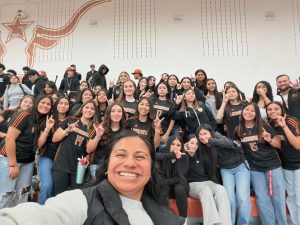
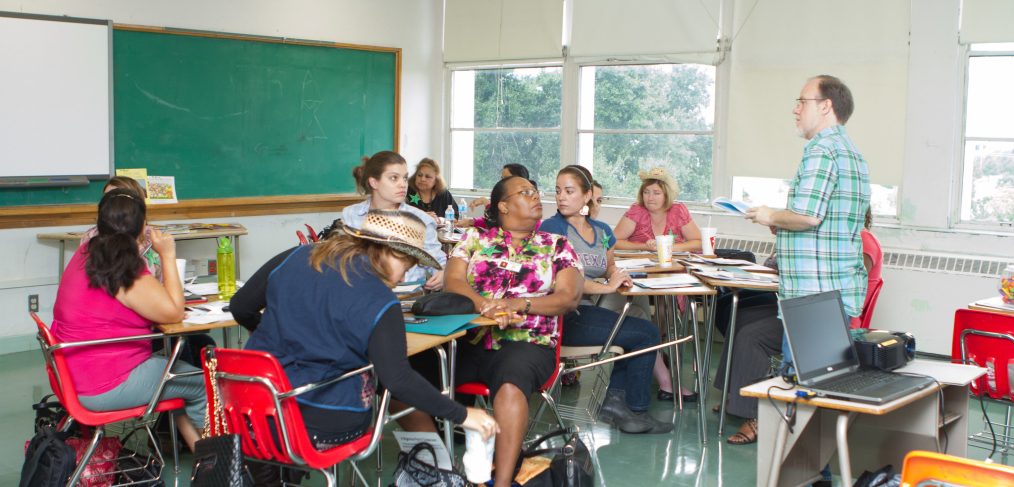
For students at South Oak Cliff High School, planning for life after graduation begins with the guidance of the counseling team. Leading this effort is Gala Smith, a school counselor who is setting the tone for a collaborative and compassionate environment that supports students.   

Smith understands firsthand what it takes to guide students toward their goals. She has served as a high school counselor at SOC for six years and credits much of her success to the strength of her team.  

“Counselors are patient, caring, and they have consideration for others,” she said. “We have great leadership skills and the ability to motivate our students.” 

Before transitioning to high school, Smith spent 18 years as an elementary and middle school counselor. Since her time at South Oak Cliff, she has built on that experience while developing new strategies tailored to the unique needs of high school students. 

Each year, students at South Oak Cliff earn college scholarships with the support of counselors like Smith. Through intentional guidance at every stage of the application process, she helps students while they craft essays that are strong, reflective, and most importantly, complete. 

In a recent effort to prepare students for college, the counseling program introduced College Culture Thursdays, an initiative that exposes students to a variety of college opportunities.  

A graduate of Alcorn State University, Smith earned her Master of Science in Secondary Education with a focus on school counseling.  

Each Thursday, she proudly wears her school colors, Alcorn gold and purple, sharing her school pride with students and encouraging them to explore colleges that can serve as the foundation for their academic, athletic, and social success.   

“I just want to make sure that students are successful in the next stage of their lives,” Smith said. 

Community service is another key focus within the counseling program. Smith regularly meets with parents to help students stand out in this area on their scholarship applications.  

At South Oak Cliff, the counseling team prioritizes strong relationships with parents and families to prepare students for college, but also to support their social emotional well-being.  

“As counselors we stand in the gap between the parents and students, helping families understand what is necessary for their child to be successful and to graduate from high school,” Smith said.  

For Smith, becoming a counselor has been a lifelong dream. After not feeling fully supported by counselors during her own high school experience, she knew that she wanted to help students in ways she once had to navigate on her own, alongside her parents. 

That experience sparked a passion for education, and she has spent the past 24 years in Dallas ISD helping prepare generations of students for success.  

“I hope that I’m inspiring them. I hope that they gain confidence they can carry with them,” Smith said. “Whether they plan to go to college, or enter the workforce, my purpose here is to inspire them to imagine more.”

Volunteering to bring joy to students and teachers

On a special day in first grade at H.S. Thompson STEAM Academy the cafeteria didn’t feel like a cafeteria at all. The stage was framed by balloons and a colorful backdrop. Children arrived dressed as princesses, princes, and storybook characters. Then, to a chorus of excited whispers, Cinderella and Prince Charming walked in, took their seats on stage, and began to read aloud.

This wasn’t a district initiative; it was the vision of Carrie Bhasin, a volunteer who has become one of Thompson Academy’s most dedicated advocates. Bhasin also represent one of thousands of volunteers in Dallas ISD whose contributions and efforts are being recognized during Public School Volunteer Week, April 20-24. 

“We hired Cinderella and Prince Charming to come to the school and read to the kids,” Bhasin recalled. “The teachers allowed the students to come dressed up that day, and then they got to have this kind of fairy tale party.”

For Bhasin, the fairy tale celebration wasn’t just about costumes and photos. It was a deliberate effort to make reading feel magical, not just academic. The event wrapped up a first-grade fairy tale unit that Bhasin helped bring to life, literally, in collaboration with the teachers.

“My hope always is that the students are going to say, ‘Oh, remember in first grade when we had that fairy tale party?’” she explained. “I want those happy memories to stay with students, and, just as importantly, to anchor a lifelong love of books.”

Although Bhasin is now a familiar face on campus, her own children never attended Thompson Academy or even Dallas ISD. Her connection to Thompson Academy began when a staff member at TR Hoover CDC, the community center where her daughter volunteered, asked Bhasin if she would like to help at a local school. Bhasin agreed and it eventually led her to Thompson Academy.

“Education was very important to our kids and to us. I just wanted to help a school that maybe needed some resources and some volunteer time; that’s why I do it,” Bhasin said.

About once a month, Bhasin visits a first-grade ESL classroom to read aloud and bring snacks. She also creates snack boxes so teachers have something ready for students who come to school hungry, and she keeps classroom treasure boxes filled with small prizes teachers can use for recognition and motivation.

“Every time I walk into that classroom, the children run up to me and they hug me and they yell my name,” Bhasin said. Those greetings, she added, touch her heart and reinforce why she keeps showing up.

Bhasin’s first major project at Thompson Academy addressed a different kind of need—one that often goes unseen.

Shortly after the school moved into its new building, she and her husband funded and built a personal care closet on campus. Stocked with shampoo, conditioner, soap, and other hygiene items, the closet offers a discreet way for team members to support students whose families are struggling.

Over time, the effort expanded to include winter coats, socks, and other essentials. For Bhasin, it was a straightforward way to act on a deeply held belief: that students at every campus deserve the same basic support and dignity.

“I enjoy going there and seeing the benefit of our efforts,” Bhasin said. 

Another strong conviction—the belief that reading offers both escape, understanding, and insight—prompted Bhasin to undertake yet another signature project on campus: a book vending machine that she and her husband, Sanjay Bhasin, purchased for the school.

Filled with books at various reading levels, the machine is used exclusively for birthdays. Each student, on his or her birthday, receives a token and the chance to select a book to keep.

“The principal tells me all the time that the kids love being able to pick out any book they want,” Bhasin said. Students eagerly anticipate their turn, often asking, “‘My birthday is coming up—am I getting a book?”’

Carrie Bhasin is also committed to helping Thompson Academy students build joyful memories at school. One of the traditions she’s most proud of is the annual daddy-daughter dance, paired with a separate mother–son night.

For each dance, Bhasin and her husband provide dinner, arrange for professional-style photos, and add a unique treat every year. One year, for instance, students and parents enjoyed Ben & Jerry’s make-your-own ice cream bar. Just this year, a caricature artist created keepsake drawings for each daddy-daughter duo.

“My kids were fortunate enough to have those experiences at their school, and they loved it. It made me realize that every child deserves that same opportunity,” she said.

Bhasin’s focus also extends beyond students to the teachers who care for them. Each month, she provides treats for teachers—coffee, cookies, sandwiches, candy jars—to acknowledge their hard work which she said is often overlooked.

“I think teachers are highly under-recognized in our society. They work harder than most people who have jobs,” she said. “They’re not just teaching math or English all day. They’re dealing with behaviors and all kinds of things.”

Bhasin and her husband have also helped fund field trips and teacher wish lists. Most recently, Bhasin and her husband agreed to support Thompson Academy in its participation in the Disney Musicals in Schools program. The Bhasins’ support will help cover costumes, props, and other expenses so students can perform in a professional venue and work with theater coaches.

For community members who feel intimidated by the idea of getting involved, Bashin’s advice is simple: you don’t have to fund a vending machine or host a full‑scale dance to make a difference. Start small; show up.

“Just do it. Contact a school and say, ‘Hey, can I bring donuts for your teachers next Friday?’’’ she said. “Or just go read to a classroom. It’s very rewarding and very needed.”

In many ways, that simple encouragement sums up her mission as a volunteer: see a need, answer it; see a child, celebrate them; see a teacher, honor them. And then do it again.

“We’re so happy to be able to help, and we hope that things that we’re doing are benefiting the kids and helping them to love school more,” she said.

Celebrating the environment through art

At Personalized Learning Preparatory at J.W. Ray Learning Center, art teacher Carla Renteria is transforming plastic trash into a powerful lesson on ocean conservation and giving her students a platform in the Dallas art world along the way.

Renteria, founder of Artful Young Minds, has spent the past year leading third through eighth graders in an ambitious weaving project that blends environmental science, cultural tradition, and contemporary art. The installation, created with upcycled plastic bags on large cardboard looms, is inspired by Mayan weaving techniques and a documentary her students watched called Our Oceans.

Rentería’s lessons are on topic for April 22, Earth Day, which has been celebrated since 1970 to broaden and activate the environmental movement worldwide and to educate about ways in which everyone can have a part in saving the planet. 

“This project means a lot to us and our students,” Renteria explained. “We didn’t come to this technique right away. There was a lot of planning that we had to do in designing.” 

The project began with storyboarding different ways to protect the ocean, as students considered plastic pollution and other threats to marine ecosystems.

Initially, the idea was simply to reuse plastic as an art material, but research took the project much deeper. Renteria began looking into traditional Mayan weaving practices and discovered how some communities have adapted their textile traditions to incorporate plastic, both as a commentary on waste and as a way to tell new stories.

“The Mayans used to do it with textiles, but they decided to start doing it with plastic,” she said. “We are trying to promote art for our oceans, a positive message. And what better way than to upcycle plastic bags and create a story with it?”

The resulting work is a set of woven panels that contrast two visions of the ocean: one vibrant and thriving with jellyfish and coral reefs, the other littered with bottle caps, dead fish, and pollution. Through their research, students realized that plastic is only one piece of a much larger problem.

“We realized that the plastic is the minimum of the problem,” Renteria said. “They’re destroying ecosystems, which is what we decided that we want to promote, an ocean of how it’s supposed to look like, how it should be preserved for its beautiful coral reefs, its beautiful ecosystem and beautiful sea creatures that live around there.”

To help students understand those ecosystems more deeply, one of the science teachers visited the art club to explain how delicate and interconnected ocean life is. Renteria’s role was then to guide students in translating that understanding into visual narrative.

“It was about teaching students about how ecosystems work and how intricate they are and how delicate and fragile they can be,” Renteria said. “For me, my role was more like, what can we do now that we’ve learned [this information] and we’ve researched it, how can we use art as a vehicle to portray it, to express that.”

The creative process has been both technical and emotional. Students began by preparing large cardboard looms, threading yarn, and learning to cut and loop plastic bags so they could be woven in. They practiced on small looms before moving to full-scale panels. Then came the challenge of conveying a visual message on a woven plastic surface.

“What was really difficult was me trying to figure out, ‘Okay, how are we going to let people understand that this maybe could be a seaweed, or maybe this could be the coral reefs?”’ Renteria said. “We had to weave on top of all that, and that was something that I’ve never done before, so this project has pushed me also as an artist and teacher.”

As students gained confidence, their ideas became more sophisticated: plastic seaweed draping over damaged reef forms, abstract textures suggesting algae or debris, and bold color choices to balance devastation with hope.

“I can already see this is a story about that destruction, a story about how our ecosystem in the oceans need help, need protection,” Renteria said. “This is a race for help, but there’s also a glimmer of hope, because it’s gray, but then there’s blue.”

The project has also expanded students’ sense of what art can be. Many had never worked with plastic as a medium or considered themselves anything other than traditional artists.

“It really does open up their minds and see how you don’t just have to do a traditional art piece,” Renteria said. “If I’m a painter, I can be a weaver, too. I don’t want to just show them the traditional ways. I want to show them what other contemporary artists are doing today.”

Funded by a Heart of Teaching grant from the Dallas Education Foundation, the project has given students access to high-quality materials and, crucially, the chance to exhibit their work beyond the classroom. The woven panels are headed to Dallas City Hall this May, where students will see their art in a public space, an experience Renteria believes will be transformative.

“The students, for the first time, are able to show their art out into the community,” she said. “They’re seeing themselves as artists that are connecting into this Dallas art scene.”

That visibility has changed how seriously they approach their work. 

“It’s a lot more like they’re putting their A-game on,” Renteria said. “In a way, they feel that it’s like a way to show the art program that we have here, and that the art program has these art students with drive.”

For Renteria, the success is not just the finished panels, but the way her students now understand their own voices.

“It definitely has had an impact,” she said. “I’ve seen it with my own eyes in the way the kids talk; they’re quicker and more empowered to voice their artistic decisions. They have the ability to recognize that they have a voice and can use it. At the end of the day, that is what being an educator is about providing the space for them to fully express themselves.”

Administrative assistants make things happen

Margarita “Margie” Guzman doesn’t seek the spotlight, and she’ll be the first to say she’s just one person among many contributing to Dallas ISD. But for 31 years, she’s been a steady, welcoming presence, someone colleagues depend on for organization, support, and a kind word in the middle of a busy day.

Today, Guzman serves as the administrative assistant to Deputy Superintendent of Business Services Eduardo Ramos. Most of her work happens quietly in the background, but it’s essential to keeping her team prepared.

“Nobody sees what goes on behind the scenes,” she said. “The team spends quiet time working together to prepare for meetings, explaining how the budget works and where and why we need to make cuts.”

National Administrative Professional Day on April 22 recognizes the essential work of team members like Guzman, whose work behind the scenes often keeps departments and schools functioning. Guzman’s role is all about preparation and coordination. Every Monday, she sits down with her supervisor to review the week ahead.

“My job is essentially to make sure my deputy has all the paperwork and presentations he needs,” she explained. “We review his schedule on Mondays, giving me the rest of the week to prepare his books, binders, and any other necessary information.” 

She sets appointments, builds in travel time, sends reminders, and double-checks details so meetings go smoothly. Her job gets busier this time of year as Business Services prepares to have meetings in the community about the budget for the 2026-2027 school year. 

“My coworkers often tell me I’m always on the move,” she said. “But I don’t feel it, because I truly enjoy what I do.”

Guzman’s connection to Dallas ISD is deeply personal. Her story is part of a three-generation legacy. It began with her mother, who started as an attendance clerk at W.E. Greiner Exploratory Arts Academy—the same middle school Guzman attended—and later became a data controller serving schools across the district.

“When I started middle school, my mom was there,” Guzman remembered. “At first it was, ‘Oh, mom’s going to be at the same school,’ but middle school is scary. Having my mom there helped a lot.”

After graduating from Sunset High School in 1986, Guzman worked as a legal assistant at a law firm. She enjoyed the job, but the district kept calling to her.

“I enjoyed it, but my mom worked for the school district, and I was like, ‘I want to work where you work,”’ she said. 

It took multiple interviews over the years. “I went for several interviews, and then I’d stop, and then I’d apply again,” she said. Eventually, she was hired as an executive administrative assistant in student transfers.

Guzman spent 12 years there before moving to the former department of College and Career Readiness. A few years later, she followed a supervisor to School Leadership and then went to Academic Services. Finally, in 2018, she transitioned to Business Services. 

In Business Services alone, she has worked with four different chief financial officers, each with a different style.

“Anytime you get a new boss, you have to get to know them, their likes and dislikes,” she said. “Everyone works differently. You just have to be ready to accept it and go on with it.”

To do that, she has a simple approach.

“Within the first two days that I work with that person, I interview them,” she explained. “Are they morning people? Do they need coffee? Do they like to be bothered early or see me in the afternoon? They may be silly questions, but I need to ask so I can know.”

That thoughtfulness extends beyond supervisors. Guzman is especially mindful of how interns and younger staff are treated.

“They’re here to learn,” she said. “It might be a little task, but to them it’s something new, and you have to have the patience to teach that person. Always treat everybody the way you would like to be treated. They could be your next boss.”

Her sense of legacy is no longer just about her mother; it now includes her daughter Desmonise Robledo, who is an executive administrative assistant to the chief of Communication Services.

Robledo, also a Sunset High School graduate, credits her mother for teaching her how to thrive in the district. The most valuable lesson she learned from her was to “always carry yourself professionally and be open-minded and flexible.”

“I’m really proud of her as an admin,” Robledo said. “It’s an exciting position to be in.”

Even though they work in the same building, Robledo and Guzman don’t see much of each other at work, separated as they are by seven floors. 

“We work in the same place, but I still make sure to visit her on the weekends,” Robledo said. “It’s always been nice for me to know she’s just a phone call away if I have any questions.”

Knowing that three generations of her family have served the same school system means a great deal to Guzman. 

“I do like that legacy,” Guzman said. “It would be really nice if maybe my grandkids also got a job with the district.”

What keeps Guzman going, however, is simple: doing her job well and knowing it contributes, in some small way, to student success.

“When I leave, at least I know that I did my best,” she said. “I’m here in the background, but my work helps Mr. Ramos, who gets the job done to help the kids.”

As for how she wants to be remembered, Guzman doesn’t overcomplicate it. 

“I want to be remembered as a hard worker and a friendly person, as someone who was always willing to help,” she said.

Universal pre-K is here

During their March board meeting, Dallas ISD trustees unanimously approved offering tuition-free prekindergarten for 3- and 4-year-old students across the district.

Currently, the district offers free pre-K to students who qualify under strict federal and state guidelines, while other families pay tuition. Under the newly approved policy, the district will eliminate tuition for students who do not meet those qualifications—expanding access to early learning for more families.

“It’s a great idea,” said Dallas ISD Trustee Dan Micciche during the meeting. “I think it’s innovative and a good thing to do, and certainly our results have shown that.”

Pre-K registration for the 2026–2027 school year opened April 1. For more information, visit https://www.dallasisd.org/departments/early-learning/pre-kearly-learning.

Headshot opportunity for central 

Are you new to the district, never had a headshot taken, or simply due for an updated one? Now’s your chance to get your shot.

Dallas ISD central team members are invited to the next professional headshot session. This quarter there will be two separate days available: . The dates will be Tuesday, April 14, and Wednesday, April 15. Both sessions take place from 8 to 11:30 a.m. 

Each session will be held at the Linus D. Wright Central Administration Building, 9400 N. Central Expressway, Fifth Floor, Suite 583.

Updates to Quarterly Headshots

We’re adapting and improving our process to better serve the district’s growing photography needs. Here’s what’s new:

  • Quarterly Headshot Days: Professional headshots will now be offered once per calendar quarter.
  • Sign-Up Blocks: To reduce early morning backups, we’ll offer pre-signups with a larger time window so arrivals are spread out and lines are shorter. 
  • Deadline for Signup: Please sign up by midnight on Sunday, April 13.
  • Sign Up Required: To keep the line as orderly as possible, we ask that you must pre-sign up for a time spot to participate.

Who Can Attend:

  • Central team members
  • Campus principals (not available for assistant principals)
  • Executive directors
  • Associate superintendents
  • Chiefs and deputy chiefs
  • Board of Trustees

Important Notes:

  • Save to Your Calendar: Our signup system will now include a link after you sign up to add your date and time to your outlook or google calendar. 
  • Quick Sessions: Each session lasts about one minute. Multiple shots will be taken for your selection. 
  • Retouching: One image may be selected for retouching, which needs to take place before you leave.

SIGN UP HERE:  CLICK HERE

Sign with a new program

Starting June 30, Dallas ISD will transition completely from Docusign to Adobe Acrobat Sign as the standard tool for electronic signatures. 

To better support its growing digital workflow needs, Dallas ISD will begin transitioning to Adobe Acrobat Sign, which provides secure e‑signature capabilities, document tracking, and automated workflows—similar to DocuSign—while integrating seamlessly with existing Adobe Acrobat tools. 

To help team members get started and have a smooth transition, Edtech has provided a series of resources: 

  • Getting Started with Adobe Acrobat Sign 
  • How to Send Documents for Signature (single or multiple recipients) 
  • Configuring Send Options 
  • Creating a Document Template 
  • Archiving Your DocuSign Documents 


Getting Started Overview: Using Adobe Acrobat Sign 

https://experienceleague.adobe.com/en/docs/document-cloud-learn/sign-learning-hub/getting-started/beginner-users-overview 

Downloading Docusign envelops in bulk https://support.docusign.com/s/document-item?language=en_US&bundleId=iqw1600716424700&topicId=bjf1601927770187.html&_LANG=enus 

If you need technical assistance, please submit a ticket to the Service Now portal. 


Connecting families 

When you walk into a Dallas ISD Fam Jam event, what you see on the surface looks like a lively community fair: student performances, boxes of food, racks of uniforms, exhibitors offering resources, and families chatting.

But at its core, it is an event where families can access food, clothing, and shelter, which for Alrich Smith, manager of Family and Community Engagement, is essential because if families are worried about the basics, it’s unrealistic to expect them to focus on test scores and homework, he said.

“We want to make sure that every need, especially the basic needs that parents have or families have, are met,” Smith said. “Once those needs are met, then we can start working on the academic side of things.”

Smith’s own connection to the city is what helps him know what families may need. He grew up in Hamilton Park and later on Stults Road—neighborhoods he can see from his office window. Smith, who plays the drums at religious services and in a band, said his mother’s long career in the classroom shaped his own path to education.

“My mother was a teacher for about over 35 years,” he recalled. “That influence was always there. She always encouraged me to get my teacher certificate, which I did not, but the work that I did ultimately lended itself to me being hired as a community liaison at Barbara Jordan Elementary School back in 1999.”

Over the years, mentors taught Smith how to serve families, connect with schools, and build systems that last. His personal faith, he said, also guides how he navigates both “the best of days and days that are not so good.”

“I had a lot of good mentors, and I always considered myself a leader,” he said. “And so at some point, I wanted to be a part of leading this work and taking it to another level.”

Smith said that one of the biggest misunderstandings about the department is mistaking it for basic, surface-level communication.

“I always like to equate involvement and engagement,” he explained. “Involvement has more of a casual approach. I’m going to send you a flyer or make a phone call—that’s just surface-level involvement.”

True engagement, he said, is much more personal and intentional. “Engagement means I want to see you eye-to-eye and say, ‘Hey, I have something that you will benefit from,’” he said. 

That distinction—from pushing out information to building relationships—is core to the department’s strategy, which aims to create what Smith calls fear of missing out.

“We want to create FOMO because we want parents to feel like, ‘Hey, if I don’t get this, if I don’t attend this, if I don’t participate in this event or activity, I’m missing out.’ So it’s up to us to be marketing majors,” Smith said. 

The ultimate goal is that parents become active partners in their children’s learning. 

“Our mission is to make sure that they have access to any and all resources, both internal and external, so that when it comes to academics, they can pour themselves into their child’s academic experience, and their child will be better for it,” he said.

Smith’s department, however, is best known for its flagship Fam Jam events: large-scale health and education fairs that bring together 60–70 exhibitors alongside student performances and on-site support.

“It’s like one big, giant opportunity for families to get everything that they need for that moment that they need,” he said. “We’ve had a pretty much 98 to 100 percent satisfaction rate on all of those events. So that’s a big part of where our success lies.”

Beyond Fam Jams, the team runs FROG (Family Resources on the Go), a mini-mobile Fam Jam that brings resources directly to campuses, Smith said.

“Families have opportunities to get linked in with the Parent Portal or get a free uniform. We have food, clothes, socks, and free educational resources—just for showing up and signing in,” he said.

According to Smith, some of the most impactful work happens in moments of crisis.

“When we’ve had emergencies—houses burn down, flood, or people lose their belongings—we were able to provide district families with not only uniforms, but also gift cards so they can get some of the basic necessities in life,” he noted.

On the academic side, Academic Partnering sessions and Facebook Live events (in both English and Spanish) connect parents directly with teachers to talk about grade-level expectations and learning strategies.

“We talk about how parents can be involved in their child’s academic experience,” Smith said. “We have teachers who come on and talk about grade-level specific things to help bridge the gap between teaching and learning, home and school.”

None of this happens, of course, without a dedicated team. The department operates as one office with two teams: a program support team that coordinates districtwide events and a campus support team of coaches who work with parent support specialists on individual campuses.

“Our campus support team goes to the campuses to empower, engage, and train parent support specialists so they can build their capacity to work with families directly,” he explained. “We have an incredible team—no, not incredible, but remarkable.”

Smith often tells his staff that an organization is only as strong as its people and its systems. In practice, that means they spend as much time building clear processes—how a school requests uniforms, how a need gets escalated, how events are promoted—as they do loading boxes into vans.

“If you’re empowering your people, giving them a depth of knowledge about the work that they do, understanding the ‘why’ of what we’re doing, and having clear systems in place, then that’s what I would say makes an organization strong,” he said.

This year’s motto is “next level,” a commitment, he said, that “everything we’ve done has been better than it was before last year.”

When Smith thinks about how he hopes others will remember his leadership, his answer echoed the mission of family engagement itself:

“I want people to say of me, ‘He empowered me to think bigger than I ever thought before,’” Smith said. ‘“He helped me understand the why behind our work.”’


Dallas ISD schools carry philanthropy forward  

The next generation of philanthropists can be found at Dallas ISD thanks to the Common Cents Pennies from the Heart Program, which guides students as they raise funds to support various organizations. As they donate what they raise, students are strengthening their community by supporting nonprofits whose missions may reflect their own lived experiences and the causes closest to their hearts.   

This year, 200 students across 21 schools participated in the program coordinated by the Family and Community Engagement Department. Founded by Louise Gartner in 1998, the initiative has grown into a lasting philanthropic effort, expanding its impact through its partnership with Dallas ISD. Today, the program is led by her daughter, Gigi Gartner, who continues her mother’s legacy of service and commitment to community.  

“I’m very proud to be carrying on her legacy,” Gartner said, encouraging participating students to see themselves as leaders of change. “My mother started this program because she wanted a community where people cared for others. She believed, ‘Why not start with the young and teach them?’” 

This year, students raised a total of $22,000, benefiting 24 nonprofits with support from the Communities Foundation of Texas. 

At Kathlyn Joy Gilliam Collegiate Academy, teacher Jonathan Dominguez led his students in selecting a nonprofit they felt deeply connected to in both mission and impact.   

“Our students chose PASOS for Oak Cliff because many of them relate to the challenges the organization seeks to address, like limited access to resources, financial barriers, and the need for community support,” Dominguez said. “By donating our funds to PASOS, our students hope to give back to an organization that uplifts neighborhoods like their own, while helping other students like them take confident steps toward their future.” 

For students at Gilliam, participating in Common Cents means putting generosity into action and showing love for their community. The campus raised $3,619 in support of its selected nonprofit, earning the top spot in funds raised and receiving the Louise Gartner Award. 

In a three-way tie, students at Young Women’s STEAM Academy at Balch Springs, W.H. Adamson High School and Bayles Elementary School each raised $2,127 for their selected nonprofits.  

“Our students chose to support Autism Speaks in recognition of the students in our school on the autism spectrum,” said Narghis Moon, a student sponsor at Bayles Elementary.  

Through this partnership, the district continues to engage families, schools, and the broader community in meaningful ways that support academic achievement and social-emotional development. 

Two students from Adamson High School and Thomas Jefferson High School were awarded the Louise Gartner Scholarship, which provides a $3,000 college scholarship in recognition of outstanding service and leadership. 

To date, more than $1 million has been raised through the Common Cents program. Dallas ISD students are not only making a meaningful impact on their communities, but also developing the leadership, compassion and purpose that will shape how they give back for years to come. 

“Thank you to our students, sponsors, and our district staff, especially from the Family and Community Engagement Office and the Volunteer and Partnership Engagement team, for helping bring this program to life across our campuses,” said Israel Rivera Executive Director of Parent Advocacy and Support Services. “And to our nonprofit partners, we are grateful for the opportunity to support your organization.” 


Assistant principal leading with values, elevating the game

Great leaders often anchor their actions in core values that will help bring out the best in themselves and those around them. Cassie White, assistant principal at Buckner Terrace Montessori, leads by example, fostering a culture that inspires both teaching and learning through resilience, collaboration, and compassion. 

The week of April 6-10 is National Assistant Principal Week, to recognize the contributions these campus leaders make to learning and the school environment every day. 

White’s path to education began in her own childhood when school became a safe haven.  

“I had teachers who believed in me and made school interesting,” she said. “I knew I wanted to give back in that same way. Over time, I realized I could expand that impact beyond my own classroom by supporting teachers and students, which led me to pursue campus leadership as an assistant principal.” 

Her leadership journey was encouraged by her former principal, who reminded her that she belonged in rooms of impact. White gained the confidence to take steps beyond the classroom when she was still a teacher. That support led her to apply to the Aspiring Leaders Program at Southern Methodist University, a two-year master’s degree program designed for educators who want to become assistant principals.  

“One of the first classes we took was called ‘Leading with Values,’ a course that helped us take a deeper look into ourselves and identify our core values,” White said. “We learned how to use values to lead with integrity and unite a staff in achieving common goals. That experience gave me the confidence that I was on the right path.”

As an assistant principal, White prioritizes being an instructional leader. She remains visible in classrooms, supports teachers in refining their instructional practices, and helps solve problems in real time. She also builds meaningful relationships with students, encouraging and supporting them as they work toward their goals.  

Dallas ISD is celebrating its outstanding leaders with the theme “APs Elevate the Game.” Activities during National Assistant Principal Week recognize that they show up each day ready to take on challenges, support their campuses, and elevate outcomes for students and staff.  

“I believe leadership is about serving your school and community, while continuously growing to new heights,” White said. “It’s about listening more than we speak, building strong relationships, and leading with integrity.” 

For White, her success is rooted in never forgetting what it feels like to be in a classroom. 

After 12 years in the classroom, she became an instructional coach at Buckner Terrace Montessori, where she taught for four years before stepping into her current role. 

Buckner Terrace Montessori school is a B- rated campus, earning a strong score of 88 from the Texas Education Agency. That success reflects the campus’ theme of “discovering the magic of learning” and its commitment to strong community partnerships and a dedicated focus on creating a positive environment.  

“I hope students remember that I believed in them,” White said. “I want my impact to be long lasting—not just in systems or programs, but in people. If teachers grow in their practice and students leave more confident and prepared because of the work we’ve done together, then that’s the kind of legacy that truly matters.” 


Help Dallas ISD celebrate assistant principals

In honor of National Assistant Principal Week, cast your vote for your favorite assistant principal across the district. Winners and prizes will be announced Friday, April 10.  To participate, vote here through April 8.

Teachers and staff can also join the celebration by participating in the AP Bingo Challenge, highlighting the many ways assistant principals elevate the game. To play:

  1. Click [HERE] to access your gameboard
  2. Take a photo for each Square
  3. Upload Photos into each box
  4. Complete the board. Elevate the Game BLACKOUT = POWER MODE