Opening doors for the next generation on the soccer field

By the time Christian “Kiki” Recino Gonzalez, current soccer coach and geography teacher at W.T. White High School, stood on a pitch facing the 2015 U.S. women’s soccer national team, it felt surreal. She had grown up in Arlington,Texas, the daughter of Guatemalan immigrants, watching stars like Alex Morgan and Marta Vieira da Silva on TV. Suddenly, she was lining up against them, wearing Guatemala’s blue and white.

“I grew up in Arlington, but my parents were immigrants, so they came to this country with nothing,” Gonzalez said. 

Her mom worked as a school cafeteria worker and her dad was a truck driver. Soccer, though, was her father’s great love, and it soon became Gonzalez’, she said.

“I just followed my dad wherever he went,” Gonzalez recalled. “He would play in the Sunday leagues and eventually they signed me up. I didn’t realize there was a girls league, so I played with the boys. I was the only girl on a little Mexican boys team.”

People quickly noticed she was good at soccer, she said. But club soccer cost money her family didn’t have. That might have ended her journey, if not for a small act of generosity. 

“My parents could not afford club soccer, but a local family stepped in and was like, ‘No, she’ll have a scholarship,’” Gonzalez said. “So I received a scholarship for Sting Soccer Club.” 

In high school, another key person also stepped in: her soccer coach, Andrea Scott. Before then, Gonzalez admitted she had never really seen soccer as a pathway to success, but Scott helped to steer her perspective. 

“My high school coach was like, ‘Hey, have you ever thought about playing for college and the national team?’ And I was like, no, what is that?’” she said. “My coach opened the doors for me.”

At a showcase tournament, scouts from the Guatemala women’s national team saw Gonzalez play. At first, she thought she was trying out for the Under-20, but she would soon realize it was much bigger than that. 

“I tried out, and the scouts were like, ‘We want you to play for the senior national team.’ I was only 18 years old and a senior in high school,” Gonzalez said. 

For the next four years, she played center midfielder and defensive midfielder for Guatemala. She debuted with her team in the 2014 CONCACAF Women’s Championship qualifiers and went on to participate in the main tournament.

Being a member of a national team not only meant living abroad but also juggling academics with commitments to an elite sport. 

“I had to take classes online to keep my scholarship for soccer,” she explained. “I was living in the facility—training with my teammates, eating with them. It becomes your whole lifestyle, but it’s something that I love. I would do it all over again if I had the opportunity.”

The game took her to stadiums she had only seen on television and pitted her against her heroes when she got to play against the 2015 U.S. Women’s World Cup squad. Yet her favorite moment wasn’t a goal or a trophy; it was a song.

“Believe it or not, it was whenever I would sing the Guatemalan national anthem,” she said. “I would see my parents and see my crowd. For me, that will forever be my favorite moment.”

Over time, Gonzalez realized her team was doing more than just competing. “When I was there, I realized we were opening doors for a generation,” she said. “Now there are girls who have that opportunity because of us. If we hadn’t done it, they might never have had the chance.”

Following her soccer career, Gonzalez tried the corporate route. Having graduated with a business degree from Grand Canyon University, she took a job at a logistics company. It lasted only six weeks. 

“I did not like the corporate world,” she admitted. “I was like, ‘What am I doing here in a cubicle?’”

So Gonzalez pivoted. She got her teacher certification and headed back to the place where everything had started: high school. While Gonzalez has been teaching for six years, this is her first year with Dallas ISD.

“My high school coach made the biggest difference in my life,” she said. “I wanted to give back to the community, and I knew coaching was my passion.”

As a geography teacher and the girls’ soccer coach at White High School, she brings the world and the game into her classroom. “Geography is cool because you get to talk about the whole world and its people,” she said. 

Gonzalez used soccer to make geography more relevant when she taped the headshot of a different soccer player to the back of each desk chair. Each player features the national team on the jersey. 

“Why does Guatemala wear blue and white? It’s because we’re between the Caribbean and the Pacific. All these jerseys mean something.”

Her coaching philosophy combines toughness with deep care. Her days start at 4:15 a.m. so she can be ready for 6:30 a.m. check-ins with her team and 7 a.m. practice. She is strict but also intentional about building leaders. 

“I also don’t like to select captains,” she said. “I tell my girls, ‘We’re going to make mistakes; no one’s perfect.’ But on the field, you should be able to tell who the leaders are. So, every game I mix it up. That has built leadership within the team and taught the girls to trust each other.”

Most of all, she wants her students to leave as stronger people. “If they come to the soccer program, [I hope] that they become a better person than they were,” she said. “The world that we’re living in is pretty scary, right? But there are still good people in it, and I hope they continue to be that no matter what they do.”

Gonzalez’ message to her girls is ultimately about effort and finishing what they start. 

“Nothing’s given,” she likes to remind her students. “Getting there is one thing, but finishing is another thing. You can do whatever you want, you just have to work for it.”

Honoring Jewish American Heritage Month and overcoming antisemitism

May is Jewish American Heritage Month, a time to honor the histories, traditions, and resilience of Jewish Americans.

Jewish American Heritage Month, established by a presidential proclamation in May 2006, honors and celebrates the contributions of Jewish Americans to society. During this month, we are reminded that discrimination against anyone, including Jewish Americans, undermines the core principles of justice, inclusion, and liberty that define the American identity.

Jewish Americans have long been a vital part of the Dallas community. Their voices, values, traditions, and achievements have helped shape the cultural fabric of our city and our schools. During Jewish American Heritage Month, we recognize and honor those contributions while standing firmly against antisemitism and all forms of hate. By recognizing Jewish American Heritage Month, Dallas ISD affirms its commitment to building a school community where diversity is honored and everyone belongs. We are committed to ensuring that every student will be welcomed and embraced in Dallas ISD.

Celebrating the 2026 Athletic Hall of Fame class 

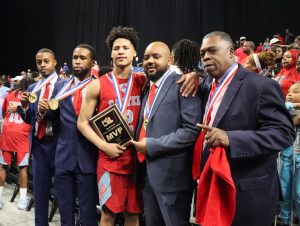
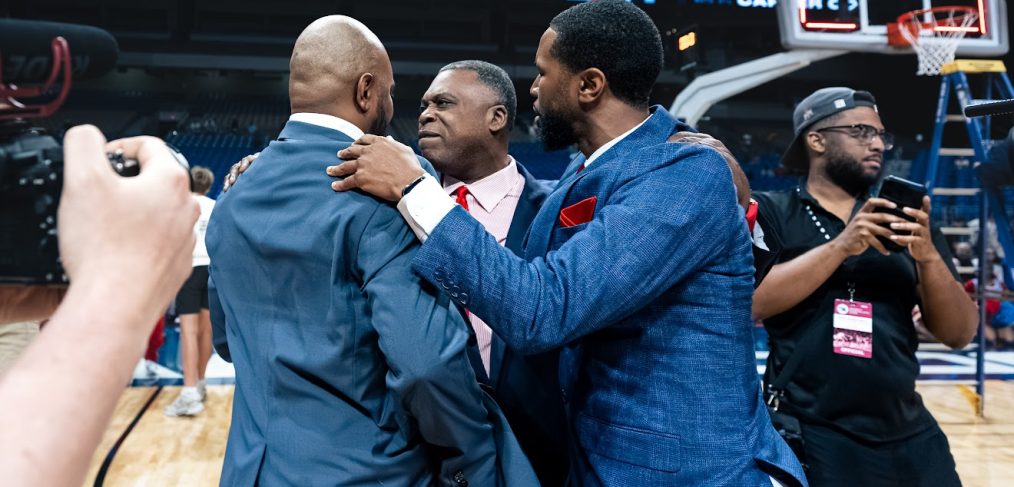
The 2026 Dallas ISD Athletic Hall of Fame induction ceremony took place recently to honor former student athletes and coaches whose achievements have left a lasting impact on Dallas ISD athletics. 

The evening celebrated individuals who made history on the field and continued to inspire others through leadership, excellence and service beyond athletics. Their accomplishments have paved the way for future generations while setting new standards of achievement.  

“It is important that we are honoring tonight’s inductees,” said Superintendent Stephanie S. Elizalde. “I want you to know how proud we are that you will always be associated with Dallas ISD. Let their success be a beacon to everyone that you can achieve anything and know that success goes through Dallas ISD.” 

Since 2018, the Hall recognizes former student athletes, coaches and community leaders who exemplify the highest standards of sportsmanship, ethical conduct, and moral character. Inductees are selected based on their athletic accomplishments, leadership, and lasting contributions to athletics.  

This year’s class included eight inductees: 

Charletta Gaines—A 1986 graduate of South Oak Cliff High School, Gaines is a three-time UIL state championship track and field coach at James Madison High School. She also previously coached at South Oak Cliff and has served Dallas ISD for many years as a campus counselor. 

Abner Haynes—A 1956 Lincoln High School graduate, Haynes emerged as a pioneering football star and became one of the earliest standouts of the American Football League after being drafted by the Dallas Texans. 

Chris Holt—A 1990 graduate of Skyline High School, Holt went on to professional baseball success after being drafted by the Houston Astros in 1992. He made his Major League debut in 1996 and was a part of three National League Central Division championships. 

Goree Johnson—Head boys’ basketball at Justin F. Kimball High School from 1990 to 1998, Johnson led the Knights to back-to-back UIL state championships in 1996 and 1997 and was named the 1998 National Coach of the Year. 

Leonard Jones—A 1965 graduate of Dr. L.G. Pinkston Sr. High School, Jones became a PGA professional golfer and devoted educator and mentor who championed minority participation in golf. 

Percy Penn—A 1945 graduate of Crozier Tech High School, Penn was a multi-sport athlete who dedicated 35 years to Dallas ISD as a coach, teacher, and assistant principal at Sunset High School and Justin F. Kimball High School, while working as a football official. 

Jonathan Scott—From David. W. Carter High School’s Class of 2001 to the national stage, Scott helped lead the University of Texas to a national championship. He went on to play nine professional seasons in the NFL, playing with the Detroit Lions, Buffalo Bills, Pittsburgh Steelers, Chicago Bears, and Atlanta Falcons. 

Jason Smith—Rising from W.T. White High School’s Class of 2004 to national prominence, Smith earned All-America honors at Baylor University, played in the NFL with the St. Louis Rams, New York Jets, and New Orleans Saints before becoming a collegiate football coach. 

Each inductee received a Hall of Fame jacket, ring and commemorative crystal award.

Celebrating AAPI heritage

May is Asian American and Pacific Islander Heritage Month, which recognizes the historical and cultural contributions of people of Asian, Native Hawaiian and Pacific Islander descent to the United States.

This year’s theme is “Power in Unity: Strengthening Communities Together” to highlight collective action, resilience, and storytelling in the community. President Jimmy Carter signed into law in 1978 a week of celebrations, but in 1990, Congress expanded the observance to a whole month.

Cultural and artistic celebrations are taking place in Dallas throughout the month, including:

  • Third annual Dancing Dragon Boat race from 10 a.m. to 5 p.m. on May 17 at the Bath House Cultural Center, 521 E. Lawther Drive. The family-friendly celebration of Asian American and Pacific Islander heritage includes live performances, hands-on workshops, art, food, vendors, and the exciting Dragon Boat race. The event is free. 
  • The Bath House also features Big Luck, a mixed media exhibition featuring works by Asian American artists from the DFW area, Los Angeles, and Seattle. The exhibition includes works by Julian Callos, Eunjee Chong, Lucy Haigan, Eun Lee, Chi Leong, Joanna Lin, Lo, Annie Nguyen, Mylan Nguyen, Brent Ozaeta, and Taro Waggoner. It runs through May 30.

Maintenance workers call Dallas ISD home

Dallas ISD intern Yandel Saldana, Southeast Maintenance HVAC technician, is proof that a skilled trade can open doors early in life. At just 19 years old, Saldana is already building a meaningful career with the district , turning a summer internship with Maintenance and Facilities Services into a full-time career and future opportunities in the field.

Saldana is one of hundreds of high school students who seek real-world experience every summer through the district’s internship program. Just last summer, the internship program offered 991 placement opportunities. A few of those turned into full-time employment afterwards, including the jobs Saldana and Humberto Medrano currently hold.

According to Miriam Gaytan, executive director of Maintenance and Operations, Maintenance and Facilities Services began with six interns in 2024. Since then, the program has really taken off, with the department hiring 30 interns this summer, she said.

“When I first started here, I saw how efficient everyone and everything was—how the HVAC team managed all their work,” said Saldana of his first day as an intern in a genuinely appreciative tone. “I really liked it because every day was something different. I just realized, ‘I want to be here.’”

Saldana, a graduate of Bryan Adams High School, entered the HVAC/R program through Career Institute South. Twice a week he would learn about the fundamentals of residential units, but stepping into the large-scale systems of school facilities was a major shift.

“The units are much larger and the components are entirely different, especially when it comes to changing them out,” he said.

One of Saldana’s biggest challenges hasn’t been technical. Naturally quiet, he had to overcome shyness to address  teachers and staff about issues in their classrooms.

“I’m not a big fan of talking to people, but since starting this job, I’ve had to speak with teachers more often about what’s happening. That was a pretty big challenge for me, but I’m getting better at it,” he said.

Day to day, Saldana’s work is varied and hands-on. He checks his work orders, travels across multiple campuses, changes filters, installs portable AC units, and supports technicians on more complex repairs like motors and compressors. Saldana sees his age as an advantage, not a limitation.

“It’s a massive advantage at my age. This is a great career path, and not many people my age have the opportunity I had to work with Dallas ISD,” Saldana said. 

Jorge Hernandez, HVAC SE supervisor, described Saldana as eager, explaining that he wanted to run and impress right off the bat. 

“Saldana sees the job as a whole new experience and is not afraid to say, “I don’t know much of this stuff, but I want to learn,’” Hernandez said.  

In his preventive maintenance role, Saldana acts as the eyes of the HVAC team, able to spot problems early, making him indispensable to the department, Hernandez said. 

Darrien Field, HVAC Repair Technician, mentored Saldana as an HVAC intern and quickly noticed his willingness to learn and strong drive. Under his supervision, Saldana worked on real equipment. Field said supervisors let interns do everything within reason, which included working on chillers, cooling towers and package units.

Within the next five years, Saldana hopes to be a full technician assigned to his own set of schools, matching the knowledge of his mentor. 

“If you really want it, go after it. Never give up and chase your dreams,” Saldana said.

Humberto Medrano—Northeast Maintenance plumbing apprentice

For Humberto Medrano, Northeast Maintenance plumbing apprentice, plumbing is more than a job—it’s a smart, future‑proof career choice rooted in both practicality and passion. A graduate of H. Grady Spruce High School, Medrano spent his last three years of high school immersed in plumbing courses, dedicating three hours every B day to learning the trade.

After graduating, Medrano joined Maintenance and Facilities Services as a plumbing intern last summer. His strong work ethic and curiosity quickly stood out, and he was hired full time after graduation, continuing his journey in the district that nurtured his skills. 

“Pipes are always going to go with pipes and fittings with fittings; it’s not going to be easy for a robot to steal a job like mine,” he joked. 

That practical mindset guides how Medrano views his work today. He finds drainage systems particularly fascinating, especially the everyday details most people overlook like what should and shouldn’t go down a drain.

“For instance, you’re not supposed to pour grease down a drain. Over time, it hardens and eventually blocks any water from passing through,” he explained, noting how simple habits can prevent major plumbing issues.

NE Supervisor Justin Morris, a Seagoville High School graduate, said Medrano is the kind of young worker he seeks when hiring. 

“He’s a self-starter,” he said. “He’s outgoing. You pretty much don’t have to tell him anything,” said Morris, who sees Medrano’s drive as a strength.

“With his work ethic, sky’s the limit for him,” he said. 

Likewise, when Joshua Fisher, plumber and Medrano’s former mentor, first met him, he immediately sensed there was something different about the young man. It wasn’t just Medrano’s résumé or certifications—it was the way he carried himself.

“From his initial presence to the way he shook hands and made eye contact, he seemed very structured for his age. He is clearly mature beyond his years,” Fisher said.

Just like Saldana, Medrano earned a certificate and gained early exposure to real-world work through Career Institute South. It is this experience, Fisher said, that has given Medrano the confidence to tackle any projects—or tools—he is given. 

“That’s the attitude I like. He’s not afraid to try new things, and because he’s such an intelligent young man, once he does something once, he knows exactly how to do it again,” Fisher said.

What Medrano finds most rewarding about his career of choice is the combination of hands-on experience and the financial opportunity that comes with learning a skilled trade.

“Financially speaking, you have to pay to get certified if you go to college—whereas here, they’re paying me to get certified,” he said. Medrano said that he expects to earn his journeyman plumbing license in three years.

Looking ahead, Medrano said he intends to remain focused on growth, certification, and mastering one of the toughest jobs in maintenance. His message to his younger self—and to future interns—is especially relevant in a technology-saturated world.

“Learn to respect others and always listen. Pay attention and stay off your phone. Keep at it—it’s a great career and a wonderful opportunity,” he said.

Teachers can learn in summer

Summer is fast approaching and the district has created a Summer Professional Learning Guide so teachers, nurses, and reset coordinators know what to do before scheduling summer sessions that are purposeful and engaging.

With completing summer learning come flex days for teachers. By completing 14 hours of eligible training June 1-26, team members can earn Flex Days on Oct. 12 and Nov. 3. To earn both flex days, participants must attend one Flex Day One session and one Flex Day Two session. Attending two Flex Day One sessions or two Flex Day Two sessions only yields 7 hours of the 14 hour requirement for both days. Self-contained teachers should connect with their principal for guidance on session selection.

Before attending, participants should review the Summer Learning website, catalog, and participant guide for specific details about sessions, attendance credit, parking, and site logistics. For more information on summer professional learning watch the video.

Dress for summer success

The district’s summer dress code guidelines will be in effect starting on June 1 and through Sept. 4 so employees can be comfortable as they perform their normal work duties while still portraying a professional image to students, parents, and community members.

Standards for daily attire are still at the discretion of the supervisor. The dress code does not allow for inappropriate apparel. [See DH(LOCAL) and DH (REGULATION)] 

  • Casual includes clothing that is comfortable and neatly put together while communicating professionalism.
  • Casual may differ based on the various business needs of the department. Please consult with your department supervisor to determine appropriate attire for your job.
  • Certain events in the District’s calendar may require employees in a specific department or location to wear business attire instead of the casual look.
  • Take your workday schedule into account when considering your attire for the day. If you have a meeting scheduled with the public or vendors, you may need to wear business attire.
  • Supervisors will have the discretion to make exceptions to appropriateness of attire as it relates to culture, religious beliefs, vocational courses, physical education, maintenance, medical necessities, events, and spirit days.
  • Employees required to wear district-issued uniforms are expected to wear the assigned uniform.

Acceptable attire

  • Pants—Nice pants or cotton slacks
  • Shirts—Blouses, casual shirts, and golf shirts
  • Dresses or skirts—Casual dresses and skirts no shorter than three inches above the bend of the knee and appropriate for an office environment
  • Footwear—Loafers, boots, flats, sandals, and leather deck shoes
  • Clothing should fit appropriately and be clean, pressed, and wrinkle-free

Unacceptable attire

Unacceptable attire includes, but is not limited to:

  • Form-fitting, snug, sagging, transparent, excessively worn, or faded clothing
  • Clothing with holes or frayed areas
  • Revealing or provocative attire
  • Necklines that expose cleavage
  • Dresses and skirts shorter than three inches above the bend of the knee
  • Jeans, sweatpants, shorts, bib overalls, leggings, spandex, and lycra
  • Tank tops, t-shirts, and shirts with messages/graphics
  • Athletic wear and beach wear
  • Slippers, flip-flops, athletic, house, and sneakers-style shoes
  • Hats worn inside unless used as protective wear appropriate for one’s job function.

Apply for Rotary awards

The Rotary Club of Dallas is looking for the Dallas ISD teachers that go the extra mile for the students and the community.  

The application window for the Rotary’s Service Above Self Teacher Awards is open now through June 5. The awards luncheon will take place in August. 

The purpose of the awards is to call attention to the importance of service in the community and to reward teachers who do. Some of the criteria for teachers to apply are: 

  • Performance over and above job description: Performance of duties in an exemplary and extraordinary manner including activities, such as curriculum development, tutoring without compensation, and other support activities.
  • Activities that benefit the community: Evidence that the nominee participates in activities or organizations that benefit the community in such a way that it positively affects students. 
  • Activities that benefit the disadvantaged or at-risk students: Relationships with staff, students and the public that create a positive impact on the learning environment for disadvantaged or at-risk students. 
  • Actions exhibiting selfless conduct toward others: Evidence that the nominee acts upon a genuine concern for the welfare of others.
  • Examples of innovation and creativity in the classroom: Development of innovative and creative exercises/activities/projects in the classroom that promote student success.

To apply for the awards, https://www.dallasrotary.org/sitepage/our-events/teachers-awards

Living the Core 4 

Dallas ISD’s Core 4—focused, fast, flexible, and friendly—comes to life every day in the front office of Jesús Moroles Expressive Arts Vanguard through the work of data controller Lucila Ortega. Nominated by Assistant Principal Zachary Goatley for exemplifying these four pillars, Ortega quietly ensures that systems run smoothly so students and families can thrive.

Ortega manages a high volume of student data and magnet applications, all while juggling multiple critical responsibilities. She said her work underpins everything from classroom placement to report cards, forming a backbone for student achievement.

“As the data controller, I am responsible for master scheduling, student placement, grading, and collecting grade books,” she explained. “I also assist our office manager with payroll and work alongside the registrar. Ultimately, my core role consists of grading, master scheduling, and student registration.” 

Ortega admits that staying focused amid constant deadlines is essential, as her work can be intense. During peak seasons, especially, she often extends her day to honor families’ needs. 

“There have been times when I’ve stayed late several days a week to stay focused on those applications, because I know families are waiting on a decision before they can make their own,” she said.

The fast and flexible dimensions of Core 4 show up in how she responds to parents and adapts to the constant flow of needs on campus. She prioritizes serving families immediately when they walk through the door.

“If a parent comes in need of assistance, I try to help right then and there rather than prolonging it; I want them to feel that people truly care,” she said.

That flexibility extends to her colleagues as well. Often going beyond her duties, Ortega helps wherever she is needed. 

“I like to help others because I know that whenever I need a helping hand, I can count on people to be there for me too,” she said. “Whenever my colleagues ask for a little help, I always try to make the time to assist. Sometimes you don’t realize you’re doing it, but you find a way to make time for others.”

What truly defines Ortega, though, is the friendly tenet. After 24 years at the same campus, she has become a trusted constant for generations of families. Her secret is simple: make every person feel seen. She greets parents by name and makes sure they feel welcomed and cared for, no matter the situation.

“I have former students who are now parents themselves with kids in the school,” she said. “They’ll come back and say, ‘Lucy, you’re still here! I’m so glad you are—it makes me feel so comfortable.’”

But for Ortega, the Core 4 isn’t a checklist; it’s a way of showing up—for students, for families, for colleagues—every single day.

“Being friendly doesn’t take anything at all. Everyone can do it; it just needs to come from the heart,” she said.

Early Learning expands access 

Early childhood education is a critical first step in cognitive development and social-emotional learning. With the recent expansion of universal prekindergarten, Dallas ISD’s Early Learning department is paving the way by providing accessible, engaging and high-quality education for young learners. 

Debbie Ramos, the assistant superintendent of Early Learning and Centralized Development, leads a dedicated team of professionals whose goal is to implement this and other opportunities for the youngest learners. 

Universal pre-K is among the department’s most significant initiatives. The program opens early learning to all preschool-age children at no cost. The department will also launch a pre-primer program.

“With Pre-Primer, we will begin adding a new grade level after kindergarten to give children an academic advantage overall,” Ramos said. “We will pilot this at eight campuses in Fall 2026.”

Early Learning includes several areas beyond pre-K that work together to support teachers and classrooms across the district.  

“Our goal is to support the instruction and the curriculum initiatives from our Academic Services team,” Ramos said. “They develop and design, and then we help with the implementation.” 

One of those areas is Pre-K Partnerships, which collaborates with Dallas ISD childcare centers across the city to expand access to early learning opportunities.  

Another is the Home Instruction for Parents of Preschool Youngsters, known as HIPPY, which provides families with weekly lessons, books, and activities that empower them to embrace their role as their child’s first teacher. Ramos also oversees an instructional strategy team that visits campuses to support teachers through coaching and small-group instruction, as well as the centralized enrollment team. 

Six years ago, the department also launched Reading Academies, a statewide initiative that helped unify and strengthen foundational literacy instruction across classrooms. They will pilot Math Academies next school year.

Ramos said the department’s balanced focus on reading and math instruction will continue to support teachers as they prepare students for elementary school.

“It is such an exciting experience to shape some of these spaces in early learning,” Ramos said. “The thing that really energizes me is getting to go out to the campuses and see it all come to life. It’s so rewarding to see our 3 and 4 year olds enjoy learning while being so smart and curious.”  

One of the department’s newest advancements is introducing phonics concepts, such as sounds and letters, earlier in the curriculum, so students enter kindergarten with stronger academic readiness.  

“Students can now get early exposure to foundational learning concepts well before transitioning into kindergarten,” Ramos said. “It will be really exciting to see the long term impact that this will have.”