Math Magic pays off for thousands of students
Math facts may seem simple, but learning them early on makes a difference in how students approach math.
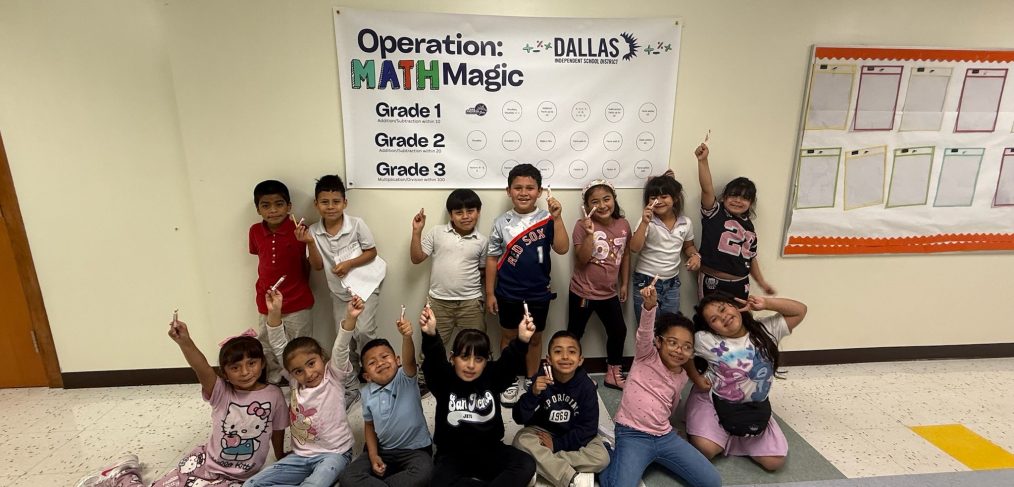
Last year, Dallas ISD launched Math Magic, an initiative focused on helping first through third graders gain automaticity with their basic facts. What began as a new idea quickly grew into a districtwide movement: 98 schools participated, reaching more than 18,000 students. By May, 12,250 students had earned their Math Magic T-shirt by reaching all six milestones.
“It’s always nice to see something come to fruition,” said Aaron Daffern, director of mathematics in Academic Services. “This is something new, it is something different, and it can be a challenge for a principal or assistant principal to take this and integrate it into their support.”
From the start, Math Magic was designed to be ambitious but realistic. The district provided structure, materials, and suggested timelines, but left room for campuses to adapt. That flexibility turned out to be a major factor in its early success.
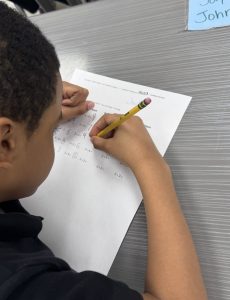 “The schools that showed the most success,” Daffern explained, “were the ones that had someone who was taking charge and organizing things.”
In classrooms, the impact is beginning to show up not just in test data, but in how students think. Daffern heard stories from early learning specialists who watched third graders struggle through the first milestones only to suddenly hit a turning point.
“For some kids it was the fourth milestone,” he recalled. “It was like a light bulb was turned on, and they started to breeze through. They thought it got easier, and honestly, it was getting a little bit more difficult, but they were starting to understand and starting to use different strategies.”
For Daffern, that “light bulb” moment in math mirrors what happens when first graders crack the code of reading. Once they understand that letters represent sounds, their reading takes off. Math Magic, he argues, does the same for mathematics.
“Fact fluency is the phonics of mathematics,” Daffern said. “You can’t read unless you know how phonics work, and you can’t do math unless you have your basic math facts.”
That fluency matters well beyond simple computation. When a fourth grader has to add fractions with unlike denominators, it suddenly becomes easier if they already know that 4 and 3 connect to 12, the least common multiple. Instead of getting lost in the arithmetic, students can focus on the concept.
“We want them to notice the patterns,” Daffern said. “If you’re multiplying by five, the one digit is always going to end in a five or zero. If you multiply by two, it’s always going to be a 0, 2, 4, 6, or 8. Math is about recognizing patterns and having that automaticity.”
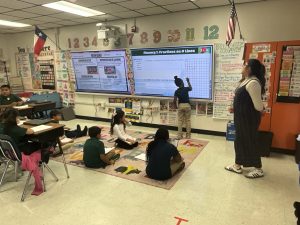 That emphasis on patterns is intentional. Without it, Daffern worries students are just “randomly memorizing things that have no context.” With it, they gain mental shortcuts that free their brains to handle richer problem-solving.
Just as important as the cognitive side is the atmosphere it creates in classrooms. Because timed tests can be intimidating, Math Magic was built around “high structure, low stress.” Campuses received a suggested testing window but no rigid reporting demands. Teachers could tuck Math Magic wherever it fit: into a daily math block, during lab time, or in those odd minutes between specials and dismissal. Elementary schools, Daffern noted, are especially good at this kind of creative scheduling.
“There are no bells in elementary school,” he said. “They’ll rearrange their master schedule every year if they need to, to make it make sense.”
Parents were invited into the effort as well. At-home games with English and Spanish instructions went home in backpacks. On selected campuses, thanks to support from the Dallas Education Foundation and the Dallas Mavericks, students received custom-designed flashcards and sturdy one-minute sand timers.
Looking ahead, the district expects Math Magic to reach all 150 elementary schools and to grow alongside new state-supported math academies for teachers in kindergarten through third grade. Daffern believes the payoff will become even clearer as this year’s second graders enter third grade with solid addition and subtraction facts already in place, and as future cohorts move into upper grades ready for higher-level computations.
In Daffern’s mind, the goal is simple: make Math Magic part of what Dallas ISD is.
“I want it to be something that 30,000 kids look forward to every year,” he said. “We would never not teach a student phonics, and we need that same mindset for math facts, because if we get this right, we’re not just making math easier—we’re opening the door to everything that comes next.”