There’s an app for saying thank you

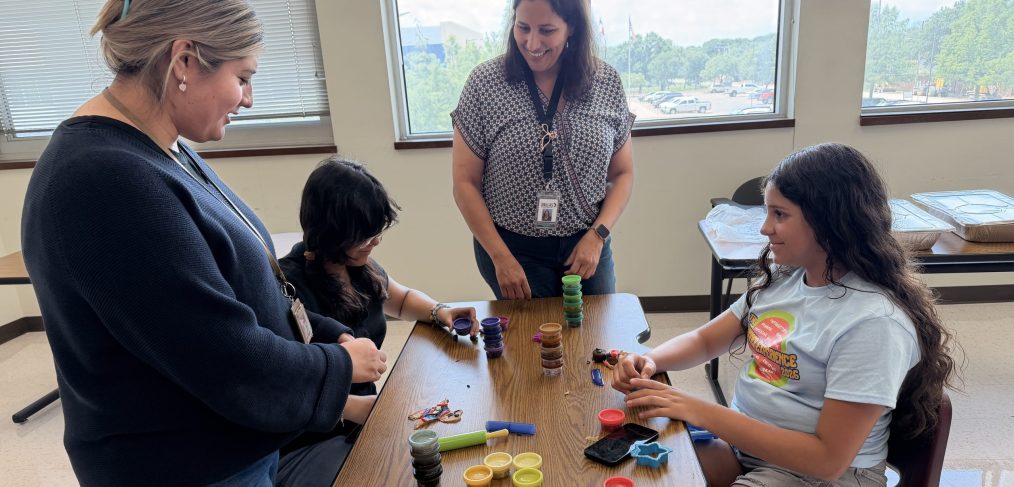
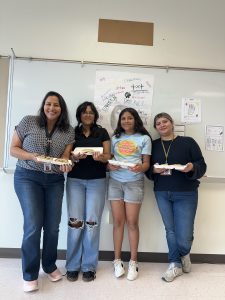
At Preston Hollow Elementary School, a new spirit of appreciation is transforming the school culture. With a focus on gratitude and positive relationships, Principal Ginette Peralta Suarez introduced GiveThx—an app-based initiative designed to help team members and students regularly recognize one another’s contributions. 

The initiative is currently being piloted by staff, but it is set to expand to students soon, making Preston Hollow the first campus in Dallas ISD to use the software. Funded by a grant secured directly through the GiveThx organization, the move to adopt the platform stemmed from a pressing need. 

“Our climate survey was not the best,” Suarez said. “I came in and it was low, and it has still trended low.” 

Suarez explained that while the campus consistently tries to celebrate team members, the focus remains on building deeper connections, which the app has helped to do.

“It’s more about trying to build that with the teachers, and also acknowledging [the positive], because many teachers will actively say how this is the best campus they have worked at,” she said, noting the difficulty of maintaining perspective. “When you’re in it, you don’t see it, right? The grass is always greener on the other side.”

To shift this perspective, Suarez began integrating the app into the start of every staff meeting. The results were immediate. By prompting a moment of gratitude at the beginning, the tone of the meetings shifted from administrative to appreciative. In just one recent meeting, staff exchanged 22 digital thank-you notes, sharing things that usually go unsaid.

“It changes our meetings, because we’re starting from a place of gratitude,” Suarez said.

The app isn’t just about giving thanks. It’s designed to encourage broader participation and self-reflection, Suarez said.

“When you log in on your phone, the app tracks your activity and prompts you if there is someone you haven’t thanked yet,” she said. “It automatically encourages you to engage with different people so that you aren’t just reaching out to the same ones all the time.”

The platform allows for easy customization to match Preston Hollow’s International Baccalaureate (IB) values. Instead of generic compliments, the thank-you notes are categorized by IB traits such as being principled, caring, risk-taker, or communicator.

“I want my IB words to be what we aim for,” Suarez explained. “It’s the language the adults use and the students use. For example, if a student misbehaves, we ask which part of the learner profile they weren’t embodying. Now, with GiveThx, we can highlight when they are embodying them. It allows us to tell our story through thanks.”

While team members are already seeing a 53% participation rate, the true goal is the student rollout. Suarez hopes the app will provide a safe, private space for students—particularly those who might be shy—to recognize one another.

“I want the students shouting out each other. Many times, conflicts between students come from a lack of communication; they hone in on the negative,” Suarez said. “This shifts the narrative to how someone helped them today. It’s a way to learn internet etiquette and technology etiquette by writing something positive about someone else.”

Far from a ‘one-and-done’ initiative, GiveThx includes 14 structured lessons per year designed to help students cultivate a deeper practice of gratitude. The gratitude lessons, Suarez explained, would be brief and easy to incorporate. 

“We ask our teachers to hold morning meetings, and that’s where these lessons fit in perfectly. Once a week, we go over a specific concept, and then we have the opportunity to practice it for the rest of the week,” she said.

Suarez considered potential challenges, especially how to ensure all students would be included once the feature opened to them. 

“The teachers will have the ability to review thank-you notes and track participation data to make sure everyone receives recognition,” she said. 

Responding to concerns about technology and social isolation among children, Suarez said, the app gives an opportunity with monitored access, said Suarez in response to potential concerns about technology and social isolation among children. It hones in on something positive. 

“You’re not sharing pictures; you’re just saying something nice about somebody else,’” she said. “It’s a good way to learn internet etiquette—to write a positive note.”

With enthusiastic participation from over half the staff already, and plans to involve non-teaching team members and tutors, Suarez envisioned GiveThx as a model for the district and beyond. 

“It just fosters a sense of gratitude. It changes your whole mindset,” she noted. “How about being grateful for what you do have?”

Looking ahead, Suarez hopes to potentially expand access to parents. “Since it’s an app base, we technically can invite parents. That may be something we do for year two,” she said.

When asked what her own “thank you note” to the Preston Hollow community would be, Suarez responds immediately that “my note would be about being caring. I would thank our staff, students, and parents for always caring for each other. It makes me a better advocate for a community that supports one another.” 

Turning challenges into success

As a young man, Roberto Garcia, Spanish teacher and wrestling coach at Thomas Jefferson High School, often got in trouble for fighting in school. Though he chalked it up to low impulse control, he now views it as an early foreshadowing of his passion for wrestling.

Garcia’s early years were marked by family, transitions, and challenges. In 2005, his family immigrated to Dallas in pursuit of better employment opportunities. His mother, who taught embroidery to low-income women, and his father, a government employee in Durango, Mexico, sought a new beginning. The crossing itself was arduous for his mother and brother, traversing the desert for over a week, but for Garcia, the journey was less treacherous.

“I got on a bus, fell asleep, and woke up here,” Garcia said. “Looking back, my journey was super easy. When my kids tell me about their own journeys—getting caught, staying in detention centers, and spending months traveling from Central America through Mexico to the United States. Mine was a walk in the park.”

Arriving in Dallas, Garcia cycled through several elementary schools as his family looked for work. Adjusting to a new language and culture, he struggled to communicate with teachers. Yet it was precisely this challenge that planted the first seeds of his academic ambition. 

“I always felt, since the very first day of school in the United States, that it was my duty to represent Durango and represent my family and represent Mexico by doing the right thing here academically,” Garcia said.

Middle school marked a turning point—Garcia discovered a calling in education and service. As he acquired a better handle on English, he began helping other newcomers in class, experiencing the joy and empowerment of breaking linguistic barriers.

“Once I started learning the language, I really enjoyed helping newcomers translate in my eighth-grade Algebra class,” Garcia said. “I loved being able to translate and seeing how excited they would get. I’d tell them, ‘Two or three years ago, I couldn’t even defend myself in English—but if you focus on the language, opportunities will come.’”

At Thomas Jefferson High School, Garcia found community and opportunity. Through the Patriot Ambassador program, started by Johno Oberly, a ninth-grade algebra teacher, Garcia and a cohort of students worked to improve school culture—tackling issues like teacher turnover, giving feedback to educators, and fostering pride. 

“Mr. Oberly equipped us with the tools to identify issues within the school that we wanted to fix and then go about and fix them,” Garcia recalled. “And so he kept nurturing that interest in education, and most importantly, in leaving this school better for the next generation.”

Upon graduating from high school, navigating the American college system as an undocumented student, he faced financial aid inaccessibility, sparse opportunities, and, at home, the pain of his parents’ divorce. Thanks to the help of mentors and a benefactor who paid for his Deferred Action for Childhood Arrivals application, Garcia enrolled in the University of North Texas and eventually became the first in his family to graduate from a four-year university.

“I graduated college without taking out any loans; I paid for it all out of pocket,” Garcia said. “I wouldn’t have had it any other way, because the experience taught me the true value of money. It gave me a different perspective, and it’s why that degree means so much to me today.”

After stints in warehouse management and insurance, Garcia found his true calling back at Thomas Jefferson. In 2022, spurred by a Facebook post and his relentless desire to serve, he stepped into the classroom as an advanced Spanish teacher—and soon after, into the wrestling room as head coach.

Despite no formal wrestling background, Garcia drew from years of boxing and fierce determination. He leaned on colleagues, friends from ​George’s MMA and Boxing Gym, and his own faith to build a program that quickly grew in size and stature. Garcia’s wrestling program now includes over 50 students, both male and female. 

Garcia is especially proud of his female wrestlers, describing them as some of the toughest young athletes he’s ever met. Under his guidance, the program has grown to 27 girls, forming both junior varsity and varsity teams, and even producing the school’s first female college wrestler.

“I genuinely believe what attracts them most is the transformation they see in themselves—not just physically, but personally and mentally,” Garcia said. “If you have the discipline to maintain your weight, to make it through a season, and to wrestle while tired or hurt, you realize you can do anything in life.”

At the core of Garcia’s approach is authenticity. He believes in getting to know students as individuals, recognizing their challenges and supporting them holistically.

“There is no cookie-cutter system for teaching kids. It takes getting to know each individual—discovering what gets them going and what doesn’t,” he said.

His lessons mix structure and flexibility, encouraging autonomy, community, and hard work.

“I believe my philosophy is just engraved in the fact that hard work works, and that nothing is ever going to be given to us, and nobody’s coming to save us,” he remarked.

Garcia dreams of building not just wrestling champions, but resilient, compassionate leaders. He hopes to institutionalize wrestling throughout the community, open his own gym, and remain a pillar for Thomas Jefferson—all while inspiring students like himself to rise above their circumstances

“My ultimate goal is to provide opportunities for my students and give back to the community that has supported me,” Garcia said. “If I could have my kids remember me for one thing, it would just be that there is meaning in our suffering, and that if we want something in our life, we have to work for it. When things get tough, just get tougher.”

Preparing the next generation of theater artists

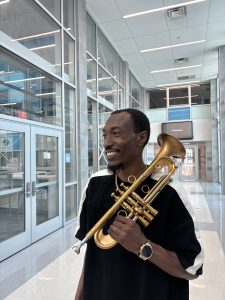
At Dr. Martin Luther King Jr. Arts Academy, the theater department is growing its creative force. Ramad Carter, the school’s theater teacher, is drawing from his artistry and lifelong passion for education to prepare the next generation of actors to become authentic, expressive, and compassionate performers.

Carter studied theater in New York City, where he earned his Bachelor of Fine Arts in dramatic acting at The New School in 2017. While there, he trained in acting, directing, and playwriting while also performing professionally throughout the city.

“I love the open-mindedness of the city,” he said. “I saw some phenomenal shows, and I was constantly inspired by the ways people created. People explored art in so many ways, and it pushed me to dig deeper and figure out where I fit as an artist.”

Even while pursuing his artist career, Carter continued to teach. During his time in New York, he worked as a teaching artist and instructor at local after school arts programs.

“From my childhood until now, teaching has been the through line in my life that has always been there,” Carter said. “I’ve always admired my teachers and the impact they made. Fast forward to today, and I’m doing that work teaching full time.”

After returning home to Texas, he earned a master’s degree in early childhood education from the University of North Texas and continued to expand his work as an educator.

Now, in his fourth-year teaching at Dr. Martin Luther King Jr. Arts Academy, Carter is building strong foundations in storytelling and the production process. Students study monologues and plays while also gaining early exposure to the technical elements of theater, including lighting, costume design, stage design and assistant directing.

Carter has directed multiple student productions in collaboration with the school’s musical director and choreographer of such Broadway hits as Annie, Disney’s Beauty and the Beast and 101 Dalmatians, and Sister Act.

Many of his students have seen Broadway musicals before they reach high school, a unique opportunity due to key partnerships with Forest Forward, Broadway Dallas and the AT&T Performing Arts Center. This early exposure to professional theater allows students to envision themselves in similar roles and imagine creative futures as performers, Carter said. Carter’s work has earned him recognition as the campus 2025-2026 Teacher of the Year. His passion for creative, student-centered instruction has established him not only as a leader in his classroom but also throughout the school. 

His dedication is especially reflected in student outcomes. In a single audition cycle, six middle school students from the department were accepted to Booker T. Washington High School for the Performing and Visual Arts for the 2024-2025 school year.

“I’m so inspired by my students,” Carter said. “They do things that are very difficult. What we learn is not just technical. I teach them to feel their emotions and connect to their characters in a way that makes their acting feel real.”   

Inside Carter’s classroom, a wall of playbills tells the story of what he has built. The collection includes productions he saw while living in New York City, shows his students have attended through Broadway Dallas, and even an Off-Broadway production written by a former college roommate and friend—Oh Happy Day.

These visual reminders serve as windows into the creative world students are learning to navigate.

“I pride myself in allowing my students to develop their own individuality and bring themselves to the work we do,” he said. “We build community. We depend on each other and take care of each other. I encourage individuality and kindness.”

MLK Oratory finalists shine with their sponsors’ support

Eight talented young orators will showcase their talents in the 34th Annual MLK Oratory competition, co-sponsored by Foley & Laudner LLP and Dallas ISD. And their sponsors will be there with them supporting their performance as they have all year. 

The competition was established in 1993 and is hosted each year in conjunction with Martin Luther King Jr. Day to encourage the community to remember the legacy of the civil rights leader. The competition will start at 11 a.m., on Jan. 16, at the Dee and Charles Wyly Theatre at the AT&T Performing Arts Center. For those who can;t attend in person, it will be livestreamed at https://live.myvrspot.com/player2?udi=ZGFsbGFzaXNk&c=c3RyZWFtNA%3D%3D.

To prepare for the competition, fourth and fifth grade students are coached by Dallas ISD teachers, or sponsors. They work alongside the student, engaging them in the history of King to prepare an original speech that answers the question: “As a student of Dr. King’s Life, what message of hope do you think he would have for the world today?”

Meet the eight sponsors who coached their young orators to reach the finals.


Betty Glover, Clara Oliver Elementary School

Betty Glover is making history with the MLK Oratory Competition as the longest-standing sponsor. She has been involved since the competition’s first year in 1993. Throughout her 58-year career in Dallas ISD, she has spent most of her time as a talented and gifted teacher at Clara Oliver Elementary School and was named district teacher of the year in 1999.

“Clara Oliver was one of the first schools to be selected to participate,” she said. “I’ve been working with the students here at Clara Oliver since the very beginning of the competition.”

Each year, Glover works closely with her students, letting them share what they want to say in their speeches. She teaches how to write an essay and guides them in understanding persuasive writing, showing them that it is something they use every day in their conversations and interactions.  

“I love motivating students to read.” she said. “I love history, and I want to make sure they love it too. As the years go on, students can become farther removed from things they’ve learned. Competitions like this help them to remember those things and also learn what they didn’t know before.”


Rochelle Hailey, Solar Preparatory School for Girls

Rochelle Hailey became an MLK Oratory Competition Sponsor three years ago. She is a debate teacher at Solar Preparatory School for Girls and supports reading and language arts learning at her school.

Hailey and her student studied King’s writings and his presentation style. The student analyzed and made personal connections to the decisions King made during his life. They also practiced delivery and presence, even using the stage during lunch and school assemblies to practice speaking to large audiences and receive feedback from peers.

 “To serve as a sponsor is an honor,” she said. “I teach confidence, courage, and the understanding that every girl’s voice has power to speak their truth and share their light,” she said, often encouraging her students to believe that their voice is worthy of the space it occupies.

 Throughout the process, Hailey watched her student go from simply reciting words, to becoming the message.

 “When I reflect on the ultimate impact of this competition, I am reminded that the future is not waiting to be written; it is already finding its voice in every child that will embrace that stage next Friday.”


Shelley Wallace, Paul L. Dunbar Learning Center

Shelley Wallace teaches in the talented and gifted program at Paul L. Dunbar Learning Center. She has been an MLK Oratory Sponsor for the last eight years, with additional support from fellow teacher Gloria Douglas.

“My favorite part of the competition is when the students experience the culmination of their hard work as they recite their speeches with anticipation of making the finals,” she said.

From watching videos of King’s speeches, to library visits, to analyzing his quotes and comparing time periods, Wallace prepared her student to be fully equipped with the knowledge to not only write her speech but recite it in a way that reflects King.

“As a sponsor, I get to serve in a capacity that illuminates the contributions of a great historian and leader,” Wallace said. “I get the opportunity to bridge the gap between a piece of past history that was dark but now gives hope to the future.”


Melissa Clay, Arturo Salazar Elementary School

Melissa Clay has been an educator for 22 years. She is now the assistant principal at Arturo Salazar Elementary School and has been an oratory competition sponsor for the last four years.

Clay began coaching her student by sorting through what the student already understood about King. From there they researched his life and legacy. She then challenged her student to create something that was hopeful, purposeful and inspirational.

For Clay, stepping into the role as a sponsor means leading by example and requires her to show up fully and intentionally, just as she asks her students to do.

This experience connects one of her childhood memories, a time when she herself was a Dallas ISD student participating in a Black History Month oratory contest as a second grader.

“I didn’t know it at the time, but my teacher saw something in me that sparked a lifelong love for speaking and self-expression,” she said. “Today, I strive to be that same light for students.”


Carla Patrick, J.P. Starks Math, Science and Technology Vanguard

Carla Patrick has been a MLK Oratory Competition Sponsor for 10 years.

She prepared her student for the competition by introducing King’s speeches and reflecting on the messages. Gathering books, articles and videos, the student used the culmination of this research to write a speech. Patrick used techniques such as practicing in a mirror to focus on stage presence.

“I assured my student that they have the tenacity to see this through,” she said.

“Taking on this role as a MLK sponsor is important to me because it helps students with decision-making, communication, and goal setting,” she said. “It also encompasses debating, problem-solving, and comprehension, which are assets that go far beyond the MLK competition. It builds leaders and encourages community involvement.”


Rosalind Reece, Wilmer Hutchins Elementary School

Rosalind Reece, music teacher at Wilmer Hutchins Elementary School, is an oratory competition sponsor this year, and is committed to sharing King’s legacy with the next generation. She has been a part of Dallas ISD for 21 years.

Reece partnered with her student’s mother who helped prepare at home, while she worked with her student at school, always remembering to encourage her student of the progress he has made.

“My favorite part of this competition is seeing the students push hard to give their best,” she said. “From the preliminary level to the final level, the drive they have to accomplish their goal to win is thrilling. Seeing them persevere despite the nerves that naturally accompany competing is motivating.”


Angela Walker, Charles Rice Learning Center

Angela Walker has been a MLK Oratory Competition Sponsor for nine years, after receiving encouragement from her principal at the time, Alpher-Garrett Jones.

After supporting her student in practicing her speech, Walker has watched her student go from a beginner orator to an extraordinary finalist.

I encouraged her by making sure she knew that she was chosen for a reason, for this time and for this moment, “Walker said. “I made sure she had adequate time to practice, and I reminded my student that I see the best in her even when she feels discouraged.”

She has been an oratory sponsor for all nine of her years as a reading language arts teacher at Charles Rice Elementary School.


Janice Wilson, Preston Hollow Elementary School 

Janice Wilson, a 30-year veteran of Dallas ISD, is a Functional Living Teacher at Preston Hollow Elementary, where she has taught for two years.

Wilson was a child during the years while King was building his legacy of justice, equality, courage, and nonviolence across the nation. Through this opportunity as an oratory sponsor, she is carrying on the impact that she witnessed in her childhood to the next generation.

Throughout the preparation process, Wilson, who has a doctorate from George Fox University, encouraged her students by celebrating progress, reinforcing strengths, normalizing nerves, and creating a supportive environment that helped the students step onto the stage feeling prepared and proud.

“There’s something powerful about seeing them become proud of their accomplishment—standing tall, delivering their words with strength, and realizing they’ve earned that moment,” she said. “I love seeing the cheers from the audience, the proud smiles from family members, and the pats on the back from classmates and teachers who recognize how hard they’ve worked. It becomes more than a competition. It turns into a celebration of their voice, their courage, and the community that lifts them up.


AI changes teacher coaching

Coaching for teachers has traditionally been done through classroom observations. Dallas ISD is trying something new by integrating video-based coaching into middle-school math instruction, part of a grant-funded partnership with the Texas Instruments Foundation and the Communities Foundation of Texas. 

Math teachers from nearly 12 middle schools assembled in the library of Billy Earl Dade Middle School recently for the workshop, led by Aaron Daffern, director of math, to celebrate successes and address ongoing challenges in using technology to advance instruction.

The AI tool was designed to bolster professional growth and improve teaching. With its help, teachers can record their lessons and receive real-time insights into their teaching style and student responses. However, the district emphasizes that the technology is secondary to the teaching itself.

“While we are using it, it is simply a means to an end. Our ultimate goal is to improve instruction, increase participation, and foster academic discourse,” Daffern said. “We want to provide faster, more actionable feedback—because if it isn’t directly related to instruction and learning, it isn’t the best use of our time.”

During the workshop, attendees shared personal experiences with the AI tool, emphasizing its usefulness for generating quick math drills, streamlining lesson activities, and providing step-by-step guidance for both teachers and students. A leaderboard encourages peer-to-peer learning, friendly competition, and recognizes top-performing educators.

“For the most part, it is a very good resource. I like the idea of using it as a ‘talking stick’ with the kids,” said Jose Gutierrez, a math teacher at L.V. Stockard Middle School. “I think that would really improve student discourse.”

Teachers also used breakout sessions during the workshop to reflect on the limitations of AI. They noted that while the tool is excellent for analyzing “talking time” distributions in class videos, the technology still requires patience.

“The feedback takes a while; you have to keep asking for it. It’s just like any regular AI thing—it’s going to take a while, like any other AI program,” said Luis Martinez Monsivais, also a math teacher at Stockard.

Teachers expressed a desire for AI tools to improve visual outputs, such as diagrams and graphs, recommending platforms for more complex visual tasks. In response, the workshop showcased new technology rollouts from over the holidays, including an audio-synced notes enhancement designed to make the platform more user-friendly.

As the district leans further into video-based coaching, privacy remains at the center of progress. The current AI tool, for example, ensures that teachers and students are always protected through high-level encryption.

Throughout the workshop, teachers remained enthusiastic about the AI’s features, describing them as tools that are truly transforming the profession.

“A few things I find really cool about it are the ability to download a lesson, upload it, and then annotate it,” said Anaka Brooks, math teacher at Piedmont Global Academy. “I’m still mastering the annotation process, but being able to annotate while casting my iPad to the screen is a total game-changer.”

Meet Hillcrest’s new athletic coordinator

Candace Balderas-Miller is one of the few female athletic coordinators in the district, leading the Hillcrest High School Athletic Department with a vision of opportunity, wellness, and athletic success for all students. Overseeing 18 sports programs, she leads by example as a lifelong learner, inspiring the next generation of student-athletes, especially young girls, finding their place in sports.

Balderas-Miller is no stranger to stepping into new spaces. Throughout her career she has transitioned across multiple sports and embraced challenges that required her to grow and adapt. Now in her 11th year with the district, she brings that tenacity into her new role as athletic coordinator and powerlifting coach at Hillcrest.

“Sometimes when we think of sports, especially because it is male-dominated, girls may feel like it’s not a place for them,” she said. “I hope that when any stude

nt sees me or interacts with me, they become open to new possibilities, because I really believe that in athletics, there is a place for everyone.”

Growing up, Balderas-Miller played soccer from a young age and later took on a new sport in college, competing in Division I and II rugby at Texas Tech University. Her commitment to lifelong fitness continued into adulthood.

“I still play rugby as an adult,” she said. “I got married and had my first child and I continued to play. My fellow coaches and my community around me were able to see how it’s possible to stay active. I was lifting weights and running, even while seven months pregnant.”

Balderas-Miller’s career in Dallas ISD began with another exciting transition, becoming the wrestling coach at Moisés E. Molina High School. Over 10 years, she advanced to assistant athletic coordinator, gaining leadership experiences that prepared her for her current role.

“I have learned the importance of being a lifelong athlete and lifelong learner,” she said. “Finding what you enjoy, discovering what you’re good at, and understanding that those passions can stay with you into adulthood is really important.”

Her impact was recognized in February 2024, when she was selected as the district’s Coach of the Month. In 2025, she was named the Region I Coach of the Year.

As both a coach and athlete, she challenges traditional ideas about who may belong in a certain sport and is redefining what strength can look like.

“I am inspired by so many other great female coaches and athletic coordinators across the district that I’ve met along the way, from South Oak Cliff, Molina and W.T. White [high schools],” she said.

With a goal of developing Hillcrest athletics to become a premier athletic program in the Dallas-Fort Worth metroplex, Balderas-Miller and her fellow coaches are providing opportunities for current and prospective student athletes to get involved in ways that best fit them.

To prepare the next generation of athletes, she manages the Hillcrest Sports Academies, an opportunity for younger students across the vertical team to find sports that interest them, meet coaches, and learn what it means to become a Hillcrest Bystander.

Current students can even participate in sports without playing on a team. The Hillcrest Football Club creates photography and video content for the football team’s social media.  

“I really want to create opportunities for every student who wants to be involved in Hillcrest athletics,” she said. “I play rugby. I once coached wrestling, and now I coach powerlifting here at Hillcrest. I do a lot of things that girls aren’t supposed to do. When students see that, it turns on a light bulb to the possibilities of what they could do if they want to.”

From one campus to many, students remain his focus

Antonio Verduzco began his leadership journey, and his 24-year career with Dallas ISD, the way many educators do, in the classroom, sharing a love for learning with his students. After his early days as a teacher and more than a decade as a school principal, Verduzco has now stepped into a new role as director of Student Activities, expanding his impact to student experiences across the district.

“As a teacher, I was able to impact the 23 kids in my classroom. As an administrator, that impact reached hundreds of students,” Verduzco said. “Now, I’m in a position where I can potentially impact more than 130,000 students. It’s a full circle moment to be here.”

Verduzco began his career in 2001 as a bilingual teacher at Margaret B. Henderson Elementary School, where he served for five years before transitioning into campus leadership. He went on to be the assistant principal at what is now the Young Men’s Leadership Academy at Fred F. Florence Middle School and Kleberg Elementary School. Later, he became the principal of what is now known as Julius Dorsey Leadership Academy, followed by B.H. Macon Elementary School.

He credits much of his growth to the mentorship and support of vertical team executive directors who invested in his leadership potential. Today, he is passing on that same encouragement and guidance to his team in student activities.

“I try to be present at every event,” he said. “The former director was the epitome of this program. We saw him at every event, and that’s the commitment I have tried to continue this year.”  

As director of Student Activities, Verduzco leads 12 districtwide student programs alongside six coordinators and three managers. Together, they create opportunities for students across Dallas ISD to discover their interests and talents through activities such as student publications, chess, cheer, academic UIL and debate.

Through these extracurricular competitions, Verduzco is encouraging students to have fun and develop courage in gaining new interests, something he said can positively enhance academics beyond these competitions.

Pulling from his 16 years as a principal, he brings a passion for developing connections and strengthening relationships across campuses to his new role. He is committed to helping schools strengthen their campus activity programs and coordinates complex district competitions throughout the year, especially during the spring semester.

“It all starts with connections,” Verduzco said. “You make connections with your students, then with teachers and staff, and then with parents. We often say, ‘It takes a village,’ and that’s our village—the parents and the community around us. That’s where you build trust and strong bonds needed to make a difference for students.”

Following in the footsteps of longtime director Leonidas Patterson, who retired in August, Verduzco is continuing a hands-on servant leadership style, a personal hallmark that has earned him recognition across the district.

While serving as principal at B.H. Macon Elementary School, Verduzco was named the district’s 2021-2022 Principal of the Year. Earlier in his career, he was a Campus Teacher of the Year. He said the lessons learned, relationships built, and experiences from those years continue to shape the leader he is today.

A Dallas native, Verduzco graduated from Skyline High School and later earned a bachelor’s degree from Texas A&M University. His love for family and his growing passion for education ultimately led him back home to Dallas ISD to become a teacher. Since then he has completed a master’s degree from the University of Texas at San Antonio, as well as a master’s in bilingual education and a doctorate in educational leadership from Southern Methodist University.

For Verduzco, every program, competition, and student milestone is a reminder that leadership is most meaningful when it creates opportunities for students. The Student Activities Department has already engaged more than 17,000 students in competitions this fall alone.

“We get to provide opportunities for our Dallas ISD students to participate in any kind of extracurricular or co-curricular activity,” he said. “It’s beautiful to see the impact we make on kids. That’s what matters most. It always comes back to serving the students.”

Math Magic prepares students for the future

One of the most important rites of passage in a young person’s life is the ability to do mental math without conscious effort. Children begin training for this process, known as automaticity, in the first grade and continue through elementary school. But as curriculum coordinators visit classrooms throughout the district, they’ve identified a recurring challenge: students lack the immediate recall of basic facts necessary for higher-level problem-solving, according to Aaron Daffern, director of mathematics in Academic Services. 

“It used to be that there was this false dichotomy: you either memorize everything but don’t understand what it is, or you go to the other extreme and just explore, but you aren’t very fast,” he said. “Education tends to swing both ways, but there’s no reason why you can’t have both. Sometimes [exploration] comes at the cost of your facts; we want to be able to do both.”

To balance memorization with conceptual learning, Academic Services introduced Math Magic this past fall—an initiative designed to help students develop automaticity in basic addition, subtraction, and multiplication facts. Mastery of these facts frees up valuable cognitive resources, enabling students to engage with complex concepts instead of being bogged down by calculating basics. 

“If all of my mental energy is spent trying to remember what eight plus seven is, there isn’t much space left to figure out whether I should even be adding or subtracting,” Daffern said. “We noticed there was an opportunity to increase that fluency through our walks this year.”

Implementing the magic

To tackle this, Math Magic provides a progression of standards-based benchmarks for first through third grades. First graders aim to master addition and subtraction facts up to a sum of 10, second graders within 20, and third graders turn to multiplication facts within 100—each step aligned to TEKS state standards.

Knowing that timed tests can sometimes feel daunting, the district designed Math Magic to be high-structure but low-stress. The program is built on a series of six milestones, following the natural progression of the curriculum—starting with easy zeros and ones before tackling the “boss levels” of sixes, sevens, and eights, Daffern said. To keep energy high, the program uses “gamified” incentives, including immediate feedback, candy, and a T-shirt prize once students have completed all six milestones.

Banners at each campus track classroom accomplishments and create a sense of healthy, inclusive competition.

“Every school has received a progress banner featuring grades first through third with six milestone circles each,” Daffern said. “Once 80% of a grade level masters a specific skill—such as doubles in addition or zeros and ones in multiplication—the school covers that circle with a checkmark, thumbs up, or their school crest.”

Promising results 

Initial feedback from schools, such as Richard Lagow Elementary School, has been promising, underscoring student excitement and ownership. As Daffern noted, “Kids were so excited. They were competing against each other, and they were monitoring their own progress—‘I missed eight last time, but I only missed four this time.’”

Beyond the classroom, one of the most heartening results of Math Magic has been parent engagement. While modern math strategies can sometimes feel “new” or confusing to parents, a math fact sheet is a universal language. These practice sheets—available as Google Docs—can be sent home, empowering parents regardless of their own math confidence. 

“One suggestion we give teachers is to send these Google Docs sheets home. As a parent, I might struggle to help with third-grade math if it’s been a while since I was in school, but I know how to use a practice sheet to help my child memorize facts,” Daffern said. “We wanted to provide a resource that parents can access without needing to teach—they can simply use a timer, quiz their child with flashcards, and provide support at home.”

Teachers have been given not only the tools but also the latitude to fit the initiative into their unique classroom cultures. Most teachers recall timed tests as a familiar format, making Math Magic an “extra resource” that fits seamlessly into daily routines.

“Our goal was to make this as self-explanatory as possible. While new curricula like Eureka or Carnegie require extensive training, these are essentially timed tests—a format most teachers are already comfortable with,” Daffern said.

Teachers sharpen their tools

While students focus on Math Magic, teachers are also sharpening their own tools through the Math Teacher Collaborative. The Math Teacher Collaborative brings educators together to build their content knowledge and instructional practices, ensuring that teachers feel confident teaching both the basics and advanced math concepts.

“Last year, we launched a three-day training for 40 high-priority campuses to deepen teachers’ understanding of math content,” Daffern said. “Since many elementary teachers may specialize in reading or are new to math, we focused on the full progression of skills. We had kindergarten teachers work through fifth-grade math, and fifth-grade teachers explore kindergarten concepts, ensuring everyone understands how the curriculum builds and where their students are headed.”

While the impact will be measured anecdotally this year—tracking T-shirt requests and drawing on teacher and principal feedback—the hope is that the combination of structure, fun, and clear goals will ensure fewer students “fall through the cracks.” 

“Students have struggled with this for a while. It’s very much like reading; if a student is reading on a third-grade level in high school, they can’t access those texts and won’t be able to do any of their coursework in high school English,” Daffern said. “Rather than trying to fix these gaps in middle or high school, we are placing the emphasis where it belongs: in first, second, and third grade.”

While the immediate goal is better scores on standardized tests like the STAAR, the long-term vision is about confidence. By the time these students reach middle school and are allowed to use calculators, they will have the foundational “number sense” to know if a calculator’s answer even makes sense.

“Kids enjoy this because they like being able to test themselves. It provides immediate feedback, and that opportunity for incremental growth is what really helps. You don’t actually have to motivate kids that much—they naturally like learning, and Math Magic provides it in bite-sized pieces,” Daffern said.

Fleet Services is ready for winter and beyond

For most people, a drop in temperature means grabbing a coat. For Duran Hargest, director of Fleet Services, it also means mobilizing a team of 56 technicians to ensure that over 1,000 vehicles—including nearly 900 school buses and a new fleet of 17 electric buses—are ready to hit the road.

Electric buses

This is the first year the district will experience winter with electric buses, Hargest said. While Texas isn’t known for extreme cold, the unpredictability of the weather means the department must prepare for anything from icy roads to power outages. Hargest noted that while temperatures rarely drop below freezing for extended periods, cold snaps can reduce EV battery range by 5-15%.

“Cold weather can affect our EV buses, particularly with battery performance and heating demands,” Hargest explained. “At 32 degrees, I expect our EV buses to lose about 5 to 15% of battery power.” 

To mitigate battery loss and keep buses on the road, Dallas ISD employs battery thermal management systems.

“Our buses are equipped with a battery thermal management system, which runs coolant through the battery cells to keep them cool in the summer, and that same coolant is used to warm the batteries up during the winter,” Hargest said. “It’s a big help when the real freezing weather arrives.” 

When temperatures dip into the sub-zero ranges, Fleet Services adapt routes or substitute diesel buses as necessary, according to Hargest.

Summer mode vs. winter mode

For the hundreds of diesel and gasoline buses, however, the preparation is less about software and more about chemistry. Every fall, Fleet Services switches to “winter gasoline,” which is designed to ignite more easily for cold starts. Yet even traditional diesel and gasoline fleets demand preparation to be ready for winter.

“All refineries switch from summer to winter fuel,” Hargest explained. “Winter gas helps with cold starts and resists gelling.” 

The department works with vendors to ensure on-site fuel tanks and buses receive anti-gel and water-treatment additives, keeping engines running through all weather conditions.

Hargest pointed out that most people don’t realize school buses don’t have a simple thermostat like a car, which allows them to regulate temperatures in no time at all.

“Every Thanksgiving break, we take our school buses and change them from ‘summer mode’ to ‘winter mode,’” Hargest said. “We actually have to go underneath the hood and turn valves to disable the AC system and enable the heaters. It only does one or the other—we can’t switch from heat to AC at any moment. When spring break rolls around, we switch them all back.”

Mobilizing the team

Winter fuel is only one part of the equation. When an ice storm looms, Hargest is the first to watch the radar. Even if the district is closed to students, his fleet technicians are classified as essential personnel.

“I’ll meet with my team or send a text: ‘The district might be closed, but I need personnel to come in.’ We go to the service centers to de-ice driveways, put out salt for traction, and ensure the centers are ready for when schools open back up,” Hargest said. “On mornings with lighter frost, technicians arrive an hour early to jump-start any buses that might struggle in the freezing air.”

Maintenance is a team effort, and every 5,000 miles, every bus undergoes a comprehensive preventive check—fluids, brakes, lights, even first aid kits. Yet the key behind this team effort is the partnership between drivers and mechanics.

“Drivers rely on us to keep the buses ready, but we also rely on them to report any issues—like low tire pressure—before routes begin. It’s a team effort,” Hargest pointed out.

The challenge of infrastructure

Hargest, a graduate of Booker T. Washington High School for the Performing and Visual Arts and an Army veteran with 26 years of mechanical experience, is a fan of the new EV technology—mostly because of the low maintenance. 

“No oil, no fuel to worry about; I just have to put tires and brakes on it,” he said. Yet he is still realistic about the hurdles, especially as they pertain to infrastructure.

While some service centers are fully “future-proofed” with enough high-capacity chargers, others require ground-up electrical upgrades. Expansion is methodical, and each step is evaluated by contractors to ensure the district can meet current and future charging needs. 

The transition to electric is still in its early stages. The drivers are learning the buses, and the buses are learning the drivers, Hargest said. Regenerative braking, route planning, and cold weather driving all affect range and reliability. Extensive staff training and clear communication protocols are integral to adapting to these changes.

A mission for the whole district

Dallas ISD’s fleet operation goes beyond just transporting students. Whether it’s repairing a police cruiser’s flat tire or switching a bus to “winter mode,” Hargest sees his department as the backbone of the district.

“My team supports the whole district—from HVAC and maintenance to IT and the police department,” Hargest said. “We’re a fairly new department, only a few years old, but our aim is exceptional customer service for everyone.”

Central team members can now schedule a photo 

Central team members who are new to the district, never had a headshot taken, or are simply due for an updated one can now schedule a time to get a professional headshot from the district’s photographer. 

This quarter there will be two separate days available between 8 and 11:30 a.m. on Jan. 13 and 14. Each session will be held at the Linus D. Wright Central Administration Building, 9400 N. Central Expressway, Fifth Floor, Suite 583. Choose the date and time that best suits your schedule. 

Updates to Quarterly Headshots

We’re adapting and improving our process to better serve the district’s growing photography needs. Here’s what’s new:

  • Professional headshots will now be offered once per calendar quarter.
  • To reduce early morning backups, we’ll offer pre-signups with a larger time window so arrivals are spread out and lines are shorter. 
  • There will be a deadline to sign up. For these initial quarterly headshot sessions, please sign up by midnight on Sunday, Jan. 11.
  • There will be no walk-ins. To keep the line as orderly as possible, you must sign up for a time spot prior to the scheduled dates.

Who can participate:

  • Central team members
  • Campus principals (not available for assistant principals)
  • Executive directors
  • Associate superintendents
  • Chiefs and deputy chiefs
  • Board of Trustees members

Important Notes:

  • The signup system will now include a link after you sign up to add your date and time to your Outlook or Google calendar. 
  • Each session lasts about one minute. Multiple shots will be taken for your selection. 
  • One image may be selected for retouching, and the selection needs to take place before you leave the session. 

SIGN UP HERE:  CLICK HERE

For questions, email photography@dallasisd.org.