Teaching perseverance through weightlifting
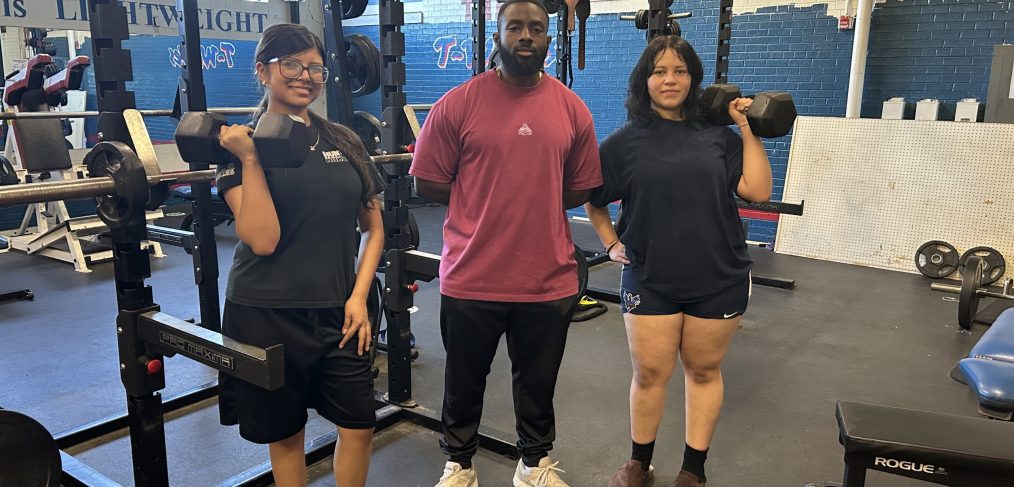
At H. Grady Spruce High School, a small group of students is quietly reshaping what strength looks like on campus. Led by science teacher and coach Isaac Dodoo, the school’s newly revived powerlifting team is not only helping students get stronger physically, but also building resilience, confidence, and a powerful sense of belonging—especially among girls.
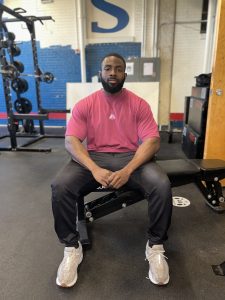
Dodoo didn’t set out to become a powerlifting coach. A lifelong fitness enthusiast who competes in bodybuilding and trains clients on the side, Dodoo said he restarted the powerlifting club at his students’ prompting.
“Three or four years ago, when I started teaching, the students were like, ‘Oh, you know, you should be a football coach, or you should be a powerlifting coach,’” he recalled. At first, Dodoo brushed it off. Then one student refused to let it go.
“She kept bugging me about it all the time. And then one day I was like, ‘You know what? We’ll do it. We’ll do it,’” he said.
Dodoo tried to launch the team last year, but it was too late in the season to get it off the ground. This year, the team finally started well after other schools had already been training.
“While everybody else started in September, some people in November, my kids didn’t start until after Christmas,” Dodoo said. “And they were still able to get a lot of strength in.”
The team is small, with about eight consistent members and roughly 15 who come in and out. But its members defy old stereotypes about who belongs in the weight room. Out of the eight regulars, five are girls.
“The girls tend to gain more strength and tire out less quickly,” Dodoo said. “My boys are great, but 99% of the time, the girls show more drive and consistent performance.”
He believes the grit his female athletes show is shaped by what they face beyond school walls.
 “A lot of them go through more than the males do on a regular basis just being women, and all the difficulties that come with that,” he explained. “Because of that, when they get to the weight room, they’re able to push past those mental blocks a lot more.”
For many of his lifters, this is the first time they’ve ever considered themselves athletes. Some had never been part of any team. Now, they’re among the strongest students in the school. Dodoo has watched them grow not only in physical strength, but in discipline and self-belief.
“Now my students are more receptive to taking feedback,” he said. “They understand that, okay, this feedback is not a personal attack on me. It’s just to make me better.”
The transformation doesn’t stop with mindset. Inside the team, students are becoming more intentional about health. Some bring their own lunches. Others carefully choose what to eat before and after practice. Dodoo doesn’t put them on strict diets, but he teaches them how to make better choices and explains why nutrition matters.
“When I started out this fitness journey, I was about 100 to 120 pounds bigger,” he said. Dodoo lost around 70 pounds by working out and eating less, but real change didn’t come until he started examining what he was eating.
“Once you realize food is such a major factor in your body’s strength and aesthetics, you have to put it at the forefront,” he said.
In his science classroom and weight room, students now read nutrition labels almost instinctively.
“I have these kids reading labels now,” he said. “They’ll look at one and say, ‘Mr. Dodoo, that’s too many calories,’ or ‘That’s good protein, but it has a little too much fat.’”
Weightlifting also teaches students perseverance. Progress in the weight room isn’t immediate, and Dodoo is honest about that. He tells his students that if they’re consistent, they can expect to see results in about two to three months, depending on genetics, diet, and how often they train. Along the way, he prepares them for failure—missed lifts, bad days, and mental blocks.
“You’re never going to conquer the gym,” Dodoo reminds his students. “As soon as you master one weight, there’s always another one waiting for you.”
He also tries to pull them away from constant comparison.
“Just because you hit a lift and your friend doesn’t, it doesn’t mean you’re done; next week, you’ll both be trying to push even more,” he said. “You cannot let that one lift be your defining moment.”
Looking ahead, Dodoo wants to grow the program, especially among underclassmen, and build a true family around powerlifting—a place for students who don’t feel like they fit into football, soccer, or other traditional sports.
“It’s not just about lifting weights; it’s about taking kids who feel they don’t belong and showing them they have what it takes to be champions—both in the gym and in life,” he said.
But Doodo hopes his personal legacy will be measured in something deeper.
“I want to be remembered as someone who never told a student they couldn’t do something, but instead supported them in trying to do everything,” he said.