Celebrating women and girls in science

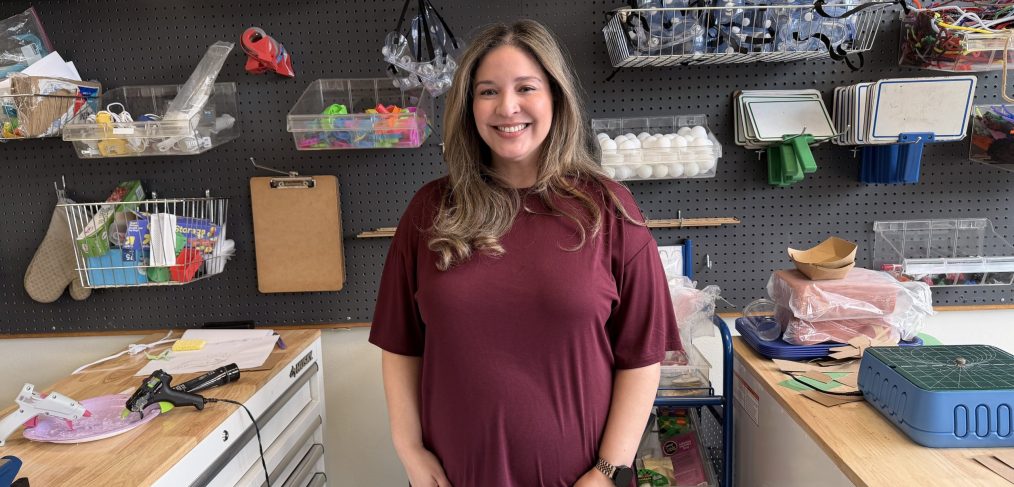
Simone Chandler, a science teacher at Young Women’s STEAM Academy at Balch Springs and Dallas ISD graduate, credits her early exposure to science for shaping her career in education and her journey toward becoming a dentist. Now, she is preparing the next generation to be resilient and inquisitive girls. 

International Day of Women and Girls in Science on Feb. 11 highlights the importance of encouraging young women to pursue innovation, discovery, and leadership in science, technology, engineering, and mathematics. The observance also recognizes learning environments, such as the STEAM academy, that promote equity and opportunity in science education.

Chandler has taught at the school for four years and understands firsthand what it means to grow up with a love for science. From her early years as a student at Harry Stone Montessori, to her high school experience at the School of Health Professions at Yvonne E. Ewell Townview Center, she was encouraged by educators who supported her plan to become both a dentist and a teacher.

She earned her bachelor’s degree in biomedical science from Sam Houston State University, and while teaching, Chandler is continuing her own goal of becoming a dentist.

“When I was in eighth grade in my science class, I knew I wanted to be a dentist,” she said. “Our teacher took us to the Texas A&M College of Dentistry downtown, and I knew that was what I wanted to do. It’s science and it’s art. I get to make people happy and bring them out of discomfort. It’s my ultimate STEM dream.”

Receiving her Registered Dental Assistant certificate while at Townview gave Chandler a head start after high school, allowing her to secure a position as a dental assistant at Mint Dentistry, where she worked for three years before becoming a teacher.

These days, between preparing for the dental school admission test and developing student lesson plans, Chandler is living by the values she teaches in her classroom—a growth mindset and an understanding that mistakes are not failures, but a necessary part of learning and scientific discovery.

“It’s fun being a teacher because you can show the girls different ways of thinking and different points of view,” Chandler said. “I am preparing them to be more confident in the science field and more confident in understanding the why behind how things work.”

Her philosophy as an educator is to make science relatable and to use the subject to prepare students to become critical and ethical thinkers in their everyday lives.

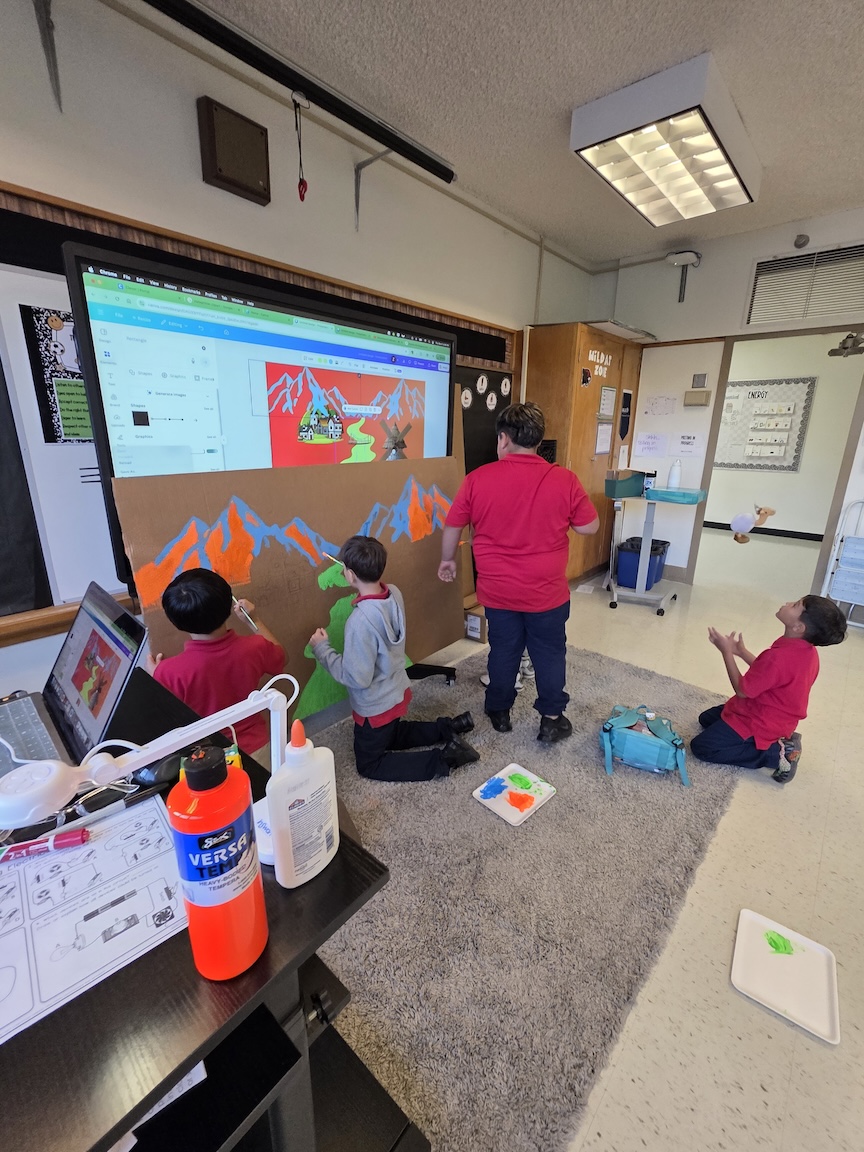
Chandler also leads the coding club at her campus. Through the Young Women’s Preparatory Network, a local nonprofit that supports young women in education, students participate in an annual STEAM Challenge.

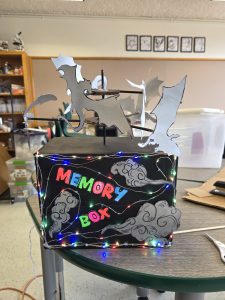
Last year, Chandler guided her students in creating a prototype that addressed challenges related to natural disasters and the people affected by those incidents. After competing at NorthPark Center, students earned the People’s Choice Award.

“I’ve taught here for most of my teaching career,” she said. “Teaching the girls here is what I’m used to, and I love it. I honestly don’t want to ever leave.”

Through her work in the classroom and beyond, Chandler is ensuring that more young women see science not as an obstacle, but as a pathway that prepares them to navigate life with confidence.

“Science is driven by curiosity, and your curiosity leads you to learn different things about the world,” she said. “Developing girls’ curiosity when it comes to science is my whole goal as a teacher, because STEM is the biggest force behind many things in our world.”


Building the foundation for emotional well-being

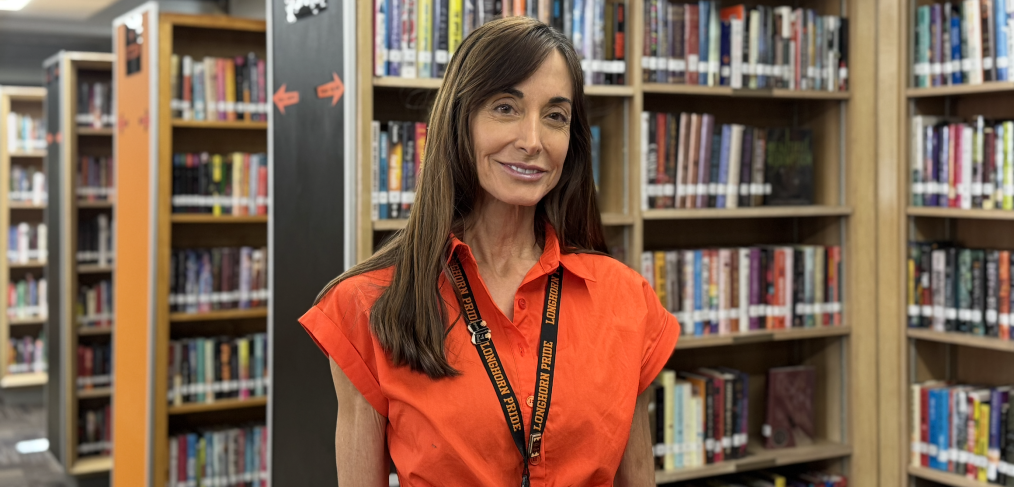
During National School Counseling Week, Dallas ISD recognizes educators who support students’ academic success while nurturing their social emotional well-being. At Frank Guzick Elementary School, counselor Elizabeth Reed-Smith is creating a student-centered program that helps young learners understand their emotions and build confidence.

After nearly 20 years in the classroom, first as a teacher and then as a librarian, Reed-Smith is now in her first year as a school counselor. As a veteran educator, she brings both experience and a modern perspective to the profession.

“My success this year is because of a strong and encouraging school community,” she said. “Having a supportive principal that trusts you to lead the school’s program has really helped me. I am also grateful to have an experienced and helpful co-counselor to collaborate with.”

Throughout her career, Reed-Smith has always aspired to become a school counselor. She achieved this lifelong goal after earning her Master of Education in Counseling and Development from Lamar University, with a specialization in professional school counseling.

As a former librarian with a love for reading, Reed-Smith incorporates literacy into her counseling approach. She uses books as a tool to teach social emotional concepts, such as kindness, to help students connect stories to real life experiences.

Guzick Elementary serves a population that is approximately 60% Hispanic and 40% African American. With this diversity in mind, Reed-Smith is committed to supporting students in both English and Spanish.

“I meet with students in small groups each week, and although I’m a native English speaker, I don’t leave my Spanish speaking students out,” Reed-Smith said. “I always write a script and speak Spanish with them. I have Spanish only in small groups, and then I have my English only in small groups, and they both go over the same things. I want all students to have an equal opportunity to learn.”

Her goal for the school’s counseling program is to reach all students and support them in learning how to express their feelings in healthy ways. As an early childhood counselor, she works with students who are just beginning to navigate a wide range of emotions, providing resources and activities that help them understand their feelings and how to respond to them.

Reed-Smith collaborates closely with teachers, using classroom observations and feedback to shape her counseling program, which helps guide small group activities designed to support social and emotional development.

Her role begins when students step through the school doors, often carrying big emotions from experiences at home, including the broader political climate, Reed-Smith said. She checks in with students daily, teaching coping, regulation, and self-expression skills to those who need additional support.

One of the strategies Reed-Smith uses is a sensory activity called “calming bottles.” During the activity, students fill a plastic water bottle with clear glue and glitter. When they feel frustrated or upset, they shake the bottle and watch the glitter slowly settle at the bottom, practicing deep breathing until the glitter becomes still.

“We work on breathing through things, and taking a moment to know what you need,” Reed-Smith said. “I teach them this because these are the skills that stay with them into adulthood. Those feelings don’t go away, and we still have to regulate our emotions as adults.”

In addition to the social emotional learning component for younger students, the counseling program at Frank Guzick Elementary School introduces students to future pathways in college, career and the military. Each week, Reed-Smith shares a video with the entire campus that highlights a different college and what it has to offer.

“I write a script for each video that I make and read it in both English and Spanish during our school’s digital announcements,” she said. “We even highlight a teacher who attended that college. I call them our ‘famous alumni.’”

For Reed-Smith, this impact is most visible when students choose to wear college shirts on College Wednesdays, simply sparked by a new dream of attending a school they’ve just learned about.

“I feel like the seed has been planted, which is exactly what I wanted to do,” Reed-Smith said. “It will continue to grow throughout the years.”

Thank you, essential team members!

Over the last several days, while winter weather challenged our city, Dallas ISD continued to stand strong because of the dedication of our essential personnel. From preparing more than 300 facilities, including our schools, ahead of time to responding when freezing conditions hit, Maintenance and Facility Services and other essential teams stepped up while other team members were at home. Their work ensured our buildings, walkways, and operations remained safe and functional. Dallas ISD is deeply grateful for their commitment and service. 

  • Grounds & Athletic Fields Department has had 60-70 employees come in to work each day this week. 
  • In collaboration with other MFS organizations, all campuses, bus transportation centers, and central sites are going through through the de-icing process to ensure safe lots and walkways.
  • Crews went out with skid steer loaders, shovels, ice melt, backpack blowers, and an abundance of team members.
  • Our Maintenance department worked tirelessly around the clock to repair any damages resulting from broken pipe leaks within our schools.
  • Since the start of the freezing temperatures on Saturday, our Mechanical, Electrical, and Plumbing Department has been addressing issues at various campuses.

To every essential Dallas ISD team member who answered the call this week: Thank you!


DEF grant recipient uses art to strengthen learning in special education

Youngsun Choi is a 2025 recipient of the Dallas Education Foundation Heart of Teaching Grant. Through the Advancing Equity through Innovation in Special Education grant program, the foundation recognizes outstanding educators, such as Choi, who is using art and inclusive activities to support student growth and strengthen her school community.

Choi is the Functional Living Instructor at Zan Wesley Holmes Jr. Middle School, where she has been a special education teacher for the last 10 years.

“I love this population of students,” Choi said. “My goal is to continue building an inclusive campus culture and school community and to help students feel valued.”

Before entering education, Choi studied fashion design in South Korea and later earned a bachelor’s degree in merchandising from the University of North Texas. Her plan to teach was inspired by motherhood. When her son began school, she realized a career in education would allow her to better support his academic journey.

Today, Choi’s passions have come full circle. She now channels her artistic background through the engaging, hands-on learning projects that support students with learning and health disabilities as they navigate academics and prepare for life after graduation.

Through her grant project, students use T-shirts, fabric dye, cups, and other materials to explore color theory and develop fine motor skills. The sensory art-based project encourages active learning as students engage different textures and processes. As they measure and mix dyes with water and study geometric patterns, students are reinforcing math and science concepts.

“Beyond their academic goal, students have transition goals,” Choi said. “I think about their future after graduation. This project helps build their functionality and confidence while preparing them to believe that they could pursue a career in an art or creative field.”

Creativity is an outlet for students to build self-trust, strengthen nonverbal communication, reduce anxiety, and promote emotional wellbeing. Through creative expression students often uncover and develop new talents, abilities that Choi believes can grow into future career paths. 

With support from the Dallas Education Foundation, Choi’s work is helping students develop a sense of accomplishment and personal value. The project has already shown success, and Choi is now collaborating with the school’s art teacher to expand the opportunity beyond her Functional Living class to the entire campus.

Students will showcase their tie-dye creations during the school’s field day this spring.

The Foundation, in collaboration with The Reese-Jones Foundation, awarded more than $65,000 in Heart of Teaching grants to 17 educators with innovative projects aimed at uplifting and empowering students with special needs.

 “The biggest outcome of the project is increased confidence in the students,” Choi said. “There is no limit when it comes to art. Students can imagine creative possibilities for their careers, like an online store. Things will be changing as AI continues to evolve, but natural human creativity is something that is still needed.”

Leaving a legacy of commitment

In 47 years of serving Dallas ISD Food & Child Nutrition Services, Brenda Jackson can count on one hand how many days she’s missed work—just one. In an era where job-hopping is the norm, her colleagues still marvel at her reliability, because for Jackson, the job was never just about serving meals—it was about serving people. 

This past December, Jackson—who was the food service assistant at Maria Luna Food Service Facility—hung up her apron one final time. Her story with the district began in 1978 at two schools, the now defunct Pearl C. Anderson Middle Learning Center and David Crockett Elementary School. 

At David Crockett, Jackson said she was more than a staff member; she was the keeper of the keys. Her manager, who has since passed away, trusted her to open the building while the city was still dark.

“She asked me, she said, ‘You don’t mind coming in at five?”’ Jackson recalled. “She gave me the key to open up. I’d come in and set up everything in the cafeteria so when the cafeteria staff came, everything was ready. Then, when it was time for the kids to come in, their breakfast would be ready.”

Jackson’s true impact happened in the quiet moments between the serving lines. She didn’t just see students as numbers; she saw them as children who sometimes needed a mother’s touch. She remembers one particular student at Crockett who would often arrive at school without lunch money and in need of clean clothes.

“One kid didn’t have any money, so I said, ‘We’re gonna feed him anyway.’ He would come in dirty, so we’d go back there and get some uniforms to put on him,” Jackson said. “Later, his mother came and told me, ‘You did a beautiful job with my son.’ He went to college and got married, and every time he sees me, he says he misses me. He says I was the person who helped him move on.”

While Jackson’s work life was defined by her commitment to the district, her personal life is currently defined by her commitment to her husband of 56 years. The decision to retire was born out of the need to care for him as he battles cancer and recovers from a grueling back surgery that nearly cost him the ability to walk.

“I didn’t plan to retire yet, but I had to. My husband has cancer, and he had a surgery on his back to remove it,” she said. “The doctors told him if he didn’t have the surgery, he wasn’t going to walk. Now I come home, I get him up, and we walk together. I tell him, ‘You’ve got to crawl before you walk.’”

During a retirement celebration in December, where Jackson was honored with several service awards, Debora Rowley, executive director of Food and Child Nutrition Services, offered a moving tribute to Jackson’s unbreakable work ethic:

“For all but one day, there were no missed mornings, no sick days and no maybe tomorrow, just reliability and work ethic that sets the example for all of us here,” Rowley said. “Think about what 47 years mean: they mean generations of students and countless co-workers who have learned from her wisdom, her humor, and her reliability. They mean consistency, commitment, and love woven into the fabric of this entire department.”

In nearly half a century, Jackson has seen food services in the district change from cooking from scratch in old-fashioned appliances to preparing foods in kitchens outfitted with the modern technology that has eased labor and improved efficiency. Through the shifting menus and new buildings, her advice to those following in her footsteps remains timeless.

“They tell me, ‘I want to be like you,’ and I tell them to be themselves. They can’t be like me. I say they have to give something the district has never had before: them,” she said. “When they’re working, they don’t come here to make friends; they come here to do a job, and to do it well.”

Jackson started  2026 as a district retiree but her impact on the people she describes as family continues. From the administrators  to the students who still stop her in the grocery store to give her a hug, her legacy, as Rowley described it, isn’t just the meals she prepared. 

“It’s the comfort you gave, the mornings you brightened, and the students and staff you encouraged along the way,” Rowley said.

Finding a calling in education

When bilingual science teacher Katharine Joss steps into her fourth-grade classroom at Annie Webb Blanton Elementary School, she sees stories, struggles, and untapped potential. It’s this deep belief in students’ possibilities that has shaped her path from chemistry labs to bilingual education, and most recently, receiving the 2025 William H. Cotton Scholarship.

“I did not want to be a teacher,” Joss admitted. “Going into college, I studied chemistry in undergrad. But during my postgrad fellowship, I realized I really loved education.” 

As the winner of the $20,000 Cotton scholarship, awarded yearly to one district team member by the Credit Union of Texas to honor the legacy of William H. Cotton for his 46 years of dedication and service to the district and the credit union. The deadline to apply for the scholarship is March 31. 

Before becoming a teacher, Joss worked through a fellowship with schools in Ghana, Ecuador, and other countries, investigating female empowerment through sports—a project born from her lifelong love for soccer. It was in Ghana, while speaking with a young girl whose life had been redirected by the power of literacy and sports, that Joss had her “aha” moment.

“I realized I really believe in the power of education as an agent of change,” Joss said. “My parents were the first in our entire extended family to go to college, and they instilled in us how much education can transform a life. Seeing that same impact in Ghana made me realize I wanted to be part of that change for future generations.”

After her fellowship, Joss found herself in Dallas and started her career as a teacher at John W. Runyon Elementary School and eventually found her way to Blanton three years later. 

“I really love the community and the families. I just like the support that we have for each other here,” she said. 

At Blanton, Joss faced a unique challenge: teaching in a bilingual “self-contained” model. While she had studied Spanish, it wasn’t her first language. She spent years honing her fluency, often motivated by the need to communicate with her husband’s Colombian family.

“At first, I thought it was like ESL—I was going to be teaching English. And then I just got moved to self-contained last year, so I have been teaching just math and science until they switched the whole program,” she said. As a self-contained bilingual teacher, Joss teaches all core subjects in both Spanish and English.

This personal hurdle became her greatest teaching tool. It allowed her to look at her students—many of whom are navigating the same linguistic frustrations—with a sense of empathy.

“I feel their struggle when they’re learning English because that’s exactly how I felt when I was learning Spanish,” she said. “It’s hard, and it’s frustrating. When my students see that I’ve put in the work to learn their language, it builds a bridge of trust. They realize that we’re learning together.”

This past summer, Joss discovered she had been named the recipient of the William H. Cotton Scholarship to further her educational journey with a post graduate degree. As the next step in career, Joss plans to use the funds to pursue a master’s degree in either bilingual education or cognitive science.

“I’ve been reading a bunch about how the brain stores information and memory,” she said. “It’s so important for teachers, but we don’t talk about it enough, especially in elementary schools. I want to learn the science of it so I can help students be more successful.”

But Joss’ goal isn’t just about grades; it’s about confidence. “My main teaching philosophy is believing in the potential of every child, no matter how much or how little they know when they enter my classroom,” she said. “Instilling that confidence in them so that they feel capable—that is my main goal.”

To support her students in achieving confidence, Joss has been proactive about securing resources. “I actually won a different grant to get an Accelerated Reader program to encourage kids to read more and spend less time on their phones,” she said. Her dedication also extends to building STEM opportunities through other grants.

For those considering a teaching career, Joss offers heartfelt advice: “The first year is really hard. I was humbled in the beginning because I thought it would just be fun and games, and it’s a lot harder than I imagined. But you are good enough. Keep going. You are making a difference, even if you feel undervalued.”

Follow new guidelines to become a notary

The Office of the Texas Secretary of State has updated the educational requirements for individuals applying for a Texas Notary Public commission in accordance with SB 693. All applicants must complete mandatory notary education and pass the required assessment before a notary application can be submitted.

These requirements became effective Jan. 1 and apply to all notaries in the district. Any Dallas ISD team member interested in becoming a  notary public will need to take an exam and pay $20 out of pocket. This fee can be reimbursed from the district with their supervisor’s pre-approval first. 

Required education overview

The Texas notary education includes:

  • Approximately 45 minutes of instructional videos
  • A 20-question open-book assessment
  • A minimum passing score of 70%

Fees, Pre-Approval, and Reimbursement

  • The SOS charges a $20 fee per assessment attempt, payable directly to the Texas Secretary of State.
  • Team members seeking reimbursement, should submit their reimbursement request with the required documentation in iExpense in Oracle. 
  • Pre-approval from their supervisor is required to be eligible for reimbursement of this fee. If pre-approval is not obtained, you may still complete the education and assessment at your own expense; however, reimbursement will not be guaranteed.
  • Approved reimbursement requests must follow standard district reimbursement procedures and include proof of payment and assessment completion.

Steps to Complete Traditional Notary Education

  1. Visit the Texas Secretary of State website and access the SOS portal.
    If you do not already have an account, create one by following the step-by-step instructions provided in the instructional video.
  2. From the left-hand menu under “Self Service,” select “Notary Education,” then click “Traditional Notary Education.” Pay the required $20.00 assessment fee directly to the Texas Secretary of State.
  3. Once you have successfully passed the assessment, notify Yvonne Uresti (yuresti@dallasisd.org)  via email and include confirmation of completion.
  4. After confirmation is received, the team member will receive information about the process to submit the notary application via email.

Workshops provide students tools for success

Each year, students from across Dallas ISD participate in debate preparation. While debate students gather at the Dallas Urban Debate Alliance’s fall debate workshop for a full day of skill-building, topic understanding, and practice, fifth-grade students participate in an interactive debate workshop designed to build essential skills for debate. 

The overall goal of these preparation sessions is to prepare students for competitive debate and public speaking, honing their confidence, communication, and critical thinking skills both at the workshop and on their home campuses.

Another goal is to equip coaches with the resources they need to bring what they learned back to their campuses and prepare for spring competitions.

This fall, over 350 students from 58 schools attended the annual 5th Grade Debate Workshop at E.D. Walker Middle School. The full-day event included a large-group introductory session in the morning to prepare students for smaller practice sessions in the afternoon. Thanks to a new partnership between the University of Texas at Dallas and DUDA, 234 district students from 22 high schools attended this fall’s workshop on the UTD campus.

At the Walker workshop, three lead presenters opened the day in a large group setting. Every student took part in  a shared debate experience. Topics included Intro to Debate & Public Speaking Skills, How to Make an Argument, and Refutation & Reasoning.

The format encouraged participation, energy, and teamwork. It also laid the groundwork for students to learn the foundation of debate.

“The energy in the room was incredible. Students were eager to jump in and try debating for themselves,” said Michelle Read, Student Activities coordinator. “It was really wonderful to see our fifth graders building up their confidence and self-esteem,” she said.

The afternoon sessions allowed coaches to connect more deeply with their students and help them apply what they had learned in the morning in a hands-on way. Workshop leaders and coaches facilitated discussions on the topic students will competitively debate later in January: “Artificial Intelligence brings more good than harm.”

Following the discussion, students were able to begin the process of creating their very first affirmative speeches and engaging in practice sessions.

By the end of the day, students were able to deliver a full speech with all the core pieces of an argument: claims, evidence, and reasoning.

Seeing students collaborate, brainstorm with their debate teams, and deliver impassioned speeches about the main ideas highlighted the day’s immediate success.

“They had come so far in just one day,” said Jamile Bahra, workshop leader. “Their energy and enthusiasm showed how much students gained from this workshop experience,” Bahra said.

The first tournament takes place Jan. 31 and will center around the timely topic of Artificial Intelligence.

There’s an app for saying thank you

At Preston Hollow Elementary School, a new spirit of appreciation is transforming the school culture. With a focus on gratitude and positive relationships, Principal Ginette Peralta Suarez introduced GiveThx—an app-based initiative designed to help team members and students regularly recognize one another’s contributions. 

The initiative is currently being piloted by staff, but it is set to expand to students soon, making Preston Hollow the first campus in Dallas ISD to use the software. Funded by a grant secured directly through the GiveThx organization, the move to adopt the platform stemmed from a pressing need. 

“Our climate survey was not the best,” Suarez said. “I came in and it was low, and it has still trended low.” 

Suarez explained that while the campus consistently tries to celebrate team members, the focus remains on building deeper connections, which the app has helped to do.

“It’s more about trying to build that with the teachers, and also acknowledging [the positive], because many teachers will actively say how this is the best campus they have worked at,” she said, noting the difficulty of maintaining perspective. “When you’re in it, you don’t see it, right? The grass is always greener on the other side.”

To shift this perspective, Suarez began integrating the app into the start of every staff meeting. The results were immediate. By prompting a moment of gratitude at the beginning, the tone of the meetings shifted from administrative to appreciative. In just one recent meeting, staff exchanged 22 digital thank-you notes, sharing things that usually go unsaid.

“It changes our meetings, because we’re starting from a place of gratitude,” Suarez said.

The app isn’t just about giving thanks. It’s designed to encourage broader participation and self-reflection, Suarez said.

“When you log in on your phone, the app tracks your activity and prompts you if there is someone you haven’t thanked yet,” she said. “It automatically encourages you to engage with different people so that you aren’t just reaching out to the same ones all the time.”

The platform allows for easy customization to match Preston Hollow’s International Baccalaureate (IB) values. Instead of generic compliments, the thank-you notes are categorized by IB traits such as being principled, caring, risk-taker, or communicator.

“I want my IB words to be what we aim for,” Suarez explained. “It’s the language the adults use and the students use. For example, if a student misbehaves, we ask which part of the learner profile they weren’t embodying. Now, with GiveThx, we can highlight when they are embodying them. It allows us to tell our story through thanks.”

While team members are already seeing a 53% participation rate, the true goal is the student rollout. Suarez hopes the app will provide a safe, private space for students—particularly those who might be shy—to recognize one another.

“I want the students shouting out each other. Many times, conflicts between students come from a lack of communication; they hone in on the negative,” Suarez said. “This shifts the narrative to how someone helped them today. It’s a way to learn internet etiquette and technology etiquette by writing something positive about someone else.”

Far from a ‘one-and-done’ initiative, GiveThx includes 14 structured lessons per year designed to help students cultivate a deeper practice of gratitude. The gratitude lessons, Suarez explained, would be brief and easy to incorporate. 

“We ask our teachers to hold morning meetings, and that’s where these lessons fit in perfectly. Once a week, we go over a specific concept, and then we have the opportunity to practice it for the rest of the week,” she said.

Suarez considered potential challenges, especially how to ensure all students would be included once the feature opened to them. 

“The teachers will have the ability to review thank-you notes and track participation data to make sure everyone receives recognition,” she said. 

Responding to concerns about technology and social isolation among children, Suarez said, the app gives an opportunity with monitored access, said Suarez in response to potential concerns about technology and social isolation among children. It hones in on something positive. 

“You’re not sharing pictures; you’re just saying something nice about somebody else,’” she said. “It’s a good way to learn internet etiquette—to write a positive note.”

With enthusiastic participation from over half the staff already, and plans to involve non-teaching team members and tutors, Suarez envisioned GiveThx as a model for the district and beyond. 

“It just fosters a sense of gratitude. It changes your whole mindset,” she noted. “How about being grateful for what you do have?”

Looking ahead, Suarez hopes to potentially expand access to parents. “Since it’s an app base, we technically can invite parents. That may be something we do for year two,” she said.

When asked what her own “thank you note” to the Preston Hollow community would be, Suarez responds immediately that “my note would be about being caring. I would thank our staff, students, and parents for always caring for each other. It makes me a better advocate for a community that supports one another.” 

Turning challenges into success

As a young man, Roberto Garcia, Spanish teacher and wrestling coach at Thomas Jefferson High School, often got in trouble for fighting in school. Though he chalked it up to low impulse control, he now views it as an early foreshadowing of his passion for wrestling.

Garcia’s early years were marked by family, transitions, and challenges. In 2005, his family immigrated to Dallas in pursuit of better employment opportunities. His mother, who taught embroidery to low-income women, and his father, a government employee in Durango, Mexico, sought a new beginning. The crossing itself was arduous for his mother and brother, traversing the desert for over a week, but for Garcia, the journey was less treacherous.

“I got on a bus, fell asleep, and woke up here,” Garcia said. “Looking back, my journey was super easy. When my kids tell me about their own journeys—getting caught, staying in detention centers, and spending months traveling from Central America through Mexico to the United States. Mine was a walk in the park.”

Arriving in Dallas, Garcia cycled through several elementary schools as his family looked for work. Adjusting to a new language and culture, he struggled to communicate with teachers. Yet it was precisely this challenge that planted the first seeds of his academic ambition. 

“I always felt, since the very first day of school in the United States, that it was my duty to represent Durango and represent my family and represent Mexico by doing the right thing here academically,” Garcia said.

Middle school marked a turning point—Garcia discovered a calling in education and service. As he acquired a better handle on English, he began helping other newcomers in class, experiencing the joy and empowerment of breaking linguistic barriers.

“Once I started learning the language, I really enjoyed helping newcomers translate in my eighth-grade Algebra class,” Garcia said. “I loved being able to translate and seeing how excited they would get. I’d tell them, ‘Two or three years ago, I couldn’t even defend myself in English—but if you focus on the language, opportunities will come.’”

At Thomas Jefferson High School, Garcia found community and opportunity. Through the Patriot Ambassador program, started by Johno Oberly, a ninth-grade algebra teacher, Garcia and a cohort of students worked to improve school culture—tackling issues like teacher turnover, giving feedback to educators, and fostering pride. 

“Mr. Oberly equipped us with the tools to identify issues within the school that we wanted to fix and then go about and fix them,” Garcia recalled. “And so he kept nurturing that interest in education, and most importantly, in leaving this school better for the next generation.”

Upon graduating from high school, navigating the American college system as an undocumented student, he faced financial aid inaccessibility, sparse opportunities, and, at home, the pain of his parents’ divorce. Thanks to the help of mentors and a benefactor who paid for his Deferred Action for Childhood Arrivals application, Garcia enrolled in the University of North Texas and eventually became the first in his family to graduate from a four-year university.

“I graduated college without taking out any loans; I paid for it all out of pocket,” Garcia said. “I wouldn’t have had it any other way, because the experience taught me the true value of money. It gave me a different perspective, and it’s why that degree means so much to me today.”

After stints in warehouse management and insurance, Garcia found his true calling back at Thomas Jefferson. In 2022, spurred by a Facebook post and his relentless desire to serve, he stepped into the classroom as an advanced Spanish teacher—and soon after, into the wrestling room as head coach.

Despite no formal wrestling background, Garcia drew from years of boxing and fierce determination. He leaned on colleagues, friends from ​George’s MMA and Boxing Gym, and his own faith to build a program that quickly grew in size and stature. Garcia’s wrestling program now includes over 50 students, both male and female. 

Garcia is especially proud of his female wrestlers, describing them as some of the toughest young athletes he’s ever met. Under his guidance, the program has grown to 27 girls, forming both junior varsity and varsity teams, and even producing the school’s first female college wrestler.

“I genuinely believe what attracts them most is the transformation they see in themselves—not just physically, but personally and mentally,” Garcia said. “If you have the discipline to maintain your weight, to make it through a season, and to wrestle while tired or hurt, you realize you can do anything in life.”

At the core of Garcia’s approach is authenticity. He believes in getting to know students as individuals, recognizing their challenges and supporting them holistically.

“There is no cookie-cutter system for teaching kids. It takes getting to know each individual—discovering what gets them going and what doesn’t,” he said.

His lessons mix structure and flexibility, encouraging autonomy, community, and hard work.

“I believe my philosophy is just engraved in the fact that hard work works, and that nothing is ever going to be given to us, and nobody’s coming to save us,” he remarked.

Garcia dreams of building not just wrestling champions, but resilient, compassionate leaders. He hopes to institutionalize wrestling throughout the community, open his own gym, and remain a pillar for Thomas Jefferson—all while inspiring students like himself to rise above their circumstances

“My ultimate goal is to provide opportunities for my students and give back to the community that has supported me,” Garcia said. “If I could have my kids remember me for one thing, it would just be that there is meaning in our suffering, and that if we want something in our life, we have to work for it. When things get tough, just get tougher.”