From the outside, the Resource Center South could be easily mistaken for another school building. But the inside tells a different story.
Instead of classrooms, Dallas ISD parents find the resources they need for their families and a place where it feels safe to ask for help.
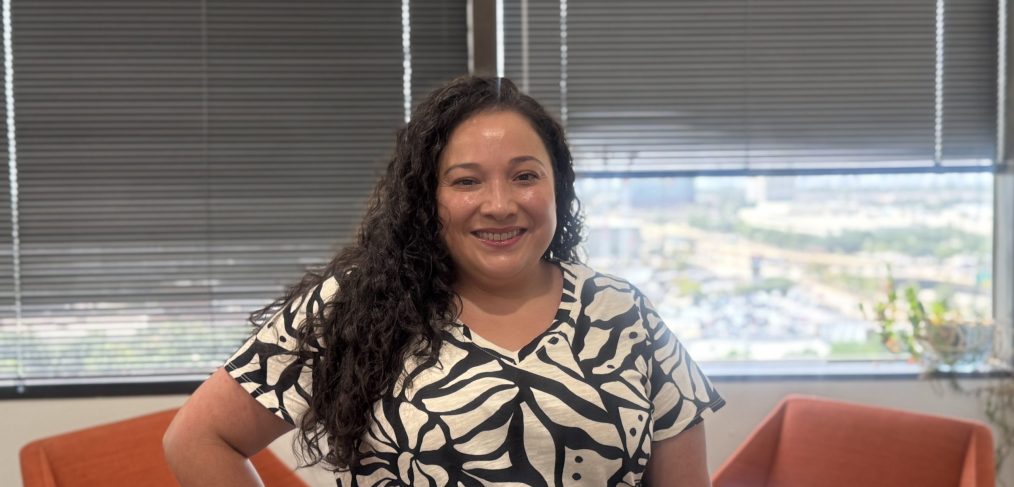
“This is my purpose every day—to literally make sure that a family has what they need,” said Tiphanie Sanders-Wright, manager of Resource Center South.
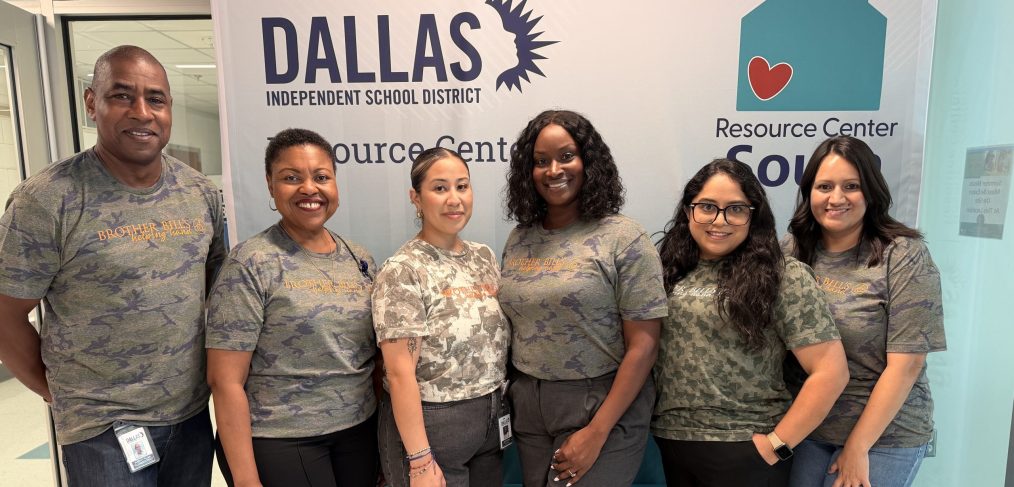
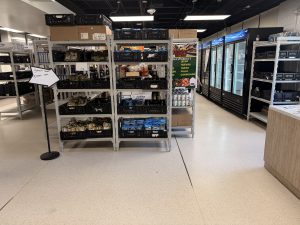
Down the hall, past the front desk and a small waiting area, is a scaled-down grocery store with shopping carts and humming reach-in refrigerators. Shelves of canned goods and household staples line walls and stretch across the room, forming aisles. Inside the commercial coolers, parents find milk, eggs, and meat. Produce fills bins and crates: greens, onions, potatoes—whatever Brother Bill’s Helping Hand, a nonprofit organization in North Dallas, was able to donate that week. 
“When a family checks in to shop, they don’t get a pre-packed box,” Sanders-Wright said. “We want parents to get exactly what they need for themselves and their families.”
Parents walk the aisles like any shopper would. Small signs taped to the shelves offer instructions: “Choose one” on some items, “Choose two” on others. By the time their cart is full, they’ve usually reached around 100 pounds of food. Volunteers help them bag groceries and walk them out to the car.
Sanders-Wright said that in the beginning that freedom startled some parents, especially those accustomed to pre-packed grocery boxes.
“When we first opened, they were like, ‘I do it myself?’” Sanders-Wright said. “And we said, yes, this is a self-service process. You get a cart. You choose. We’re just here to help.”
The grocery store is only one part of what the center offers, but it captures its spirit—restoring a sense of control to parents who may have gone a long time without feeling any.
Resource Center South opened its doors to families in 2022, after voters approved the 2020 Bond Program that included funding to “plant resources” across the district. Before anything was built, the Office of School Improvement held surveys, focus groups, and interviews in the community. Families asked for food support, health care, safer neighborhoods, help with work and schooling.
Now, a parent can walk in needing groceries and leave with far more. On Wednesdays, Children’s Health staff set up in an office and sit side by side with families, helping them complete applications for CHIP, TANF, Medicaid, or Medicare. Parkland Health nurses come to give immunizations and flu shots. In the evenings, parents trickle into ESL or GED classes while their children attend reading sessions, art, or piano lessons just a few doors away.
There are even dedicated quiet spaces for parents who need to “dock in and work” and a computer lab. Through the center, parents are given their own Dallas ISD login. Other spaces include a mental health suite and a small library where “the vision is for families to essentially build their own home libraries,” Sanders-Wright said.
While Resource Center South is not the only resource center in operation, it was the first of four centers to open and served as a template for the others. Located near Dr. Elba and Domingo Garcia West Dallas STEM School the West Dallas, the Resource Center West is housed in a renovated space where Dallas ISD families can access free groceries, mental health and wellness support, and other wraparound services. It offers a service not available in the first center—a laundry facility that any parent in the district can use.
“It doesn’t matter that one resource center is south and another is west. Parents from all over the district can access services at either location,” Sanders-Wright said.
Resource Centers South and West will eventually be joined by two other centers, one opening in January 2027 at the old John Lewis Social Justice Academy, and another planned next to the renovated H. Grady Spruce High School around 2027–2028. Both are designed to address the same core priorities like access to healthy food and mental health support.
During July, the center shifts into summer camp mode with its Summer Enrichment Program. Elementary students come for cooking, dance, music, and art, rotating through rooms that feel more like studios than classrooms. Older students can choose from among life coaching, podcasting, and even musical theater. Sanders-Wright said seeing former students return each summer, taller and more confident, is one of the quiet joys of the job.
Despite its mission to be inclusive, Dallas ISD can still feel huge and confusing from the outside. Sanders-Wright hears that all the time.
“Sometimes parents just need someone to slow it down,” she said. “We have the time to sit and say, ‘No, you need to go here,’ or, ‘Call this person.’ And then they come back and tell us, ‘You helped me, and now my child is doing better.’ That’s the part that stays with us.”
The center runs with only three full-time staff members. Everyone else—partner organizations, volunteers, even high school students who come in for service hours—keeps the place moving. By the end of the day, the stories can be heavy. Food insecurity. Rent overdue. A teenager asking for hygiene products because there’s nothing at home.
As closing time nears, the staff gather to check on each other, to trade the day’s hardest and best moments. They hug in the hallway. They plan what to cook next in the demonstration kitchen—or gush about the mothers who used the kitchen to make lunch for them. They talk about the parent who walked in with hesitation and left with groceries, a class schedule, and a little more air in their lungs.
On her way home, Sanders-Wright thinks of those faces.
“Sometimes parents just fall into our arms crying,” she said. “They say, ‘Thank you so much. I was so proud and embarrassed before coming in here.’ Those are the stories I hold on to. That’s when I know we really did something that day.”



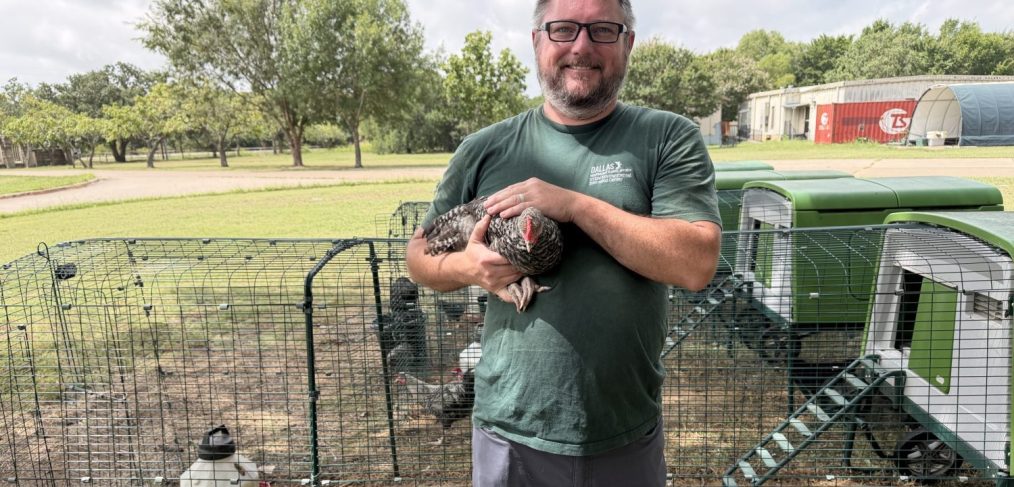
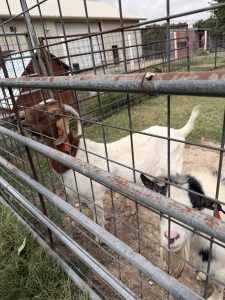 Mr. Gobbles is gone now, but his story says a lot about the place Mark Broughton, director of the Environmental Education Center, runs. Animals here are not merely props; they are residents whose lives are interwoven into the daily life of the center and the educational experiences of thousands of district students who visit each year.
 This kind of work demands more than just feeding and watering. The center has grown its herd, expanded the goat corral, added a nature play area for younger children, and planted an orchard with dozens of fruit trees. Broughton still rattles off the varieties almost by habit, from pears and peaches to pomegranates and mulberries.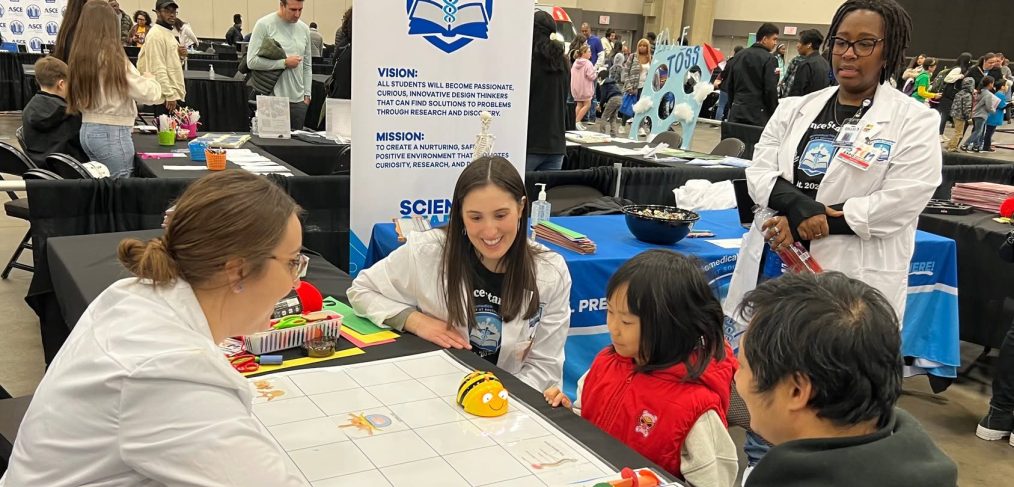
 As the principal at Biomedical Preparatory at UT Southwestern, Gina Maffucci leads a campus where students are introduced to bioscience as early as prekindergarten. After serving two years as the school’s assistant principal, Maffucci is stepping into her third year as principal, continuing the next chapter of learning at a school she has helped build.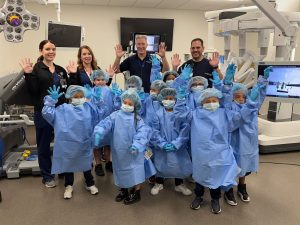


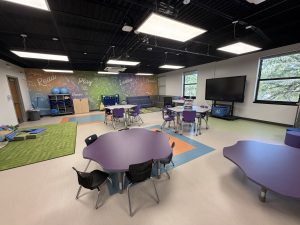 During July, the center shifts into summer camp mode with its Summer Enrichment Program. Elementary students come for cooking, dance, music, and art, rotating through rooms that feel more like studios than classrooms. Older students can choose from among life coaching, podcasting, and even musical theater. Sanders-Wright said seeing former students return each summer, taller and more confident, is one of the quiet joys of the job.