
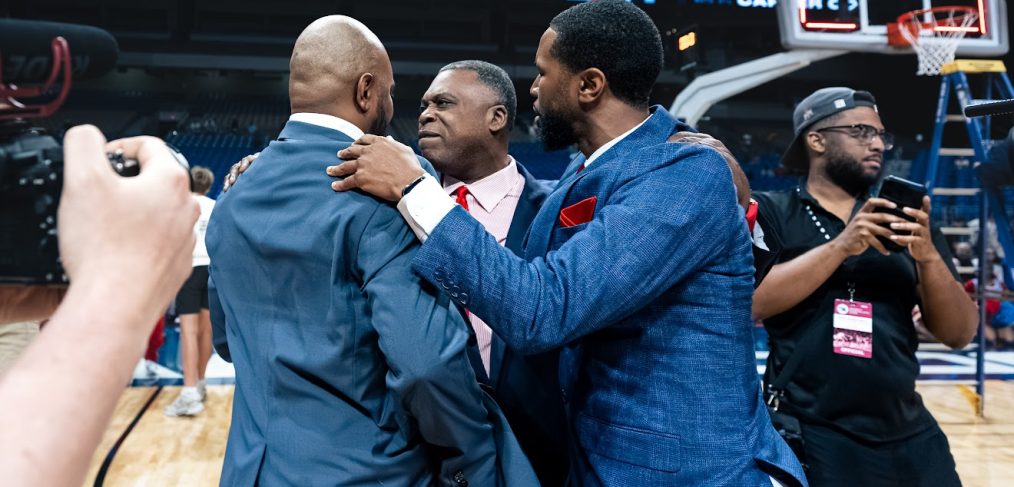
For Lyndon Love, head basketball coach at David W. Carter High School, this year’s basketball championship is a part of a journey that began decades earlier as a student. 
A 1987 graduate of South Oak Cliff High School, Love once paced the same basketball courts as a student-athlete. He credits much of his coaching philosophy to the mentors who shaped him during those years, including Rodney Sneed, the former head coach at SOC, who later invited Love to return to his alma mater as an assistant coach after college.
“When I was a student, my high school coach would never let us quit,” Love said. “As a first-year student, I thought playing at South Oak Cliff was one of the toughest things I had ever done. Coach always pushed us to be the best we could be, not only on the court but in the classroom. I instill that in my guys at Carter now.”
The lesson became the foundation of a coaching career that has spanned more than 30 years in Dallas ISD and 12 years leading the Carter High School basketball program.
Carter’s UIL State Championship run this season has been years in the making. Their loss in the regional finals last year, stayed with the program and served as motivation for the players who returned, determined to finish what they started.
Love’s reminder to never give up came full circle this spring for athletes at Carter.
When Carter High School’s boys’ basketball team stepped onto the court for the semifinals game in March, they were just two wins away from making school history.
Trailing by three points, with less than three minutes remaining against Brock High School, the players relied on preparation and trust in one another, turning to a play they had practiced many times before, he said.
“During a time out, one of our players, Amarion Hunter, put his arm around the point guard and said, ‘I’m going to get you the ball and you’re going to knock the shot down,’” said Brandon Lewis, varsity basketball coach at Carter. “We came out of the time out, ran the play, and made the shot. They had been practicing that shot throughout the year. It has become the biggest shot in Carter history.”
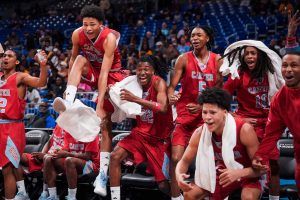 The shot shifted the game in Carter’s favor as the Cowboys took the lead, sparking a run that secured them the game and moved them one step closer to the school’s first state championship.
“That was one of the greatest moments of my coaching career,” Love said.
Now state champions, the Cowboys’ historic achievement stands as the reflection of a culture of resilience and brotherhood.
“Our upcoming seniors led us to the championship,” Love said. “They put in work during the summer and the fall, and that got us where we needed to be. I give all the credit to our players and our parents.”
Love finished the year with more than 400 career victories and was also named the Dallas Morning News Basketball Coach of the Year and the UIL 4A Division II Coach of the Year.
The championship season had meaning for Love beyond trophies and accolades. He shared the experience with his son, Kobe, a point guard on the team, writing his own chapter as a student-athlete in Dallas ISD.
Under Love’s leadership, students achieved great success beyond the court. The program counts three valedictorians, a salutatorian, National Honor Society members, and student-athletes who have graduated with associate degrees. 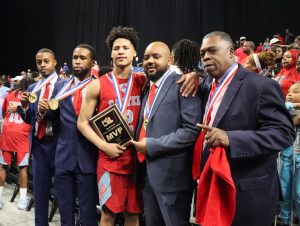
That commitment to student success is carried throughout the program by a coaching staff focused on preparing student-athletes for success on the court and in the classroom.
Selected by Love to coach the incoming freshman, Lewis helps lay the foundation for the program. Now in his fourth-year coaching at Dallas ISD and at Carter, Lewis said the path to excellence was already established when he arrived.
“I’ve learned a lot from Coach Love,” Lewis said. “People often like the finished product they see on the court, but as coaches, we emphasize student success in the classroom. That focus is a testament to our hard work, not only just as coaches, but also being productive Black men in our society.”
While the state championship marked a historic moment for the program, Love and the coaching staff say their focus remains on preparing students for life beyond basketball.
“For our student-athletes, we put emphasis on the student first, and every time we break from practice, we remind them that what they do off the court dictates what they do on the court,” Lewis said. “We want our kids to go to college and be productive citizens in society.”

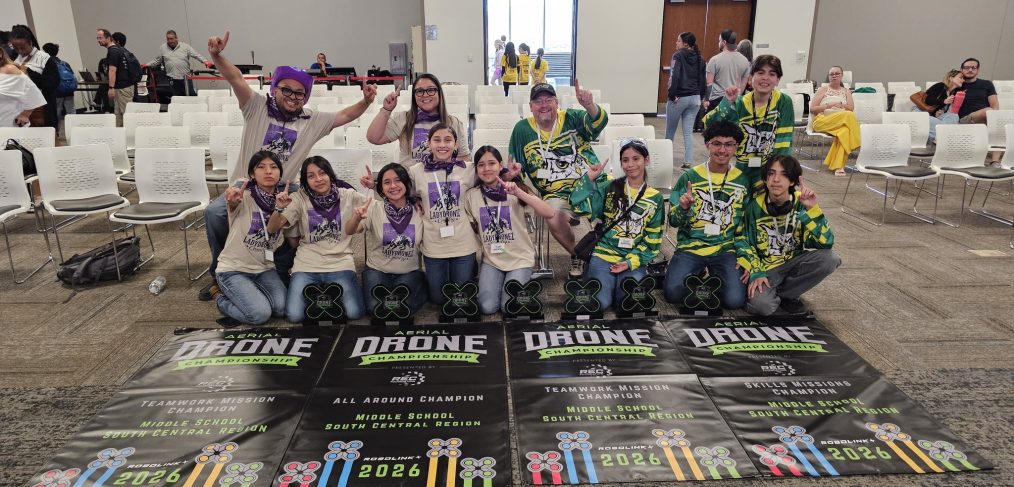
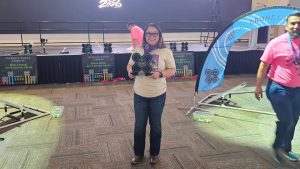 “They said, ‘If this is all about learning, then you can learn with us. Let’s do it together,’” Cortez said. “That stopped me. They weren’t asking for an easy path. They were asking for a chance.”
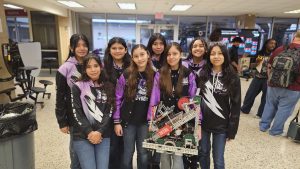 For Cortez, the awards matter less than what happens in the classroom and practice space. She talks about students bent over laptops, adjusting code line by line, or nudging drones into precise positions so a program will run correctly in a gym full of air vents and moving people.
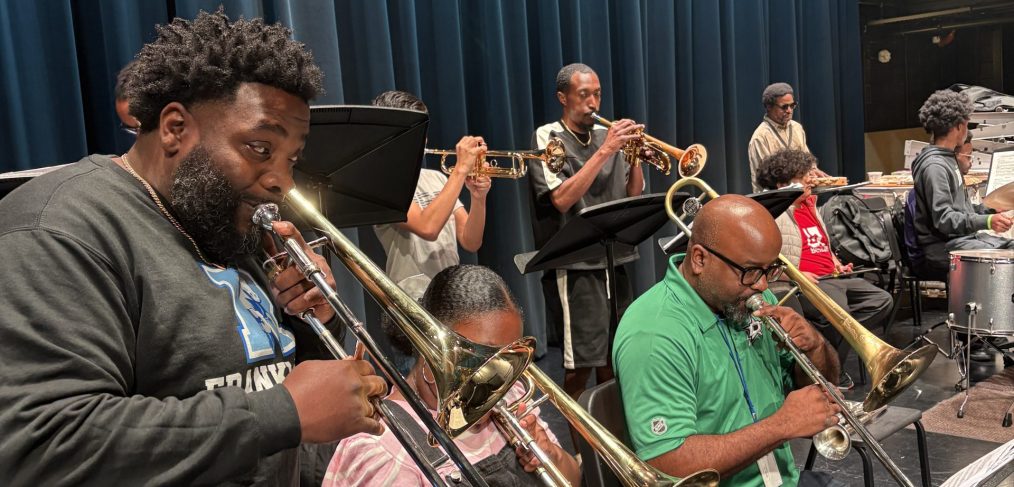
 Kermit Gray is the director of bands at Roosevelt High School, and once walked in those same halls as a student. He experienced a full circle moment as an instructor at the jazz camp held at his alma mater.

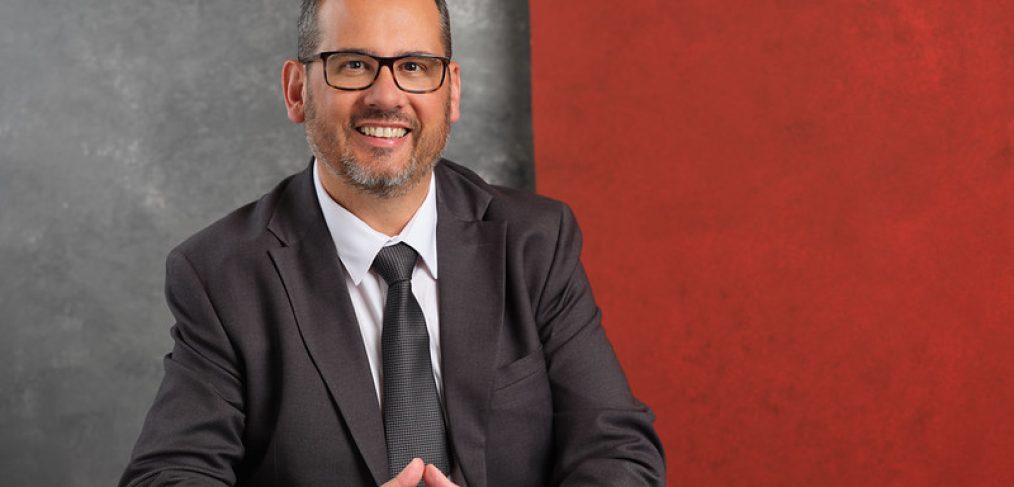
 He grew up and trained as a teacher in Spain, where he worked in a bilingual school with students whose first language was not Spanish. Over time, his desire to grow pushed him toward the life-changing decision of accepting an opportunity through the Spanish Ministry of Education to teach in the United States.At first, Texas was almost a mystery.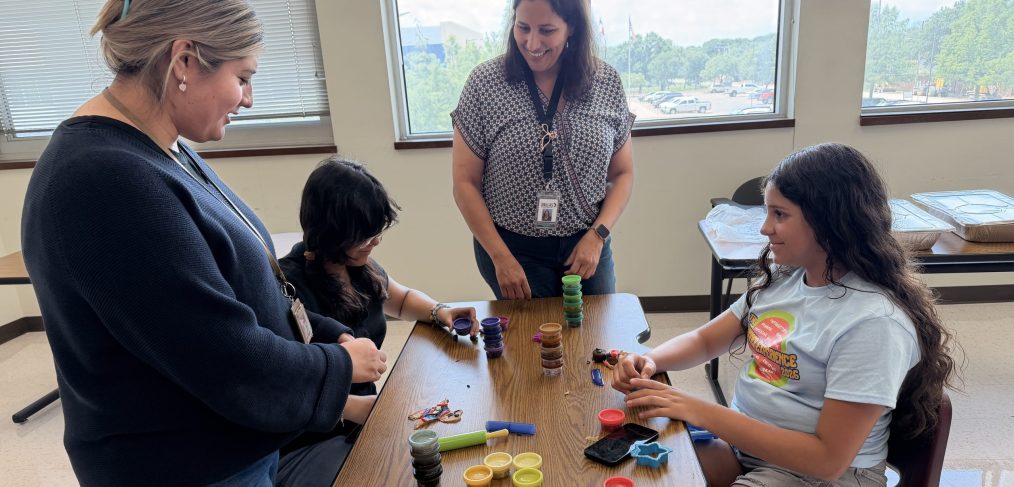
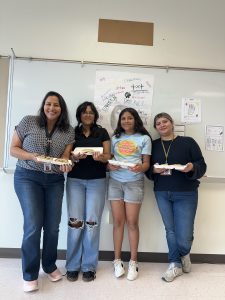 Bazey Mireles, Spanish teacher at Hill Middle School, who is co-teaching with Fernandes, sees the camp as a chance to plant long-term seeds.