Summer camp provides hands-on heart knowledge
Special contributor Alysson Arcila
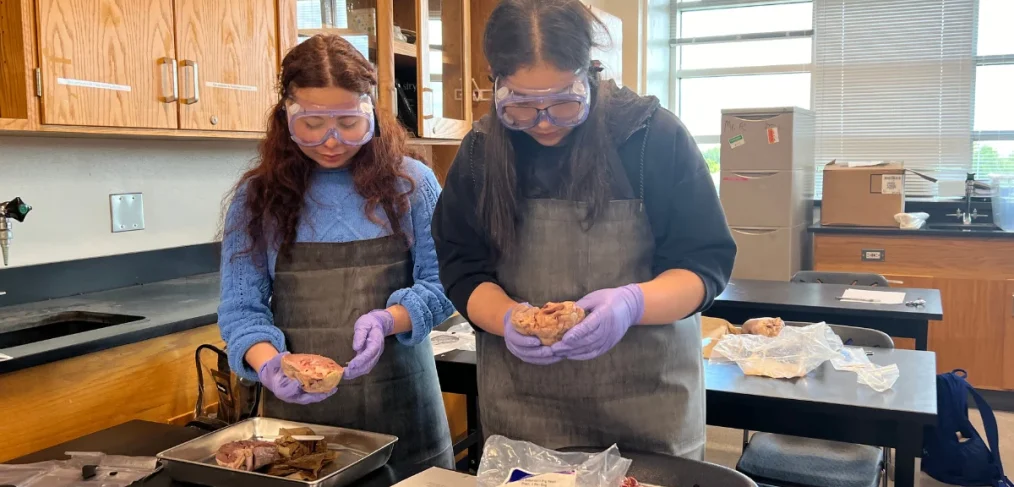
This year’s Future Doctors Summer Camp cohort isn’t interested in breaking hearts—they’re interested in studying them. In one room, students steady their hands over surgical pads as they practice their first delicate stitches. In another, they lean in close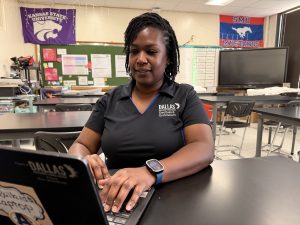 over a pig’s heart, sliding gloved fingers inside to see how blood once moved through it. These teen prospective doctors gathered at Hillcrest High School and South Oak Cliff High School this summer for a practical look into the medical field.
“I had no idea the students would have this much background knowledge. They came in eager, hands-on, and ready to learn,” said Tamara Ballard, a school librarian at Martin Weiss Elementary School. Ballard’s role at the Future Doctors Summer Camp is to keep things running. She takes attendance, makes sure supplies are where they need to be, and checks that the instructors, who also happen to be medical students, have what they asked for.
Ballard has spent 20 years in education and talks about books with the same warmth she now uses for these hands-on labs. At her school, she curates sports and medical titles so children can see their interests reflected on the shelves. At the Future Doctors camp, she watches older students test those interests in real time.
This kind of work, she said, lets her stand at the edge of the action and watch students surprise themselves.
The camp, now in its third year under the direction of Lisa Whitaker, director of Electives and Enrichment, is free to Dallas ISD students interested in healthcare. This summer, 18 students spent long days moving between lecture, lab, and simulations.
For Ballard, one memorable session centered on CPR.
“When students did their CPR lesson, a lot of them said they already had experience, so that made things easier,” Ballard said. “The students partnered up, moved the tables, and laid down on the floor. They were able to do a little skit where one person would call for help, and the other person would perform CPR.”
Another session brought students face to face with a pig heart. Ballard heard students describe the strong smell and watched them slide their fingers into the chambers to open the heart. For many, it was the first time they had seen an organ up close, outside of a textbook or video.
Students also listened to a pediatrician discuss the years of study the career requires. For some, those moments reinforced an interest in medicine. For others, it was a sign to consider a different role within healthcare.
What strikes Ballard the most about the camp is how seriously the students take the opportunity. Some arrive already knowing anatomical and medical terms. Others ask questions after sessions about college, time management, and whether they could really do this. Ballard sees all of it as part of their education.
“This is a hands-on experience that they will remember going off to college,” Ballard said. “Even if the kids choose another field, they leave with a clearer sense of themselves and the knowledge that they were trusted with real work.”