AI changes teacher coaching
Coaching for teachers has traditionally been done through classroom observations. Dallas ISD is trying something new by integrating video-based coaching into middle-school math instruction, part of a grant-funded partnership with the Texas Instruments Foundation and the Communities Foundation of Texas.
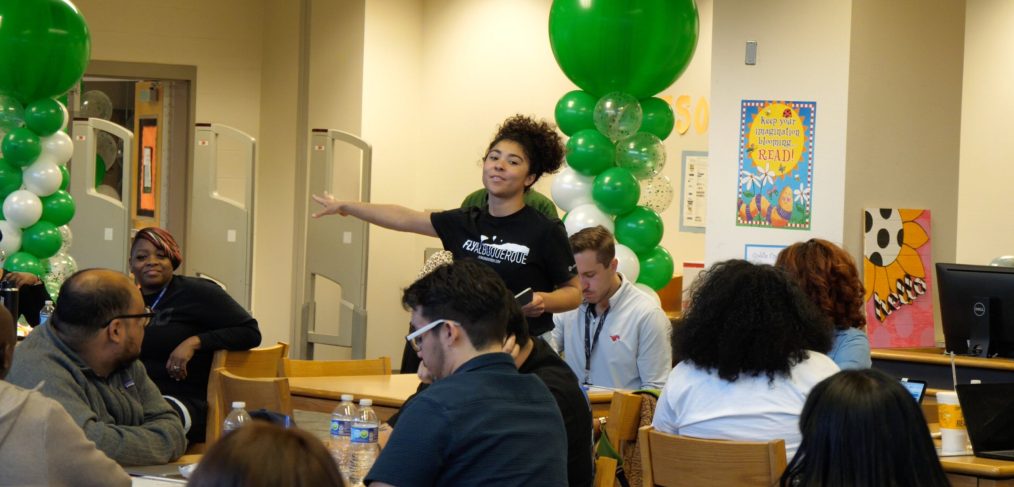
Math teachers from nearly 12 middle schools assembled in the library of Billy Earl Dade Middle School recently for the workshop, led by Aaron Daffern, director of math, to celebrate successes and address ongoing challenges in using technology to advance instruction.
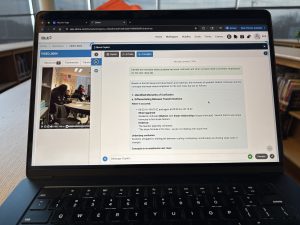
The AI tool was designed to bolster professional growth and improve teaching. With its help, teachers can record their lessons and receive real-time insights into their teaching style and student responses. However, the district emphasizes that the technology is secondary to the teaching itself.
“While we are using it, it is simply a means to an end. Our ultimate goal is to improve instruction, increase participation, and foster academic discourse,” Daffern said. “We want to provide faster, more actionable feedback—because if it isn’t directly related to instruction and learning, it isn’t the best use of our time.”
During the workshop, attendees shared personal experiences with the AI tool, emphasizing its usefulness for generating quick math drills, streamlining lesson activities, and providing step-by-step guidance for both teachers and students. A leaderboard encourages peer-to-peer learning, friendly competition, and recognizes top-performing educators.
“For the most part, it is a very good resource. I like the idea of using it as a ‘talking stick’ with the kids,” said Jose Gutierrez, a math teacher at L.V. Stockard Middle School. “I think that would really improve student discourse.”
Teachers also used breakout sessions during the workshop to reflect on the limitations of AI. They noted that while the tool is excellent for analyzing “talking time” distributions in class videos, the technology still requires patience.
“The feedback takes a while; you have to keep asking for it. It’s just like any regular AI thing—it’s going to take a while, like any other AI program,” said Luis Martinez Monsivais, also a math teacher at Stockard.
Teachers expressed a desire for AI tools to improve visual outputs, such as diagrams and graphs, recommending platforms for more complex visual tasks. In response, the workshop showcased new technology rollouts from over the holidays, including an audio-synced notes enhancement designed to make the platform more user-friendly.
As the district leans further into video-based coaching, privacy remains at the center of progress. The current AI tool, for example, ensures that teachers and students are always protected through high-level encryption.
Throughout the workshop, teachers remained enthusiastic about the AI’s features, describing them as tools that are truly transforming the profession.
“A few things I find really cool about it are the ability to download a lesson, upload it, and then annotate it,” said Anaka Brooks, math teacher at Piedmont Global Academy. “I’m still mastering the annotation process, but being able to annotate while casting my iPad to the screen is a total game-changer.”