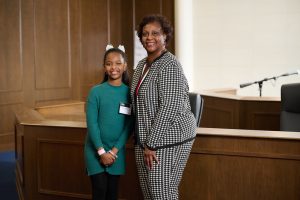
Eight talented young orators will showcase their talents in the 34th Annual MLK Oratory competition, co-sponsored by Foley & Laudner LLP and Dallas ISD. And their sponsors will be there with them supporting their performance as they have all year.
The competition was established in 1993 and is hosted each year in conjunction with Martin Luther King Jr. Day to encourage the community to remember the legacy of the civil rights leader. The competition will start at 11 a.m., on Jan. 16, at the Dee and Charles Wyly Theatre at the AT&T Performing Arts Center. For those who can;t attend in person, it will be livestreamed at https://live.myvrspot.com/player2?udi=ZGFsbGFzaXNk&c=c3RyZWFtNA%3D%3D.
To prepare for the competition, fourth and fifth grade students are coached by Dallas ISD teachers, or sponsors. They work alongside the student, engaging them in the history of King to prepare an original speech that answers the question: “As a student of Dr. King’s Life, what message of hope do you think he would have for the world today?”
Meet the eight sponsors who coached their young orators to reach the finals.
Betty Glover, Clara Oliver Elementary School
 Betty Glover is making history with the MLK Oratory Competition as the longest-standing sponsor. She has been involved since the competition’s first year in 1993. Throughout her 58-year career in Dallas ISD, she has spent most of her time as a talented and gifted teacher at Clara Oliver Elementary School and was named district teacher of the year in 1999.
“Clara Oliver was one of the first schools to be selected to participate,” she said. “I’ve been working with the students here at Clara Oliver since the very beginning of the competition.”
Each year, Glover works closely with her students, letting them share what they want to say in their speeches. She teaches how to write an essay and guides them in understanding persuasive writing, showing them that it is something they use every day in their conversations and interactions.
“I love motivating students to read.” she said. “I love history, and I want to make sure they love it too. As the years go on, students can become farther removed from things they’ve learned. Competitions like this help them to remember those things and also learn what they didn’t know before.”
Rochelle Hailey, Solar Preparatory School for Girls
Rochelle Hailey became an MLK Oratory Competition Sponsor three years ago. She is a debate teacher at Solar Preparatory School for Girls and supports reading and language arts learning at her school.
Hailey and her student studied King’s writings and his presentation style. The student analyzed and made personal connections to the decisions King made during his life. They also practiced delivery and presence, even using the stage during lunch and school assemblies to practice speaking to large audiences and receive feedback from peers.
“To serve as a sponsor is an honor,” she said. “I teach confidence, courage, and the understanding that every girl’s voice has power to speak their truth and share their light,” she said, often encouraging her students to believe that their voice is worthy of the space it occupies.
Throughout the process, Hailey watched her student go from simply reciting words, to becoming the message.
“When I reflect on the ultimate impact of this competition, I am reminded that the future is not waiting to be written; it is already finding its voice in every child that will embrace that stage next Friday.”
Shelley Wallace, Paul L. Dunbar Learning Center
Shelley Wallace teaches in the talented and gifted program at Paul L. Dunbar Learning Center. She has been an MLK Oratory Sponsor for the last eight years, with additional support from fellow teacher Gloria Douglas.
“My favorite part of the competition is when the students experience the culmination of their hard work as they recite their speeches with anticipation of making the finals,” she said.
From watching videos of King’s speeches, to library visits, to analyzing his quotes and comparing time periods, Wallace prepared her student to be fully equipped with the knowledge to not only write her speech but recite it in a way that reflects King.
“As a sponsor, I get to serve in a capacity that illuminates the contributions of a great historian and leader,” Wallace said. “I get the opportunity to bridge the gap between a piece of past history that was dark but now gives hope to the future.”
Melissa Clay, Arturo Salazar Elementary School
Melissa Clay has been an educator for 22 years. She is now the assistant principal at Arturo Salazar Elementary School and has been an oratory competition sponsor for the last four years.
Clay began coaching her student by sorting through what the student already understood about King. From there they researched his life and legacy. She then challenged her student to create something that was hopeful, purposeful and inspirational.
For Clay, stepping into the role as a sponsor means leading by example and requires her to show up fully and intentionally, just as she asks her students to do.
This experience connects one of her childhood memories, a time when she herself was a Dallas ISD student participating in a Black History Month oratory contest as a second grader.
“I didn’t know it at the time, but my teacher saw something in me that sparked a lifelong love for speaking and self-expression,” she said. “Today, I strive to be that same light for students.”
Carla Patrick, J.P. Starks Math, Science and Technology Vanguard
Carla Patrick has been a MLK Oratory Competition Sponsor for 10 years.
She prepared her student for the competition by introducing King’s speeches and reflecting on the messages. Gathering books, articles and videos, the student used the culmination of this research to write a speech. Patrick used techniques such as practicing in a mirror to focus on stage presence.
“I assured my student that they have the tenacity to see this through,” she said.
“Taking on this role as a MLK sponsor is important to me because it helps students with decision-making, communication, and goal setting,” she said. “It also encompasses debating, problem-solving, and comprehension, which are assets that go far beyond the MLK competition. It builds leaders and encourages community involvement.”
Rosalind Reece, Wilmer Hutchins Elementary School
Rosalind Reece, music teacher at Wilmer Hutchins Elementary School, is an oratory competition sponsor this year, and is committed to sharing King’s legacy with the next generation. She has been a part of Dallas ISD for 21 years.
Reece partnered with her student’s mother who helped prepare at home, while she worked with her student at school, always remembering to encourage her student of the progress he has made.
“My favorite part of this competition is seeing the students push hard to give their best,” she said. “From the preliminary level to the final level, the drive they have to accomplish their goal to win is thrilling. Seeing them persevere despite the nerves that naturally accompany competing is motivating.”
Angela Walker, Charles Rice Learning Center
Angela Walker has been a MLK Oratory Competition Sponsor for nine years, after receiving encouragement from her principal at the time, Alpher-Garrett Jones.
After supporting her student in practicing her speech, Walker has watched her student go from a beginner orator to an extraordinary finalist.
“I encouraged her by making sure she knew that she was chosen for a reason, for this time and for this moment, “Walker said. “I made sure she had adequate time to practice, and I reminded my student that I see the best in her even when she feels discouraged.”
She has been an oratory sponsor for all nine of her years as a reading language arts teacher at Charles Rice Elementary School.
Janice Wilson, Preston Hollow Elementary School
Janice Wilson, a 30-year veteran of Dallas ISD, is a Functional Living Teacher at Preston Hollow Elementary, where she has taught for two years.
Wilson was a child during the years while King was building his legacy of justice, equality, courage, and nonviolence across the nation. Through this opportunity as an oratory sponsor, she is carrying on the impact that she witnessed in her childhood to the next generation.
Throughout the preparation process, Wilson, who has a doctorate from George Fox University, encouraged her students by celebrating progress, reinforcing strengths, normalizing nerves, and creating a supportive environment that helped the students step onto the stage feeling prepared and proud.
“There’s something powerful about seeing them become proud of their accomplishment—standing tall, delivering their words with strength, and realizing they’ve earned that moment,” she said. “I love seeing the cheers from the audience, the proud smiles from family members, and the pats on the back from classmates and teachers who recognize how hard they’ve worked. It becomes more than a competition. It turns into a celebration of their voice, their courage, and the community that lifts them up.





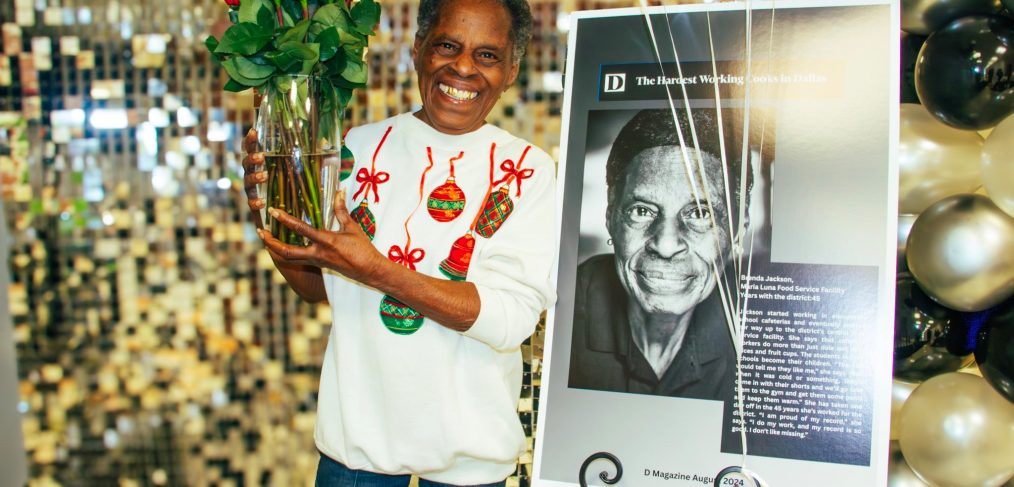
 Jackson’s true impact happened in the quiet moments between the serving lines. She didn’t just see students as numbers; she saw them as children who sometimes needed a mother’s touch. She remembers one particular student at Crockett who would often arrive at school without lunch money and in need of clean clothes.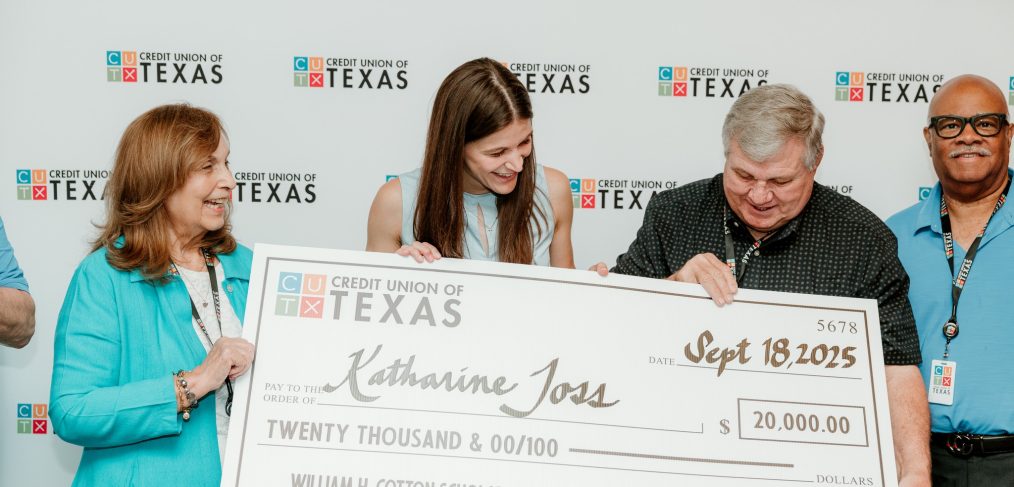
 Before becoming a teacher, Joss worked through a fellowship with schools in Ghana, Ecuador, and other countries, investigating female empowerment through sports—a project born from her lifelong love for soccer. It was in Ghana, while speaking with a young girl whose life had been redirected by the power of literacy and sports, that Joss had her “aha” moment.
 “I feel their struggle when they’re learning English because that’s exactly how I felt when I was learning Spanish,” she said. “It’s hard, and it’s frustrating. When my students see that I’ve put in the work to learn their language, it builds a bridge of trust. They realize that we’re learning together.”
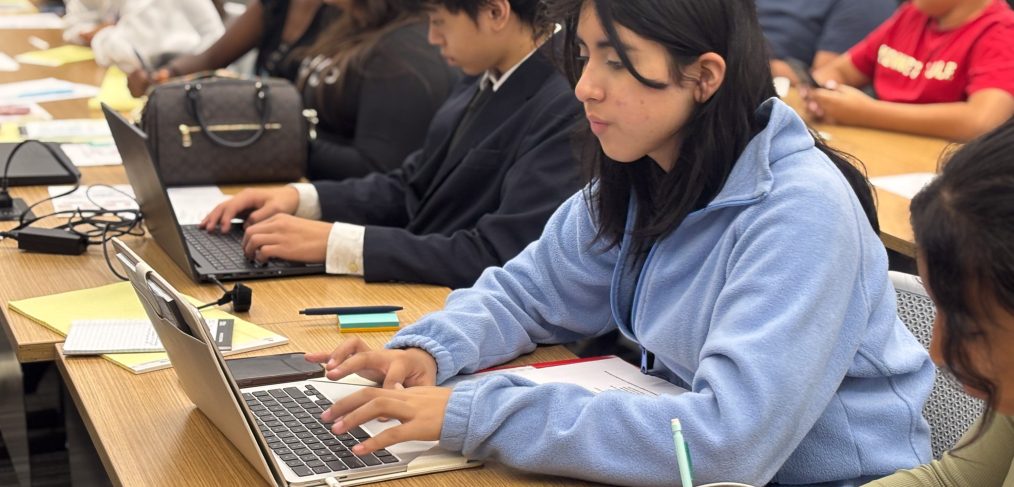
 This fall, over 350 students from 58 schools attended the annual 5th Grade Debate Workshop at E.D. Walker Middle School. The full-day event included a large-group introductory session in the morning to prepare students for smaller practice sessions in the afternoon. Thanks to a new partnership between the University of Texas at Dallas and DUDA, 234 district students from 22 high schools attended this fall’s workshop on the UTD campus.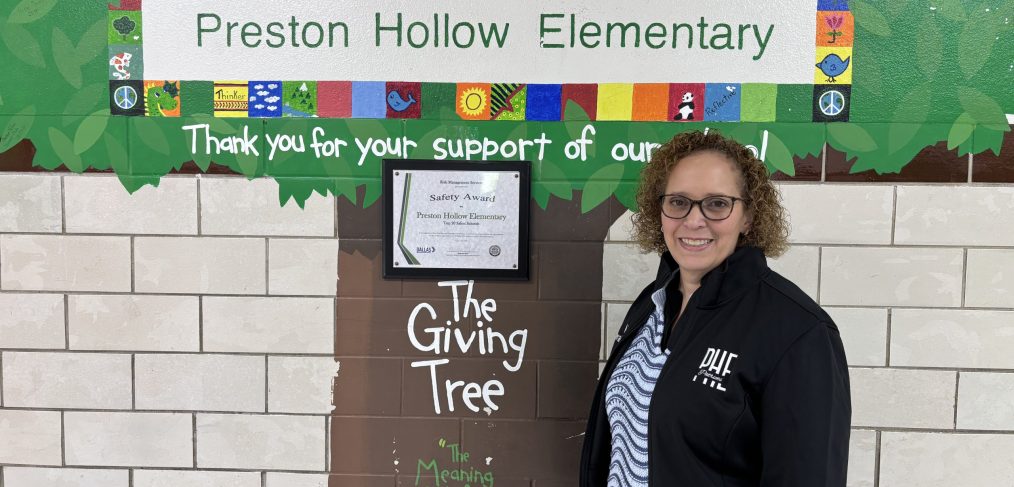
 “It’s more about trying to build that with the teachers, and also acknowledging [the positive], because many teachers will actively say ho
 “The teachers will have the ability to review thank-you notes and track participation data to make sure everyone receives recognition,” she said.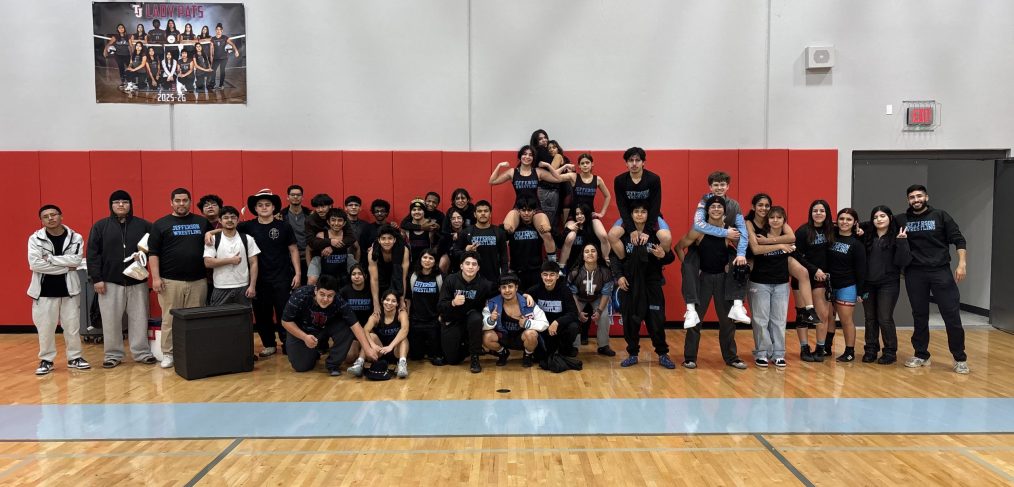
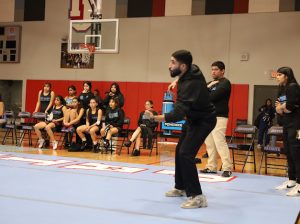 Middle school marked a turning point—Garcia discovered a calling in education and service. As he acquired a better handle on English, he began helping other newcomers in class, experiencing the joy and empowerment of breaking linguistic barriers.
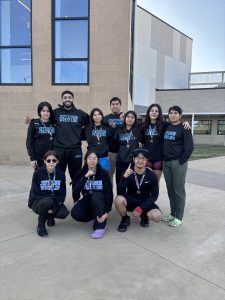 Despite no formal wrestling background, Garcia drew from years of boxing and fierce determination. He leaned on colleagues, friends from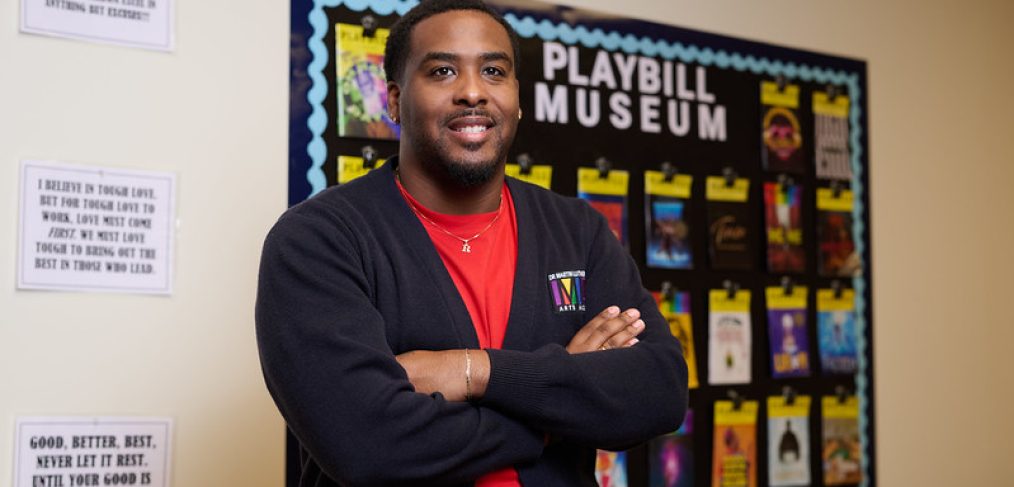

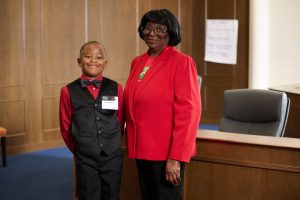 Betty Glover is making history with the MLK Oratory Competition as the longest-standing sponsor. She has been involved since the competition’s first year in 1993. Throughout her 58-year career in Dallas ISD, she has spent most of her time as a talented and gifted teacher at Clara Oliver Elementary School and was named district teacher of the year in 1999.
 Rochelle Hailey became an MLK Oratory Competition Sponsor three years ago. She is a debate teacher at Solar Preparatory School for Girls and supports reading and language arts learning at her school.
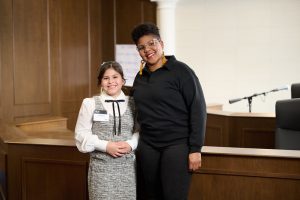 For Clay, stepping into the role as a sponsor means leading by example and requires her to show up fully and intentionally, just as she asks her students to do.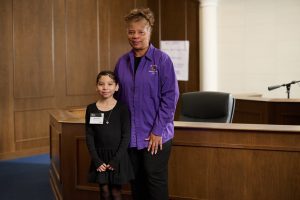
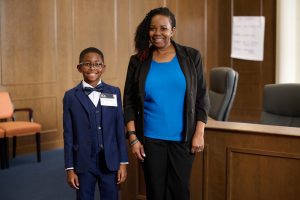 sharing King’s legacy with the next generation. She has been a part of Dallas ISD for 21 years.
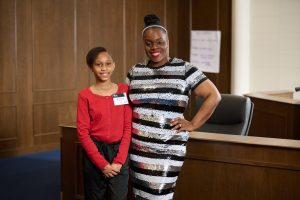 Angela Walker has been a MLK Oratory Competition Sponsor for nine years, after receiving encouragement from her principal at the time, Alpher-Garrett Jones.